Ayurvedic Treatment Hospital in Kerala, India, Ayurveda Resort, Doctor
THE BEST AYURVEDIC TREATMENT CENTRE AND HOSPITAL IN KERALA, INDIA | SINCE 1965

THE BEST AYURVEDIC TREATMENT CENTRE AND HOSPITAL IN KERALA, INDIA | SINCE 1965

7 Proven Facts: What Happens During an Ayurveda Consultation
If you are considering traditional Ayurvedic care, you may wonder what happens during an Ayurveda consultation and how it differs from a conventional health appointment. In Thiruvananthapuram, people may explore Ayurveda for personalized guidance based on traditional principles of body constitution, lifestyle, diet, digestion, sleep, and overall well-being. An Ayurveda consultation usually involves a detailed conversation about your health history, daily routine, current concerns, eating habits, and emotional well-being. The practitioner may also use traditional assessment methods to understand your individual constitution and identify possible imbalances.
Understanding the consultation process can help you know what information to prepare, what questions may be asked, and what type of recommendations you might receive.
1. What Happens During an Ayurveda Consultation
To understand what happens during an Ayurveda consultation, it is useful to know that Ayurveda traditionally takes a whole-person approach. Instead of focusing only on one symptom, the consultation may explore different aspects of your physical and mental well-being.
The first appointment is often more detailed because the practitioner needs time to understand your health background and individual characteristics.
During an initial Ayurvedic consultation, you may be asked about:
- Your main health concerns
- Previous and current medical conditions
- Current medications and supplements
- Appetite and digestion
- Bowel habits
- Sleep patterns
- Daily routine
- Physical activity
- Stress levels
- Food preferences
- Energy levels
- Seasonal changes in your health
- Family health history
This detailed discussion helps the practitioner develop a broader picture of your health.
Understanding the Purpose of the Consultation
The main purpose is to understand your individual constitution and current state of balance according to traditional Ayurvedic principles.
The practitioner may consider your physical characteristics, digestion, lifestyle, sleep, mental tendencies, and environmental influences before suggesting a personalized wellness plan.
2. Detailed Health History Assessment
An important part of what happens during an Ayurveda consultation is discussing your health history.
The practitioner may ask when your symptoms began, how frequently they occur, what makes them better or worse, and whether you have previously received treatment.
You should provide accurate information about diagnosed medical conditions, previous surgeries, allergies, medicines, supplements, and ongoing medical treatments.
Questions About Your Current Concerns
You may be asked questions such as:
- When did the concern first appear?
- Is it constant or occasional?
- Does it change during different times of the day?
- Does food influence the symptoms?
- Does stress make the problem worse?
- Have you noticed seasonal changes?
- Have you already tried any treatments?
These questions help the practitioner understand patterns rather than considering an isolated symptom alone.
3. Understanding Your Ayurvedic Constitution
Ayurveda traditionally describes three functional principles known as Vata, Pitta, and Kapha. These are commonly referred to as doshas.
One of the key elements of what happens during an Ayurveda consultation may be an assessment of your natural constitution, traditionally known as Prakriti.
Vata
Vata is traditionally associated with movement and functions such as circulation, breathing, and bodily motion.
Pitta
Pitta is traditionally associated with transformation, including digestion and metabolism.
Kapha
Kapha is traditionally associated with structure, stability, and lubrication.
Every individual is believed in Ayurvedic tradition to have a particular combination of these three doshas. The practitioner may consider this constitution when developing dietary and lifestyle recommendations.
4. Assessment of Current Imbalances
Ayurvedic assessment does not focus only on your natural constitution. The practitioner may also evaluate your present state, traditionally called Vikriti.
Vikriti refers to the current pattern of doshic imbalance according to Ayurvedic theory.
Changes in diet, stress, sleep, weather, activity, or daily routine may be considered when assessing why a person’s present state differs from their natural constitution.
Understanding this difference is an important part of what happens during an Ayurveda consultation because recommendations may be developed around both your underlying constitution and current concerns.
5. Traditional Observation and Examination
Another aspect of what happens during an Ayurveda consultation may involve traditional observation techniques.
The exact assessment methods can vary depending on the practitioner and the reason for your visit.
Pulse Assessment
Pulse assessment, traditionally called Nadi Pariksha, may be used as part of an Ayurvedic evaluation.
The practitioner feels the pulse at the wrist and interprets its characteristics according to traditional Ayurvedic principles.
Ayurvedic pulse assessment should not be considered a replacement for standard diagnostic testing when medical evaluation is necessary.
Tongue Observation
The practitioner may examine the appearance of your tongue.
In Ayurvedic tradition, features such as coating, moisture, texture, and general appearance may be considered alongside other observations.
Skin and Physical Appearance
The practitioner may observe characteristics such as:
- Skin texture
- Dryness or oiliness
- Hair characteristics
- Body build
- Facial appearance
- General physical condition
These observations may contribute to the traditional constitutional assessment.
6. Discussion About Digestion and Appetite
Digestion has an important place in Ayurvedic philosophy.
When learning what happens during an Ayurveda consultation, many people are surprised by how many questions may relate to appetite, food, digestion, and bowel habits.
Ayurveda traditionally uses the concept of Agni, or digestive fire, to describe digestive and metabolic processes.
The practitioner may ask:
- Do you feel hungry at regular times?
- Do you experience bloating after eating?
- Do certain foods cause discomfort?
- Are your bowel movements regular?
- Do you feel heavy or tired after meals?
- Do you frequently experience acidity?
- How much water do you drink?
- At what times do you normally eat?
These details help the practitioner understand your digestive patterns from an Ayurvedic perspective.
7. Evaluation of Daily Lifestyle
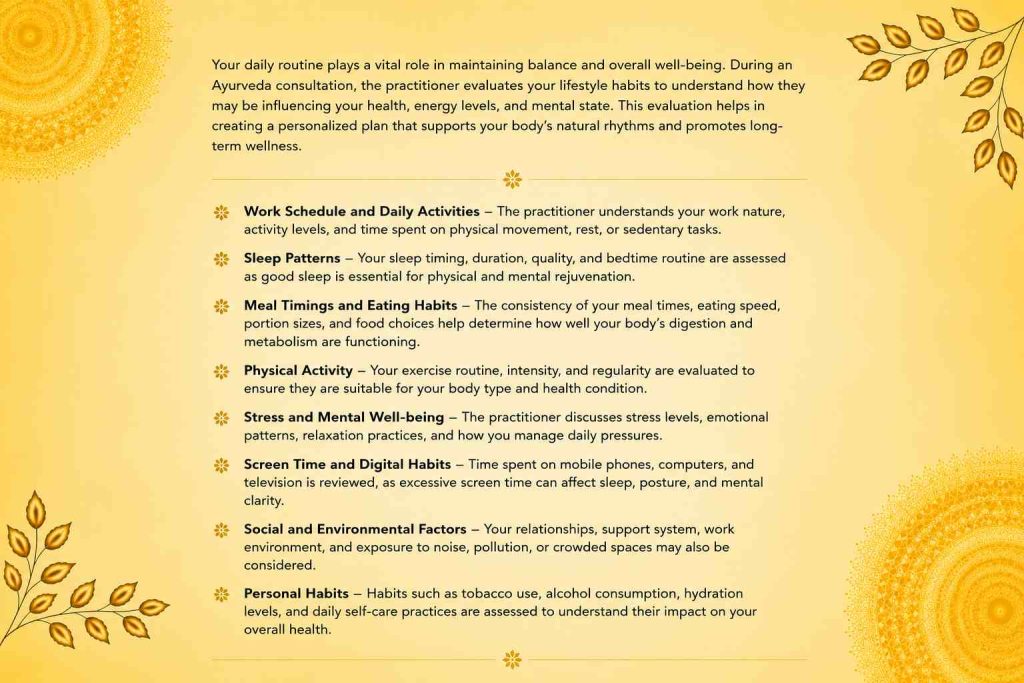
Your daily routine can influence the recommendations you receive.
During the consultation, you may discuss your work schedule, sleeping pattern, exercise habits, meal timing, travel, screen time, and other lifestyle factors.
Sleep Assessment
The practitioner may ask:
- What time do you normally sleep?
- How many hours do you sleep?
- Do you wake during the night?
- Do you feel refreshed in the morning?
- Is it difficult to fall asleep?
Sleep quality is considered an important component of overall wellness in Ayurveda.
Physical Activity
Your exercise routine may also be discussed.
The practitioner may consider the type, frequency, and intensity of your physical activity when suggesting lifestyle modifications.
8. Emotional and Mental Well-Being
Understanding what happens during an Ayurveda consultation also means recognizing that emotional well-being may be discussed alongside physical health.
The practitioner may ask about stress, concentration, mood, work pressure, emotional patterns, and relaxation.
These questions help build a more complete picture of lifestyle and general well-being.
Persistent or severe mental health symptoms should be evaluated by an appropriately qualified healthcare professional.
9. Causes of Imbalance According to Ayurveda
From an Ayurvedic perspective, imbalance may develop because of multiple interacting factors rather than one isolated cause.
Traditional Ayurveda may consider factors such as:
- Irregular meal timing
- Inappropriate dietary habits
- Insufficient or excessive sleep
- Sedentary lifestyle
- Excessive physical activity
- Emotional stress
- Seasonal changes
- Changes in climate
- Travel
- Irregular daily routines
The practitioner may explore these factors during the consultation to understand patterns associated with your concerns.
This does not mean every symptom is caused by lifestyle or doshic imbalance. Symptoms can have medical causes that require appropriate clinical investigation.
10. Symptoms Discussed During an Ayurveda Consultation
People may seek Ayurvedic consultations for a range of health and wellness concerns.
During an appointment, discussions may involve symptoms related to:
- Digestion
- Appetite
- Sleep
- Stress
- Joint or muscle discomfort
- Skin health
- Energy levels
- Daily bowel habits
- General well-being
A responsible consultation should also consider whether symptoms require conventional medical investigation.
Severe chest pain, breathing difficulty, sudden weakness, significant bleeding, severe abdominal pain, or other potentially urgent symptoms require prompt medical attention.
11. Types of Ayurvedic Consultations

Although the general principles are similar, the exact format of an Ayurveda consultation may vary.
Initial Consultation
The initial appointment is usually the most comprehensive.
The practitioner may spend more time collecting information about your health history, lifestyle, diet, digestion, sleep, current concerns, and constitution.
Follow-Up Consultation
A follow-up appointment generally focuses on progress.
The practitioner may ask whether symptoms or daily patterns have changed and whether you have been able to follow the recommended diet or lifestyle routine.
Recommendations may then be adjusted according to your progress.
Preventive Wellness Consultation
Some people consult an Ayurvedic practitioner without having a specific health complaint.
The discussion may focus on maintaining balanced routines, dietary habits, sleep, physical activity, and seasonal wellness practices.
12. Personalized Diet Recommendations
Dietary guidance is often a significant component of what happens during an Ayurveda consultation.
Rather than recommending exactly the same foods to everyone, traditional Ayurvedic dietary advice may consider constitution, digestion, season, current imbalance, and individual tolerance.
Recommendations may address:
- Meal timing
- Food combinations
- Portion sizes
- Cooking methods
- Hydration
- Spices
- Seasonal foods
- Foods that may be better limited
Dietary recommendations should also take into account allergies, diagnosed medical conditions, nutritional needs, and existing medical dietary restrictions.
13. Lifestyle Recommendations
An Ayurveda consultation may include suggestions related to daily routine, traditionally known as Dinacharya.
These recommendations can differ considerably between individuals.
They may involve:
- Regular sleeping and waking times
- Consistent meal schedules
- Suitable physical activity
- Relaxation practices
- Yoga or gentle movement
- Breathing exercises
- Daily self-care practices
- Seasonal adjustments
The goal is generally to create a practical routine that can be followed consistently.
14. Ayurvedic Treatments That May Be Discussed
Depending on the assessment, the practitioner may discuss traditional Ayurvedic therapies.
These can include external treatments, dietary measures, lifestyle changes, herbal preparations, or more structured traditional therapies.
External Ayurvedic Therapies
Traditional therapies may involve massage with herbal oils or other external applications.
The recommended therapy depends on the individual’s assessment and the purpose of treatment.
Panchakarma
Panchakarma refers to a group of traditional Ayurvedic procedures.
It is not appropriate for everyone and should only be considered after an appropriate assessment by a suitably qualified practitioner.
Ayurvedic Herbal Preparations
Herbal formulations may sometimes be recommended.
Patients should tell the practitioner about all medicines and supplements they currently take because herbal preparations can interact with medicines or may not be appropriate for certain health conditions.
Do not discontinue prescribed medication unless advised by the healthcare professional responsible for your treatment.
15. Benefits of an Ayurveda Consultation
People may value Ayurvedic consultations because they often involve detailed discussions about multiple aspects of daily life.
Potential practical benefits include:
- Greater awareness of lifestyle patterns
- Individualized dietary guidance
- Attention to sleep and daily routine
- Discussion of digestive habits
- Personalized wellness recommendations
- Opportunity to review everyday habits
- Structured follow-up
Individual experiences vary, and Ayurvedic treatment should not be viewed as a guaranteed cure for a medical condition.
16. How Long Does an Ayurveda Consultation Take
The duration varies depending on the practitioner, type of appointment, and complexity of your concerns.
An initial consultation may take longer than a follow-up because detailed information needs to be collected.
Follow-up appointments may be shorter because your basic health history is already available and the discussion can focus on changes since your previous appointment.
When arranging an appointment, you can ask how much time is normally allocated for the consultation.
17. What Should You Bring to an Ayurveda Consultation
Preparing in advance can make your appointment more useful.
Consider bringing:
- A list of current medications
- Details of supplements or herbal products
- Relevant medical reports
- Recent laboratory test results
- Imaging reports when applicable
- Information about previous treatments
- A list of current symptoms
- Questions you want to discuss
Providing complete information is particularly important if you have a diagnosed medical condition or are currently receiving medical treatment.
18. Tips Before Your First Ayurveda Consultation
Knowing what happens during an Ayurveda consultation can help you prepare appropriately.
Try to provide accurate information rather than changing your answers based on what you think the practitioner expects.
Useful tips include:
- Write down your main concerns beforehand.
- List all medications and supplements.
- Bring relevant medical records.
- Be clear about allergies.
- Explain your normal diet accurately.
- Describe your actual sleeping pattern.
- Mention existing medical diagnoses.
- Ask questions if recommendations are unclear.
- Discuss concerns about herbs or therapies.
- Continue appropriate medical care for existing conditions.
Clear communication helps ensure that recommendations are based on a more complete understanding of your situation.
19. What Happens After an Ayurveda Consultation
After completing the assessment, the practitioner may explain their interpretation of your constitution and current imbalance according to Ayurvedic principles.
You may receive a personalized plan involving diet, routine, activity, sleep, or traditional therapies.
Some recommendations may be introduced gradually rather than all at once.
A follow-up consultation may be suggested to evaluate changes and modify the plan where appropriate.
You can also ask how long recommendations should be followed and which changes should receive the greatest priority.
20. Safety and Responsible Ayurvedic Care
Safety should be an important consideration when exploring Ayurvedic care.
Tell the practitioner about:
- Pregnancy or breastfeeding
- Chronic medical conditions
- Allergies
- Previous adverse reactions
- Prescription medicines
- Over-the-counter medicines
- Vitamins and supplements
- Other herbal preparations
Ayurvedic care should complement appropriate medical evaluation rather than delay necessary diagnosis or emergency treatment.
If you have unexplained, persistent, severe, or rapidly worsening symptoms, appropriate medical assessment is important.
Conclusion
Understanding what happens during an Ayurveda consultation can make your first appointment easier to approach. The process commonly includes a detailed health history, Ayurvedic constitutional assessment, discussion of digestion, diet, sleep, lifestyle, stress, and traditional examination methods. Recommendations may then include individualized dietary guidance, daily routines, traditional therapies, or other wellness measures. If you are considering an Ayurveda consultation in Thiruvananthapuram, provide complete information about your health, medications, and existing treatments so the consultation can be approached responsibly and safely. For evidence-based information on Ayurvedic medicine, including its uses, research, and safety considerations, visit the National Center for Complementary and Integrative Health (NCCIH) – Ayurvedic Medicine.
Frequently Asked Questions
What happens during an Ayurveda consultation for the first time?
A first Ayurveda consultation usually includes a detailed discussion about your health history, current concerns, diet, digestion, sleep, lifestyle, daily routine, and general well-being. Traditional Ayurvedic assessment methods may also be used to understand your constitution.
How should I prepare for an Ayurveda consultation?
Before your consultation, prepare a list of your current health concerns, medications, supplements, allergies, and previous medical conditions. Bringing relevant medical reports or recent test results may also help provide a more complete health history.
What questions are asked during an Ayurveda consultation?
An Ayurvedic practitioner may ask about your appetite, digestion, bowel habits, sleep patterns, energy levels, diet, physical activity, stress, daily routine, medical history, and any symptoms or concerns you are currently experiencing.
Is pulse examination included in an Ayurveda consultation?
Some Ayurvedic practitioners use traditional pulse assessment, known as Nadi Pariksha, as part of the consultation. It may be considered alongside your health history, physical characteristics, lifestyle, digestion, and other traditional observations.
Will my dosha be identified during an Ayurveda consultation?
The practitioner may assess your constitution using the traditional Ayurvedic concepts of Vata, Pitta, and Kapha. Your natural constitution and current state of balance may be considered when developing personalized recommendations.
Will I receive dietary recommendations after the consultation?
Dietary guidance is commonly included in Ayurvedic consultations. Recommendations may consider your constitution, digestive patterns, current concerns, individual food tolerance, lifestyle, and seasonal factors.
Are Ayurvedic medicines prescribed during every consultation?
No. Ayurvedic medicines are not necessarily recommended during every consultation. Depending on the individual assessment, guidance may focus on diet, daily routines, lifestyle practices, traditional therapies, or herbal preparations when considered appropriate.
Can I continue my regular medicines during Ayurvedic care?
You should not stop or change prescribed medicines without consulting the healthcare professional responsible for your treatment. Always inform the Ayurvedic practitioner about prescription medicines, over-the-counter products, supplements, and herbal preparations you currently use.
How long does an Ayurveda consultation usually take?
The duration varies depending on the practitioner and your individual needs. An initial consultation may take longer because it generally involves a detailed health and lifestyle assessment, while follow-up consultations may be shorter.
What happens during a follow-up Ayurveda consultation?
During a follow-up consultation, the practitioner may review changes in your symptoms, digestion, sleep, diet, lifestyle, and general well-being. Recommendations may then be continued or adjusted according to your progress and individual requirements.
Call Now
+91 7356 445 553
+91 8921 442 253
We Welcome You
Vandithadam, Pachaloor P.O,
Thiruvananthapuram,
kovalam, kerala India
Sent Email
info@sivasoorya.org




Connect with Kerala’s Leading Ayurveda Centre for treatment enquiries, Panchakarma scheduling, wellness retreat packages, or customised Ayurvedic guidance. Our skilled Ayurvedic specialists and support team assist guests from India and abroad with trusted insights, professional care, and well-defined recommendations for lasting healing.
Quick Link
Services

