Ayurvedic Treatment Hospital in Kerala, India, Ayurveda Resort, Doctor
THE BEST AYURVEDIC TREATMENT CENTRE AND HOSPITAL IN KERALA, INDIA | SINCE 1965

THE BEST AYURVEDIC TREATMENT CENTRE AND HOSPITAL IN KERALA, INDIA | SINCE 1965

7 Powerful Benefits of Kerala Ayurveda for Germany Guide
Kerala Ayurveda for Germany represents growing interest in Kerala’s traditional Ayurvedic knowledge among people seeking a more holistic approach to wellness. Rooted in the principles of Ayurveda, this approach combines individualized lifestyle guidance, herbal traditions, therapeutic practices, nutrition, yoga, and daily routines. From Thiruvananthapuram these time-tested concepts have gained international attention as people look for wellness practices that consider the relationship between the body, mind, diet, environment, and everyday habits.
Rather than focusing only on individual symptoms, Ayurveda traditionally looks at a person as a whole. Understanding its principles, therapies, potential benefits, and limitations can help people make informed decisions about incorporating Ayurvedic practices into their wellness routines.
What Is Kerala Ayurveda for Germany
Kerala Ayurveda for Germany can be understood as the introduction and application of Kerala’s traditional Ayurvedic wellness principles for people in Germany.
Ayurveda is a traditional system with historical roots in India. The term is commonly interpreted as the “science of life.” Its principles emphasize balance in lifestyle, nutrition, physical activity, sleep, mental well-being, and daily routines.
Kerala has developed a particularly strong tradition of Ayurvedic practice. Various therapeutic procedures, herbal preparations, massages, dietary approaches, yoga practices, and seasonal routines have become associated with Kerala Ayurveda.
When these concepts are introduced internationally, they should be adapted responsibly to local lifestyles, climates, regulations, and individual health requirements.
Understanding the Principles of Kerala Ayurveda
A central concept behind Kerala Ayurveda for Germany is that individuals may have different physical and psychological characteristics.
Ayurvedic tradition describes three fundamental functional principles known as doshas:
Vata
Vata is traditionally associated with movement, circulation, breathing, flexibility, and nervous system activity.
People described as having dominant Vata characteristics are traditionally considered more likely to benefit from warmth, regular routines, nourishing foods, adequate rest, and calming activities.
Pitta
Pitta is associated with transformation, digestion, metabolism, heat, and intensity.
Traditional Ayurvedic recommendations for balancing Pitta often emphasize moderation, cooling foods, adequate relaxation, and avoiding excessive heat or overstimulation.
Kapha
Kapha is traditionally associated with stability, structure, lubrication, strength, and endurance.
Ayurvedic lifestyle recommendations for Kapha characteristics may emphasize regular activity, stimulating routines, lighter foods, and maintaining physical movement.
These concepts belong to traditional Ayurvedic theory and should not be treated as substitutes for modern medical diagnoses.
7 Powerful Benefits of Kerala Ayurveda for Germany
Interest in Kerala Ayurveda for Germany is often connected with its broad approach to everyday wellness.
1. Encourages a Holistic Wellness Approach
One of the defining characteristics of Ayurveda is its whole-person perspective.
Rather than looking at wellness as a single activity, Ayurvedic traditions consider several interconnected factors, including:
- Nutrition
- Sleep
- Physical activity
- Mental well-being
- Daily routines
- Seasonal changes
- Stress management
- Individual constitution
This approach can encourage people to pay greater attention to everyday habits that influence general well-being.
2. Supports Structured Daily Routines
Traditional Ayurveda places considerable importance on Dinacharya, meaning daily routine.
Regular waking and sleeping patterns, personal hygiene, physical activity, mindful eating, and relaxation practices may all form part of an Ayurvedic-inspired routine.
For people with demanding work schedules, having a structured wellness routine can encourage consistency.
3. Promotes Mindful Eating
Food has an important role in Ayurvedic philosophy.
Rather than concentrating exclusively on calories or individual nutrients, traditional Ayurveda considers factors such as digestion, appetite, food combinations, preparation methods, seasons, and individual characteristics.
General mindful eating principles may include:
- Eating at regular times
- Choosing freshly prepared meals
- Eating slowly
- Paying attention to hunger and fullness
- Avoiding excessive overeating
- Choosing foods appropriate for individual needs
Anyone with a medical condition requiring dietary management should follow advice from an appropriately qualified healthcare professional.
4. Encourages Stress-Management Practices
Modern lifestyles can involve significant physical and mental demands.
Kerala Ayurvedanya for Germany may incorporate traditional relaxation practices alongside yoga, meditation, breathing exercises, massage, and appropriate lifestyle modifications.
These practices are often used as part of broader wellness routines designed to encourage relaxation and mental balance.
5. Encourages Physical and Mental Balance
Ayurvedic traditions generally consider physical and mental wellness interconnected.
Movement, adequate sleep, nourishing food, relaxation, social interaction, and structured daily habits can all contribute to overall quality of life.
Ayurvedic-inspired routines therefore often combine several practices rather than relying on one isolated technique.
6. Offers Individualized Wellness Principles
Another characteristic of traditional Ayurveda is personalization.
Recommendations may differ according to an individual’s constitution, age, season, lifestyle, digestion, activity level, and other factors.
This individualized philosophy is one reason people may explore Kerala Ayurvedanya for Germany when looking for wellness approaches tailored to their routines.
7. Connects Traditional Knowledge With Modern Lifestyles
Traditional Ayurvedic principles developed in a very different social and environmental setting from modern European life.
Responsible adaptation allows appropriate wellness practices to be incorporated without assuming that every traditional practice will be suitable for every person.
The emphasis should remain on safety, appropriate professional guidance, and realistic wellness goals.
Common Types of Kerala Ayurvedic Therapies
Kerala Ayurveda includes several traditional therapeutic practices. Their suitability varies significantly between individuals.
Abhyanga
Abhyanga is a traditional Ayurvedic oil massage involving the application of herbal or plain oils to the body.
It is commonly associated with relaxation and traditional wellness routines.
Shirodhara
Shirodhara traditionally involves gently pouring a continuous stream of liquid, commonly oil, over the forehead for a specific period.
It is typically offered as a relaxation-oriented Ayurvedic procedure.
Kizhi
Kizhi involves warmed herbal bundles that are traditionally applied or massaged over selected areas of the body.
Different types of Kizhi may use different herbal or therapeutic materials.
Panchakarma
Panchakarma refers to a group of classical Ayurvedic procedures.
Because some Panchakarma procedures can be intensive and may not be suitable for everyone, they should not be attempted without appropriate professional assessment and supervision.
Herbal Preparations
Herbal preparations are another important element of traditional Ayurveda.
However, “natural” does not automatically mean risk-free. Herbal products can cause adverse effects or interact with medicines. Quality, dosage, ingredients, contamination risk, and regulatory requirements should therefore be carefully considered.
Causes of Imbalance According to Ayurvedic Tradition
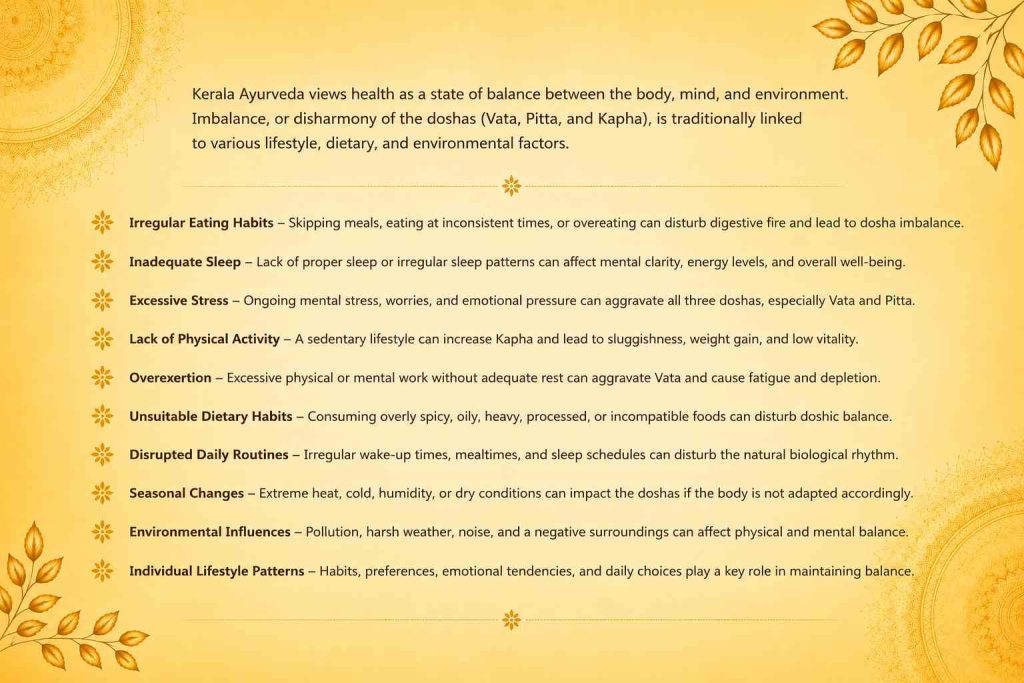
Kerala Ayurveda for Germany traditionally interprets wellness through the concept of maintaining balance.
Ayurvedic philosophy associates imbalance with various lifestyle and environmental factors rather than describing a single universal cause.
Common factors traditionally considered include:
- Irregular eating patterns
- Inadequate sleep
- Excessive stress
- Lack of physical activity
- Overexertion
- Seasonal changes
- Unsuitable dietary habits
- Disrupted daily routines
- Environmental influences
- Individual lifestyle patterns
These are traditional Ayurvedic interpretations rather than modern diagnostic criteria.
Traditional Signs of Dosha Imbalance
Ayurvedic practitioners may evaluate different characteristics when considering a person’s traditional constitutional pattern.
Traditional Vata-Related Signs
These may include irregular routines, feelings of restlessness, dryness, variable appetite, or difficulty maintaining consistency.
Traditional Pitta-Related Signs
Traditional descriptions may include excessive heat, irritability, strong appetite, or sensitivity to particular foods and environmental conditions.
Traditional Kapha-Related Signs
Traditional descriptions may include feelings of heaviness, sluggishness, excessive sleepiness, or reduced motivation.
Persistent or unexplained symptoms should always be medically evaluated rather than attributed automatically to a dosha imbalance.
Kerala Ayurveda for Germany and Seasonal Wellness
Seasonal changes are particularly relevant when transferring traditional wellness practices from one climate to another.
Germany experiences substantial differences between winter and summer. Ayurveda traditionally recommends adjusting food, physical activity, clothing, sleep patterns, and daily routines according to seasonal conditions.
During colder periods, people may naturally prefer warm meals, comfortable indoor activities, and warming routines. Warmer months may call for lighter meals, adequate hydration, and different physical activities.
The objective is not to reproduce Kerala’s seasonal routine exactly but to understand the underlying principle of adapting wellness practices to the surrounding environment.
Ayurvedic Diet and Nutrition
Diet is a major component of Kerala Ayurveda for Germany.
Traditional Ayurvedic nutrition considers food qualities, preparation, season, digestion, and individual constitution.
Common principles include consuming freshly prepared meals where practical, maintaining consistent meal timings, eating mindfully, and selecting a balanced variety of foods.
Ayurvedic cooking commonly incorporates spices such as:
- Turmeric
- Ginger
- Cumin
- Coriander
- Fennel
- Cardamom
- Cinnamon
- Black pepper
These ingredients can form part of normal cooking, but concentrated supplements or medicinal preparations require greater caution.
People taking medication, pregnant individuals, older adults, children, and people with chronic medical conditions should obtain professional guidance before using medicinal herbal products.
Role of Yoga and Meditation
Yoga and meditation can complement the lifestyle philosophy associated with Kerala Ayurveda for Germany.
Yoga may support flexibility, strength, body awareness, and relaxation when practiced appropriately. Meditation and breathing exercises are commonly incorporated into routines intended to support mental calmness and mindfulness.
A balanced routine could include gentle stretching, yoga, breathing exercises, meditation, walking, and adequate periods of rest.
Intensity should always be appropriate for an individual’s age, mobility, fitness, and health status.
How Ayurvedic Wellness Can Fit Modern Life
A common misconception is that following Ayurveda requires making dramatic lifestyle changes.
In practice, some people begin with simple habits.
For example, they might maintain consistent sleep schedules, prepare more meals at home, practice yoga several times per week, dedicate a few minutes to meditation, or establish clearer boundaries between work and rest.
Kerala Ayurveda for Germany can therefore be approached as a framework for creating greater awareness around daily habits rather than as an all-or-nothing lifestyle.
Tips for Following Kerala Ayurvedic Principles Safely
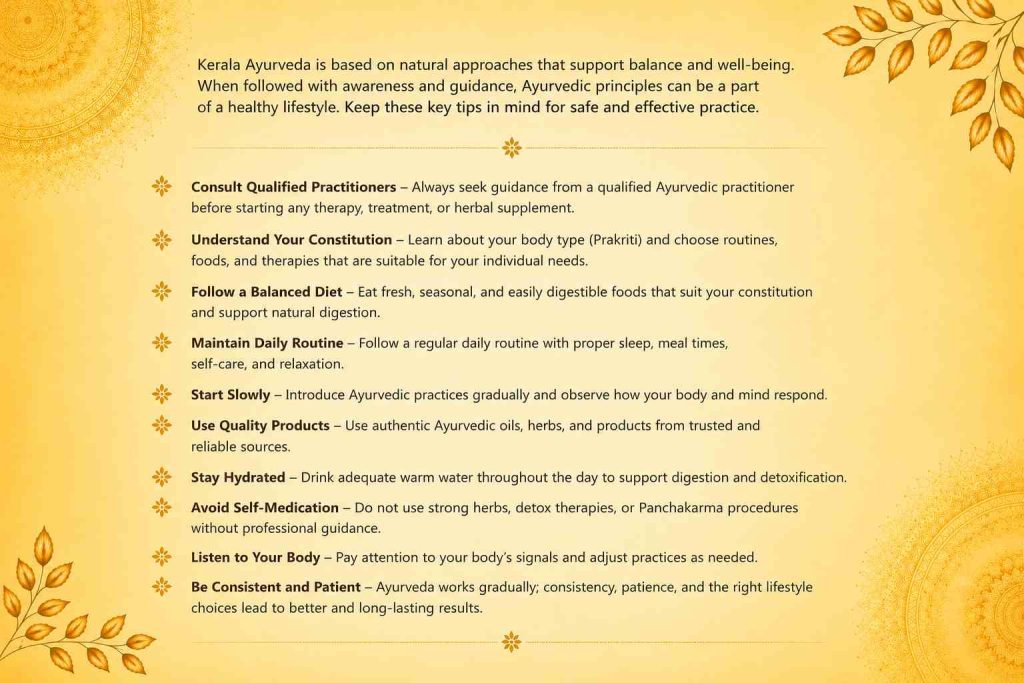
Safety should remain an important consideration when exploring traditional wellness practices.
Useful precautions include:
- Choose appropriately trained practitioners.
- Disclose existing medical conditions.
- Mention all medications and supplements being taken.
- Avoid unknown or unverified herbal products.
- Do not discontinue prescribed medication without medical advice.
- Check ingredients before using herbal preparations.
- Avoid intensive therapies without proper assessment.
- Maintain adequate hydration and nutrition.
- Seek medical care for persistent symptoms.
- Consider local healthcare regulations.
Traditional practices and evidence-based healthcare do not necessarily need to be treated as opposing systems. Complementary wellness practices can be approached responsibly while conventional healthcare remains available when medically necessary.
Who May Be Interested in Kerala Ayurveda for Germany
People may explore Kerala Ayurveda for Germany for many reasons.
Some are interested in traditional Indian wellness systems, while others want to establish healthier daily routines. Some may be particularly interested in Ayurvedic massage, yoga, meditation, mindful eating, or seasonal wellness.
It may appeal to individuals interested in:
- Holistic wellness
- Relaxation practices
- Mindful living
- Traditional Ayurveda
- Yoga and meditation
- Personalized lifestyle routines
- Ayurvedic nutrition
- Seasonal wellness habits
Individual suitability remains important because not every therapy or herbal preparation is appropriate for every person.
Combining Ayurveda With Conventional Healthcare
Ayurveda should not be used as a reason to delay necessary medical evaluation.
Symptoms such as persistent pain, unexplained weight loss, severe fatigue, breathing difficulty, bleeding, high fever, sudden neurological symptoms, or significant changes in normal bodily functions require appropriate medical attention.
People receiving treatment for diagnosed conditions should inform their healthcare providers before introducing herbal preparations or intensive complementary therapies.
This is particularly important because certain herbal ingredients can interact with prescription medications.
Conclusion
Kerala Ayurveda for Germany provides a way to explore traditional Ayurvedic principles through nutrition, daily routines, massage, yoga, meditation, seasonal adaptation, and individualized wellness practices. Its strongest practical value lies in encouraging people to pay closer attention to how everyday habits influence overall well-being.
Anyone considering herbal preparations or specialized Ayurvedic procedures should prioritize product quality, appropriate professional guidance, and compatibility with existing healthcare. With responsible adaptation, the traditional wellness philosophy originating from Thiruvananthapuram can be explored within a modern lifestyle while respecting individual needs and safety. For reliable information about Ayurveda and its traditional practices, visit the World Health Organization (WHO) to learn more about traditional medicine and global health standards.
Frequently Asked Questions
What is Kerala Ayurveda for Germany?
Kerala Ayurveda for Germany refers to the adaptation and exploration of traditional Kerala Ayurvedic wellness principles for people in Germany, including lifestyle routines, nutrition, massage, yoga, meditation, and selected traditional Ayurvedic practices.
What are the main principles of Kerala Ayurveda?
Kerala Ayurveda traditionally focuses on maintaining balance between the body, mind, lifestyle, diet, environment, and individual constitution. It also considers the Ayurvedic concepts of Vata, Pitta, and Kapha when developing personalized wellness routines.
What are the three doshas in Ayurveda?
The three doshas are Vata, Pitta, and Kapha. In traditional Ayurvedic theory, they represent different functional characteristics associated with movement, transformation, stability, and other aspects of physical and mental well-being.
What therapies are commonly associated with Kerala Ayurveda?
Traditional Kerala Ayurveda may include practices such as Abhyanga oil massage, Shirodhara, Kizhi, selected Panchakarma procedures, yoga, meditation, dietary guidance, and the use of certain herbal preparations when appropriate.
Is Kerala Ayurveda suitable for everyone?
Not every Ayurvedic therapy or herbal preparation is suitable for everyone. Individual health conditions, age, medications, allergies, pregnancy, and other factors should be considered before beginning specialized Ayurvedic practices.
Can Ayurvedic herbs be taken with regular medicines?
Some Ayurvedic herbs and supplements may interact with prescription or over-the-counter medicines. People taking medication should consult an appropriately qualified healthcare professional before introducing herbal preparations.
How can beginners follow an Ayurvedic lifestyle?
Beginners can start with simple habits such as maintaining regular sleep and meal times, eating mindfully, staying physically active, practicing relaxation techniques, and gradually learning about Ayurvedic lifestyle principles.
Does Kerala Ayurveda include yoga and meditation?
Yoga and meditation are separate traditional disciplines but are commonly incorporated into Ayurvedic wellness routines. They may complement practices focused on physical activity, relaxation, mindfulness, and overall well-being.
Can Ayurvedic routines be adapted to Germany's climate?
Yes. Traditional Ayurveda emphasizes adapting lifestyle and dietary habits according to seasonal and environmental conditions. Ayurvedic-inspired routines can therefore be adjusted to suit Germany's colder winters, warmer summers, and individual lifestyle needs.
Can Kerala Ayurveda replace conventional medical treatment?
Ayurvedic wellness practices should not be considered an automatic replacement for conventional medical diagnosis or treatment. Persistent or concerning symptoms should be assessed by an appropriately qualified healthcare professional, and prescribed treatment should not be stopped without medical advice.
Call Now
+91 7356 445 553
+91 8921 442 253
We Welcome You
Vandithadam, Pachaloor P.O,
Thiruvananthapuram,
kovalam, kerala India
Sent Email
info@sivasoorya.org





Connect with Kerala’s Leading Ayurveda Centre for treatment enquiries, Panchakarma scheduling, wellness retreat packages, or customised Ayurvedic guidance. Our skilled Ayurvedic specialists and support team assist guests from India and abroad with trusted insights, professional care, and well-defined recommendations for lasting healing.

