Ayurvedic Treatment Hospital in Kerala, India, Ayurveda Resort, Doctor
THE BEST AYURVEDIC TREATMENT CENTRE AND HOSPITAL IN KERALA, INDIA | SINCE 1965

THE BEST AYURVEDIC TREATMENT CENTRE AND HOSPITAL IN KERALA, INDIA | SINCE 1965

7 Powerful Facts: Who Is a Candidate for Ksharasutra Treatment
Choosing the right treatment is one of the most important decisions for anyone dealing with anorectal conditions. If you have been wondering who is a candidate for Ksharasutra treatment, understanding the eligibility criteria can help you make an informed choice. This traditional Ayurvedic surgical technique has gained recognition for treating conditions such as piles, fistula, and fissure with minimal tissue damage. Patients in Thrissur and other regions often seek this procedure because it combines traditional principles with modern clinical practices.
What Is Ksharasutra Treatment
Ksharasutra treatment is an Ayurvedic para-surgical procedure that uses a specially prepared medicated thread to treat certain anorectal disorders. The medicated thread is coated with herbal medicines possessing cleansing, healing, and antimicrobial properties.
The thread is carefully placed in the affected tract or tissue, allowing gradual cutting, drainage, and healing while minimizing damage to surrounding healthy tissues.
It is widely used for:
- Anal fistula
- Hemorrhoids (piles)
- Pilonidal sinus
- Certain chronic sinus tracts
Who Is a Candidate for Ksharasutra Treatment
Understanding who is a candidate for Ksharasutra treatment begins with identifying the underlying medical condition and its severity.
A person may be a suitable candidate if they have:
- Anal fistula
- Recurrent fistula after previous surgery
- Internal or external hemorrhoids
- Chronic anal fissure in selected cases
- Pilonidal sinus
- Chronic sinus tracts
- Persistent discharge from fistula
- Pain during bowel movements
- Swelling around the anal region
Many healthcare providers evaluate the patient’s overall health, medical history, and diagnostic findings before recommending the procedure.
Medical Conditions Commonly Treated
Anal Fistula
One of the most common reasons for considering Ksharasutra treatment is anal fistula. It involves an abnormal tunnel connecting the anal canal to the skin around the anus.
Common symptoms include:
- Continuous discharge
- Pain
- Swelling
- Recurrent abscesses
- Skin irritation
Hemorrhoids (Piles)
Patients with certain grades of hemorrhoids may benefit from Ksharasutra treatment.
Symptoms include:
- Bleeding during bowel movements
- Itching
- Swelling
- Pain
- Prolapse
Pilonidal Sinus
This condition occurs near the tailbone where hair and debris become trapped beneath the skin.
Symptoms include:
- Pain while sitting
- Swelling
- Pus discharge
- Recurrent infection
Chronic Sinus Tracts
Long-standing infected tracts that fail to heal with conventional treatment may also respond well to this procedure.
Signs That You May Be a Candidate for Ksharasutra Treatment
Several symptoms may indicate who is a candidate for Ksharasutra treatment.
These include:
- Persistent anal pain
- Recurrent abscess formation
- Non-healing wounds
- Continuous pus discharge
- Bleeding during bowel movements
- Itching around the anus
- Swelling
- Difficulty sitting comfortably
- Repeated recurrence after surgery
A detailed medical examination helps determine whether this treatment is appropriate.
Who May Not Be an Ideal Candidate
Although many patients can benefit, not everyone is suitable.
Your healthcare provider may recommend alternative treatment if you have:
- Severe uncontrolled diabetes
- Serious bleeding disorders
- Active severe infections
- Advanced inflammatory bowel disease
- Certain complex anorectal cancers
- Poor overall medical fitness for procedures
Proper evaluation is always essential.
Benefits of Ksharasutra Treatment
Patients often choose this treatment because of its advantages.
Some important benefits include:
- Minimally invasive approach
- Lower risk of recurrence in selected conditions
- Gradual healing
- Limited damage to healthy tissues
- Reduced hospital stay
- Faster return to routine activities
- Lower postoperative discomfort in many patients
- Preservation of anal sphincter function
- Suitable for recurrent fistula cases
- Cost-effective in many situations
How Doctors Decide Who Is a Candidate for Ksharasutra Treatment
Healthcare providers usually perform several evaluations before deciding who is a candidate for Ksharasutra treatment.
These may include:
Medical History
The doctor reviews:
- Previous surgeries
- Existing illnesses
- Current medications
- Duration of symptoms
Physical Examination
A careful examination identifies:
- External openings
- Swelling
- Tenderness
- Infection
Imaging Studies
When required, investigations may include:
- MRI
- Ultrasound
- Fistulogram
- Blood investigations
These help understand the extent of disease.
How the Procedure Is Performed
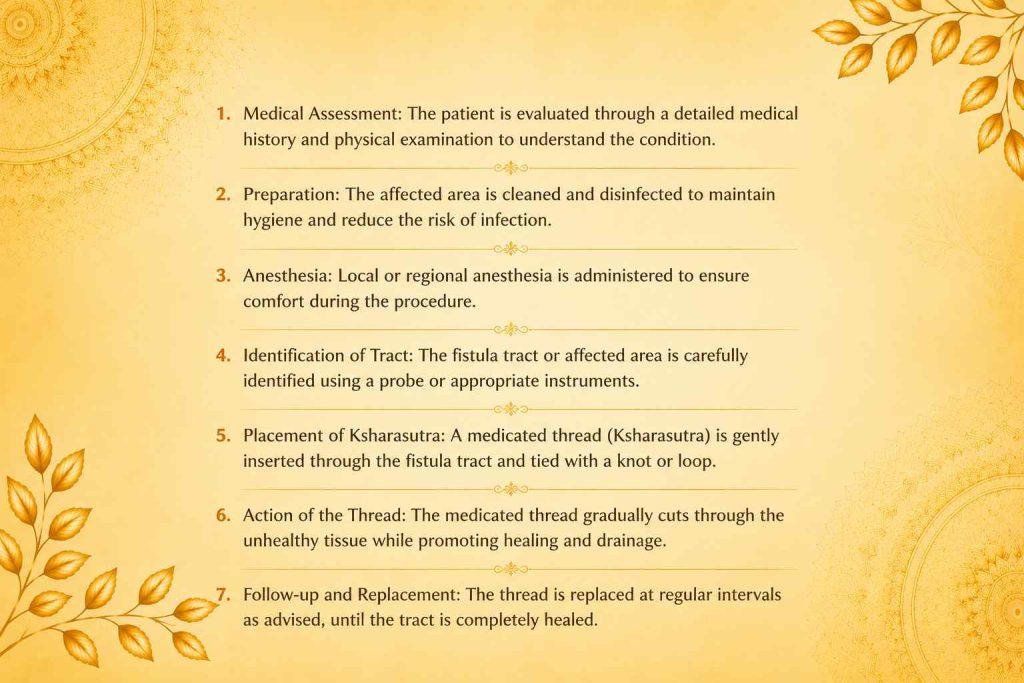
The exact steps may vary depending on the condition.
Generally, the procedure includes:
- Medical assessment
- Preparation of the affected area
- Local or regional anesthesia
- Placement of medicated Ksharasutra thread
- Regular thread replacement at scheduled intervals
- Monitoring healing progress
The thread gradually cuts through unhealthy tissue while promoting healing.
Recovery After Ksharasutra Treatment
Recovery varies depending on the severity of disease.
Patients are usually advised to:
- Keep the area clean
- Take prescribed medicines
- Attend follow-up visits
- Maintain soft bowel movements
- Drink enough water
- Eat fiber-rich foods
- Avoid prolonged sitting
- Maintain personal hygiene
Many people can resume light activities within a short period, depending on individual recovery.
Lifestyle Tips for Better Healing

Good lifestyle habits improve recovery.
Helpful tips include:
- Eat fruits and vegetables daily
- Increase dietary fiber
- Stay hydrated
- Avoid constipation
- Exercise regularly
- Maintain healthy body weight
- Avoid prolonged sitting
- Practice good anal hygiene
- Follow medical advice carefully
Possible Risks and Complications
Like any medical procedure, Ksharasutra treatment carries some risks.
Possible complications include:
- Mild pain
- Temporary bleeding
- Infection
- Delayed healing
- Local discomfort
- Swelling
Regular follow-up helps identify and manage these issues early.
Comparing Ksharasutra Treatment with Conventional Surgery
| Feature | Ksharasutra Treatment | Conventional Surgery |
|---|---|---|
| Tissue Damage | Usually minimal | May be greater |
| Hospital Stay | Often shorter | May be longer |
| Recovery | Gradual | Depends on surgery |
| Recurrence | Lower in selected fistula cases | Varies |
| Sphincter Preservation | Better in many cases | Depends on procedure |
Preparing for the Procedure
Preparation usually includes:
- Medical consultation
- Physical examination
- Blood tests
- Imaging if needed
- Medication review
- Dietary advice
- Bowel preparation if recommended
Following instructions improves treatment outcomes.
Questions to Ask Before Treatment
Before undergoing the procedure, consider asking:
- Is my condition suitable?
- What results can I expect?
- How many follow-up visits are needed?
- What precautions should I take?
- When can I return to work?
- Are there any alternatives?
- What dietary changes are recommended?
When Should You Consult a Healthcare Professional
Seek medical evaluation if you experience:
- Persistent anal pain
- Bleeding
- Recurrent swelling
- Pus discharge
- Fever with anal infection
- Difficulty passing stools
- Recurring fistula symptoms
Early treatment often prevents complications.
Conclusion
Understanding who is a candidate for Ksharasutra treatment helps patients choose the most appropriate management for anorectal disorders. Suitable candidates typically include individuals with anal fistula, selected hemorrhoids, pilonidal sinus, or chronic sinus tracts after proper medical evaluation. A thorough assessment determines whether this minimally invasive Ayurvedic procedure is the right option for each individual. If you are considering who is a candidate for Ksharasutra treatment, consulting a qualified healthcare professional in Thrissur can help you receive personalized guidance and appropriate care. To better understand who is suitable for Ksharasutra treatment, you can explore peer-reviewed clinical research on Ksharasutra therapy available through PubMed .
Frequently Asked Questions
Who is a candidate for Ksharasutra treatment
People with anal fistula, selected hemorrhoids, pilonidal sinus, or chronic sinus tracts may be suitable candidates after medical evaluation.
Is Ksharasutra treatment painful
Most patients experience mild discomfort, which is usually manageable with prescribed medications.
How long does recovery take
Recovery varies depending on the condition and severity, but many patients resume routine activities within a relatively short period.
Can recurrent fistula be treated with Ksharasutra
Yes. It is commonly used for recurrent anal fistula in suitable patients.
Is hospitalization required
Many patients require only a short hospital stay or day-care procedure, depending on their condition.
How often is the medicated thread changed
The thread is generally replaced at regular follow-up visits as advised by the treating healthcare provider.
Is Ksharasutra treatment safe
When performed by trained professionals and in appropriately selected patients, it is considered a safe treatment option.
What foods should I eat after treatment
A high-fiber diet, fruits, vegetables, whole grains, and adequate water intake are generally recommended.
Can I return to work after Ksharasutra treatment
Many patients can return to light work within a few days, depending on individual recovery and medical advice.
Does Ksharasutra treatment prevent recurrence
It has shown lower recurrence rates in selected anorectal conditions, particularly anal fistula, when combined with proper follow-up care.
Call Now
+91 7356 445 553
+91 8921 442 253
We Welcome You
Vandithadam, Pachaloor P.O,
Thiruvananthapuram,
kovalam, kerala India
Sent Email
info@sivasoorya.org





Connect with Kerala’s Leading Ayurveda Centre for treatment enquiries, Panchakarma scheduling, wellness retreat packages, or customised Ayurvedic guidance. Our skilled Ayurvedic specialists and support team assist guests from India and abroad with trusted insights, professional care, and well-defined recommendations for lasting healing.

