Ayurvedic Treatment Hospital in Kerala, India, Ayurveda Resort, Doctor
THE BEST AYURVEDIC TREATMENT CENTRE AND HOSPITAL IN KERALA, INDIA | SINCE 1965

THE BEST AYURVEDIC TREATMENT CENTRE AND HOSPITAL IN KERALA, INDIA | SINCE 1965

HOW CAN GERMAN PATIENTS PREPARE BEFORE STARTING AYURVEDA?
Knowing how can German patients prepare before starting Ayurveda can make an Ayurveda consultation and treatment experience more organized, comfortable, and informed. For international patients travelling from Germany to an Ayurvedic centre in Thiruvananthapuram, preparation is especially useful because treatment may involve changes in daily routine, food, therapies, medicines, and activity levels.
Ayurveda is traditionally based on an individualized approach. Therefore, preparation should begin before arrival rather than only after treatment starts. Patients can collect their medical information, understand their treatment goals, discuss current medicines, organize travel documents, and learn what to expect during an Ayurvedic consultation.
Why Preparation Matters Before Starting Ayurveda
Understanding how can German patients prepare before starting Ayurveda begins with recognizing why preparation is important.
An Ayurvedic programme may be different from a normal holiday or wellness visit. Depending on the individual’s needs, it may include consultations, dietary recommendations, massage therapies, yoga, meditation, lifestyle guidance, or other traditional procedures.
Good preparation can help patients:
- Communicate their health history clearly
- Explain their treatment goals
- Bring relevant medical documents
- Discuss current medicines and supplements
- Understand dietary recommendations
- Prepare mentally for changes in routine
- Organize travel and accommodation details
- Ask informed questions before treatment begins
- Reduce avoidable confusion during the stay
Preparation does not mean that a patient needs to understand Ayurveda completely before arrival. A qualified practitioner should explain the recommended approach and determine which traditional practices are appropriate.
For international visitors, understanding how can German patients prepare before starting Ayurveda involves more than arranging travel. It also means preparing medical information, reviewing current medicines, understanding Ayurvedic therapies, planning dietary needs, and setting realistic wellness goals. Proper preparation can help patients communicate clearly with practitioners and approach their Ayurvedic experience with greater confidence and awareness.
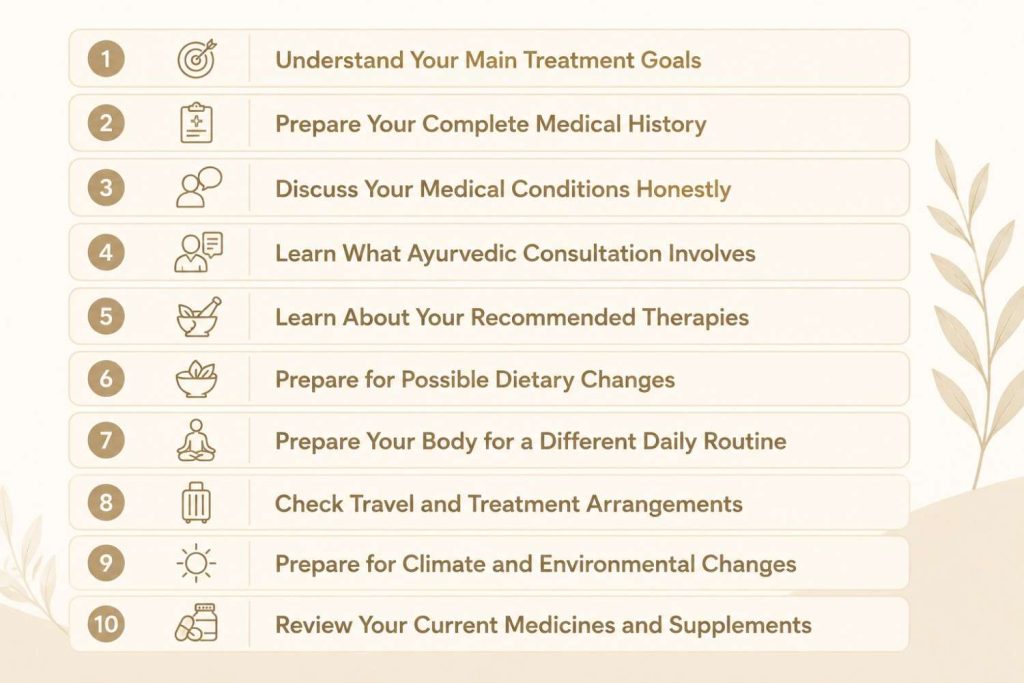
1. Understand Your Main Treatment Goals
The first step in learning how can German patients prepare before starting Ayurveda is to identify why they are considering Ayurvedic care.
Patients may be interested in Ayurveda for different reasons. Some may want general wellness support, while others may be interested in relaxation, lifestyle improvement, traditional therapies, yoga, or complementary care alongside conventional treatment.
Before travelling, write down the main reasons for seeking Ayurvedic care.
For example:
- What do I hope to improve?
- What concerns me most about my current routine?
- What type of wellness support am I looking for?
- Am I interested in relaxation or traditional therapies?
- Am I already receiving conventional medical care?
Having clear goals makes the initial consultation more productive.
Avoid Expecting One Treatment to Solve Everything
Ayurveda is traditionally individualized. A practitioner may recommend a combination of lifestyle measures rather than one single therapy.
Patients should therefore avoid arriving with the expectation that a specific procedure will automatically produce a particular result.
A realistic approach is to remain open to professional assessment and understand the reasoning behind the proposed programme.
2. Prepare Your Complete Medical History
One of the most important parts of how can German patients prepare before starting Ayurveda is organizing medical information before the first consultation.
International patients should consider carrying relevant medical records, particularly when they have existing health conditions or are undergoing treatment.
Useful documents may include:
- Recent medical reports
- Previous diagnostic reports
- Imaging reports where relevant
- Laboratory test results
- Prescription information
- Current medication lists
- Allergy information
- Previous treatment summaries
- Information about previous surgeries
- Relevant dietary restrictions
Documents in German may be easier for the healthcare team to understand when accompanied by a clear English summary or appropriate translation.
Create a Medication List
Write down every medicine and supplement currently being used.
Include:
- Medicine name
- Strength or dosage
- How often it is taken
- Reason for taking it
- Prescribing doctor’s information when appropriate
This information is particularly important because some herbal preparations may interact with conventional medicines.
Never stop a prescribed medicine simply because an Ayurvedic programme has started. Changes to conventional medication should be discussed with the appropriate medical professional.
3. Discuss Your Medical Conditions Honestly
Another essential part of how can German patients prepare before starting Ayurveda is open communication.
Patients should tell the practitioner about relevant existing health conditions, previous procedures, allergies, and ongoing treatments.
Do not leave out information because it seems unrelated to Ayurveda.
The practitioner may need to understand:
- Previous surgeries
- Long-term medicines
- Allergies
- Dietary restrictions
- Previous reactions to treatments
- Current symptoms
- Existing diagnoses
- Pregnancy or pregnancy planning where relevant
- Other complementary therapies being used
Accurate information allows the practitioner to consider whether a traditional therapy is appropriate.
4. Learn What Ayurvedic Consultation Involves
Before travelling, German patients can research the basic structure of an Ayurvedic consultation.
A consultation may involve questions about lifestyle, food habits, sleep, activity, digestion, stress, previous health concerns, and daily routines. Traditional Ayurvedic assessment may also consider constitutional concepts such as Vata, Pitta, and Kapha.
These concepts belong to Ayurvedic theory and should not be confused with modern medical diagnoses.
The practitioner may use the consultation to develop an individualized wellness or treatment plan.
Prepare Questions in Advance
Writing questions before the appointment can be helpful.
Consider asking:
- What is the purpose of my recommended treatment?
- How long might the programme take?
- What should I eat during treatment?
- Should I continue my regular medicines?
- Are there activities I should avoid?
- What should I expect after each therapy?
- Are there any possible precautions?
- What should I do if I feel unwell?
A prepared question list can make the consultation easier.
5. Learn About Your Recommended Therapies
Patients should understand the basic purpose of any Ayurvedic procedure recommended to them.
Traditional Kerala Ayurveda may include therapies such as Abhyanga, Shirodhara, Kizhi, or Panchakarma. However, not every procedure is appropriate for every person.
Abhyanga
Abhyanga is traditionally an Ayurvedic oil massage. It is commonly associated with relaxation and traditional wellness routines.
Patients should inform the practitioner about skin sensitivities, allergies, injuries, or other relevant concerns before the procedure.
Shirodhara
Shirodhara traditionally involves the controlled application of liquid over the forehead for a specific period.
Patients should understand how the procedure is performed and communicate any concerns before treatment.
Kizhi
Kizhi traditionally involves warmed herbal bundles used during a therapeutic massage or application.
Temperature sensitivity, skin conditions, and other individual factors should be discussed beforehand.
Panchakarma
Panchakarma refers to a group of classical Ayurvedic procedures. Some procedures can be intensive and therefore require careful assessment.
Patients should not assume that a Panchakarma programme is automatically suitable simply because it is a traditional Ayurvedic treatment.
6. Prepare for Possible Dietary Changes
Diet is often an important part of Ayurvedic programmes. Therefore, how can German patients prepare before starting Ayurveda also involves understanding that food habits may change during treatment.
A practitioner may recommend modifications based on the individual’s traditional Ayurvedic assessment and treatment plan.
Patients can prepare by being ready to:
- Follow regular meal timings
- Eat freshly prepared foods where practical
- Reduce unnecessary processed foods
- Drink adequate fluids
- Follow individual dietary recommendations
- Inform the centre about food allergies
- Mention vegetarian or other dietary preferences
Do Not Make Extreme Dietary Changes Before Consultation
Patients do not necessarily need to begin a strict Ayurvedic diet before meeting the practitioner.
It is generally more useful to maintain a reasonably normal routine and provide accurate information about existing eating habits.
This allows the practitioner to understand the patient’s usual lifestyle before making recommendations.
7. Prepare Your Body for a Different Daily Routine
Learning how can German patients prepare before starting Ayurveda also means preparing for possible changes in daily activities.
An Ayurvedic programme may encourage regular sleep, appropriate movement, relaxation, mindful eating, and reduced unnecessary stress.
Patients who normally have highly irregular schedules may benefit from gradually establishing more consistent routines before travelling.
Helpful preparation can include:
- Maintaining regular sleep times
- Eating meals at predictable times
- Staying adequately hydrated
- Getting appropriate physical activity
- Reducing excessive late-night screen use
- Allowing sufficient time for rest
- Avoiding unnecessary overexertion
The objective is not to completely change your lifestyle overnight.
Small, manageable changes can make the transition easier.
8. Check Travel and Treatment Arrangements
International patients should organize practical details before beginning treatment.
Important preparations may include:
- Passport and travel documents
- Visa requirements where applicable
- Travel insurance
- Medical insurance information
- Accommodation arrangements
- Airport transportation
- Clinic contact details
- Emergency contact information
- Copies of medical records
- Prescription information
Keep important documents available both digitally and in printed form where practical.
Patients should also confirm appointment times and understand whether the treatment programme requires a particular length of stay.
9. Prepare for Climate and Environmental Changes
Patients travelling from Germany to India may experience a different climate and daily environment.
Weather conditions can affect comfort, clothing choices, hydration needs, and activity levels.
Before travelling, consider packing:
- Comfortable clothing
- Suitable footwear
- Personal hygiene items
- Necessary prescribed medicines
- Copies of health documents
- Appropriate sun protection
- Reusable water bottle where suitable
- Personal items needed for longer stays
Patients should follow professional advice regarding hydration and activity, particularly if they have medical conditions affected by heat or changes in fluid balance.
10. Review Your Current Medicines and Supplements
Medication safety is an important part of how can German patients prepare before starting Ayurveda.
Some patients may already take prescription medicines, over-the-counter products, vitamins, minerals, or herbal supplements.
Bring a complete list to the consultation.
Do not assume that two products are safe together simply because one of them is labelled natural.
Herbal products can have pharmacological effects and may interact with conventional medicines.
Important Safety Questions
Before using any herbal preparation, ask:
- What are the ingredients?
- What is the recommended amount?
- How long should it be used?
- Could it interact with my medicines?
- Are there known precautions?
- Is the product from a reliable source?
- Who should avoid it?
If you take regular medication, discuss any planned herbal products with an appropriate healthcare professional.
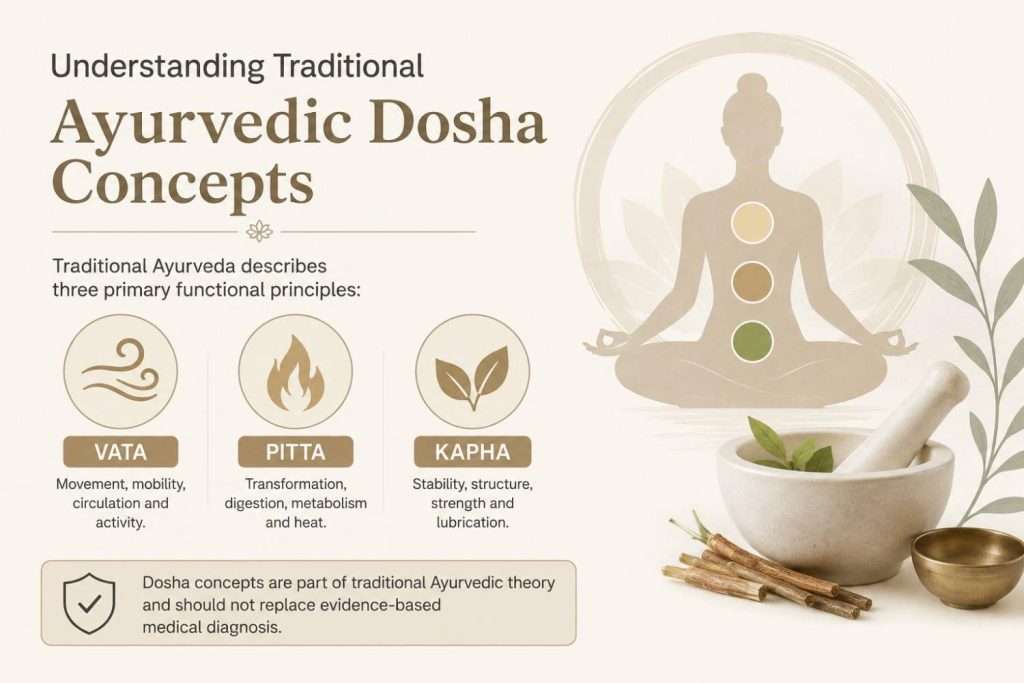
Understanding Traditional Ayurvedic Dosha Concepts
Another area German patients may encounter during an Ayurvedic consultation is the concept of doshas.
Traditional Ayurveda describes three primary functional principles:
Vata
Vata is traditionally associated with movement and functions involving mobility, circulation, and activity.
Pitta
Pitta is traditionally associated with transformation, digestion, metabolism, and heat.
Kapha
Kapha is traditionally associated with stability, structure, strength, and lubrication.
Patients do not need to diagnose their own dosha before treatment.
A practitioner should explain how these traditional concepts relate to the proposed programme.
It is also important to understand that dosha concepts are part of traditional Ayurvedic theory and should not replace evidence-based medical diagnosis.
Benefits of Preparing Before Ayurvedic Treatment
Good preparation can provide several practical benefits.
Better Communication
A complete health history helps patients communicate more clearly with practitioners.
More Organized Treatment
Understanding appointments, therapies, meals, and daily routines can make the overall experience easier to manage.
Greater Treatment Awareness
Patients who ask questions are more likely to understand why particular traditional practices are being recommended.
Improved Safety
Sharing information about medicines, allergies, and existing conditions helps healthcare professionals identify potential precautions.
More Comfortable Travel
Organizing documents, accommodation, transport, and personal medicines before arrival can reduce unnecessary stress.
What German Patients Should Avoid Before Starting Ayurveda
Knowing what not to do is also important.
Avoid:
- Stopping prescribed medication without medical advice
- Starting multiple herbal supplements immediately
- Following extreme diets without professional guidance
- Assuming natural products are always risk-free
- Hiding existing medical conditions
- Ignoring allergies
- Beginning intensive exercise suddenly
- Expecting guaranteed outcomes
- Replacing necessary medical care with complementary treatment
- Choosing therapies without proper assessment
Ayurveda can be explored as a traditional healthcare and wellness system, but individual safety should remain the priority.
A Simple Preparation Checklist
Before travelling, German patients can use this checklist:
Medical Preparation
Collect relevant medical reports
Prepare a current medication list
Note allergies and dietary restrictions
Record important previous treatments
Prepare questions for the practitioner
Travel Preparation
Check travel documents
Confirm accommodation
Organize transportation
Keep emergency contacts available
Carry necessary prescribed medicines
Treatment Preparation
Understand the consultation process
Ask about recommended therapies
Discuss dietary requirements
Ask about treatment duration
Understand important precautions
Personal Preparation
Maintain a regular sleep routine
Stay adequately hydrated
Avoid unnecessary overexertion
Be prepared for routine changes
Keep an open but realistic mindset
Conclusion
Understanding how can German patients prepare before starting Ayurveda can make the transition into an Ayurvedic programme more organized and informed. The most useful preparation includes gathering medical records, preparing a medication list, communicating health conditions, identifying personal goals, learning about recommended therapies, organizing travel details, and being prepared for possible changes in diet and daily routine.
Patients should approach traditional Ayurvedic care with realistic expectations and should not discontinue necessary conventional treatment without appropriate medical advice. Herbal preparations and intensive therapies also require careful consideration, particularly when prescription medicines or existing medical conditions are involved.
For German patients planning an Ayurvedic experience in Thiruvananthapuram, thoughtful preparation can support clearer communication and a more comfortable treatment journey. By asking questions, sharing accurate health information, and following appropriate professional guidance, patients can approach Ayurveda in a responsible and informed manner.With thoughtful preparation, you can spend less time worrying about luggage and more time focusing on your Ayurvedic wellness experience.To learn more about Ayurveda and holistic wellness practices, visit National Center for Complementary and Integrative Health
FREQUENTLY ASKED QUESTIONS
Call Now
+91 7356 445 553
+91 8921 442 253
We Welcome You
Vandithadam, Pachaloor P.O,
Thiruvananthapuram,
kovalam, kerala India
Sent Email
info@sivasoorya.org





Connect with Kerala’s Leading Ayurveda Centre for treatment enquiries, Panchakarma scheduling, wellness retreat packages, or customised Ayurvedic guidance. Our skilled Ayurvedic specialists and support team assist guests from India and abroad with trusted insights, professional care, and well-defined recommendations for lasting healing.

