Ayurvedic Treatment Hospital in Kerala, India, Ayurveda Resort, Doctor
THE BEST AYURVEDIC TREATMENT CENTRE AND HOSPITAL IN KERALA, INDIA | SINCE 1965

THE BEST AYURVEDIC TREATMENT CENTRE AND HOSPITAL IN KERALA, INDIA | SINCE 1965

WHAT FOODS SHOULD YOU EAT DURING AYURVEDA TREATMENT: Best Food Guide
Ayurveda is a holistic system of healing that focuses on balancing the body, mind, and spirit. Along with herbal medicines and therapeutic procedures, food plays an essential role in recovery and overall wellness. Understanding WHAT FOODS SHOULD YOU EAT DURING AYURVEDA TREATMENT can help improve digestion, support the body’s natural healing process, and enhance the effectiveness of Ayurvedic therapies. Whether you are undergoing treatment for a specific health condition or simply following an Ayurvedic lifestyle, choosing the right foods is one of the most important steps toward better health. If you are receiving Ayurvedic care in Thiruvananthapuram, following the recommended dietary guidelines can help you achieve better results.
Unlike modern diet plans that often focus only on calories or nutrients, Ayurveda emphasizes eating according to your digestive strength (Agni), body constitution (Dosha), season, and health condition. This personalized approach helps nourish the body while preventing further imbalance.
Why Food Is Important During Ayurveda Treatment
One of the key principles of Ayurveda is that food is medicine. Proper nutrition supports digestion, strengthens immunity, removes toxins, and restores balance.
When considering WHAT FOODS SHOULD YOU EAT DURING AYURVEDA TREATMENT, remember that every meal should promote healing rather than burden the digestive system.
Benefits of eating the right Ayurvedic foods include:
- Better digestion
- Improved nutrient absorption
- Increased energy levels
- Faster recovery
- Reduced inflammation
- Stronger immunity
- Balanced metabolism
- Enhanced mental clarity
Understanding the Ayurvedic Concept of Digestion
Ayurveda believes that strong digestion is the foundation of good health.
The digestive fire, known as Agni, determines how efficiently your body processes food.
If digestion becomes weak:
- Toxins (Ama) accumulate
- Energy decreases
- Immunity weakens
- Diseases develop more easily
Choosing the correct foods helps strengthen Agni and prevent toxin buildup.
WHAT FOODS SHOULD YOU EAT DURING AYURVEDA TREATMENT
The answer depends on your individual health condition and body type, but several foods are generally recommended because they are easy to digest and naturally healing.
Warm, Freshly Cooked Foods
Freshly prepared meals are highly valued in Ayurveda.
These foods:
- Improve digestion
- Preserve nutrients
- Reduce digestive stress
- Support healing
Examples include:
- Vegetable soups
- Khichdi
- Steamed vegetables
- Rice with lentils
- Soft cooked grains
Avoid refrigerated leftovers whenever possible.
Whole Grains
Whole grains provide steady energy while supporting digestion.
Healthy choices include:
- Rice
- Barley
- Oats
- Millet
- Quinoa
- Wheat (if suitable)
These grains are generally lighter than refined products and help maintain digestive balance.
Fresh Seasonal Vegetables
Seasonal vegetables are considered highly nourishing in Ayurveda.
Recommended vegetables include:
- Pumpkin
- Bottle gourd
- Ridge gourd
- Ash gourd
- Carrots
- Beetroot
- Spinach
- Green beans
- Cabbage
- Zucchini
Cooking vegetables makes them easier to digest than eating them raw during treatment.
Fresh Fruits
Fresh fruits provide natural vitamins, minerals, antioxidants, and hydration.
Good options include:
- Apples
- Pears
- Papaya
- Pomegranate
- Grapes
- Mango (seasonally)
- Banana (in moderation)
- Sweet oranges
Eat fruits separately from heavy meals whenever possible.
Easily Digestible Proteins
Protein supports tissue repair and recovery.
Healthy Ayurvedic protein sources include:
- Moong dal
- Red lentils
- Split lentils
- Chickpeas (well cooked)
- Kidney beans (moderately)
- Fresh homemade paneer
- Organic tofu
Protein should be easy to digest rather than excessively heavy.
Healthy Dairy
Ayurveda recommends fresh dairy products when digestion is strong.
Suitable choices include:
- Warm milk
- Homemade buttermilk
- Fresh curd (during daytime)
- Ghee
Avoid processed dairy products containing additives.
Ghee
Ghee is one of the most respected foods in Ayurveda.
Benefits include:
- Lubricates tissues
- Supports digestion
- Improves nutrient absorption
- Nourishes the brain
- Reduces inflammation
Small amounts are generally sufficient.
Healing Spices
Spices improve digestion and stimulate metabolism.
Common Ayurvedic spices include:
- Turmeric
- Cumin
- Coriander
- Fennel
- Ginger
- Black pepper
- Cardamom
- Cinnamon
These spices are often added according to individual needs.
Herbal Teas
Warm herbal drinks support detoxification.
Popular options include:
- Ginger tea
- Tulsi tea
- Cumin-coriander-fennel tea
- Cinnamon tea
- Licorice tea
- Coriander seed tea
Avoid excessive caffeine.
Healthy Oils
Healthy fats are important for healing.
Recommended oils include:
- Sesame oil
- Coconut oil
- Cow ghee
- Olive oil (moderately)
Deep-fried foods should still be limited.
Foods to Avoid During Ayurveda Treatment
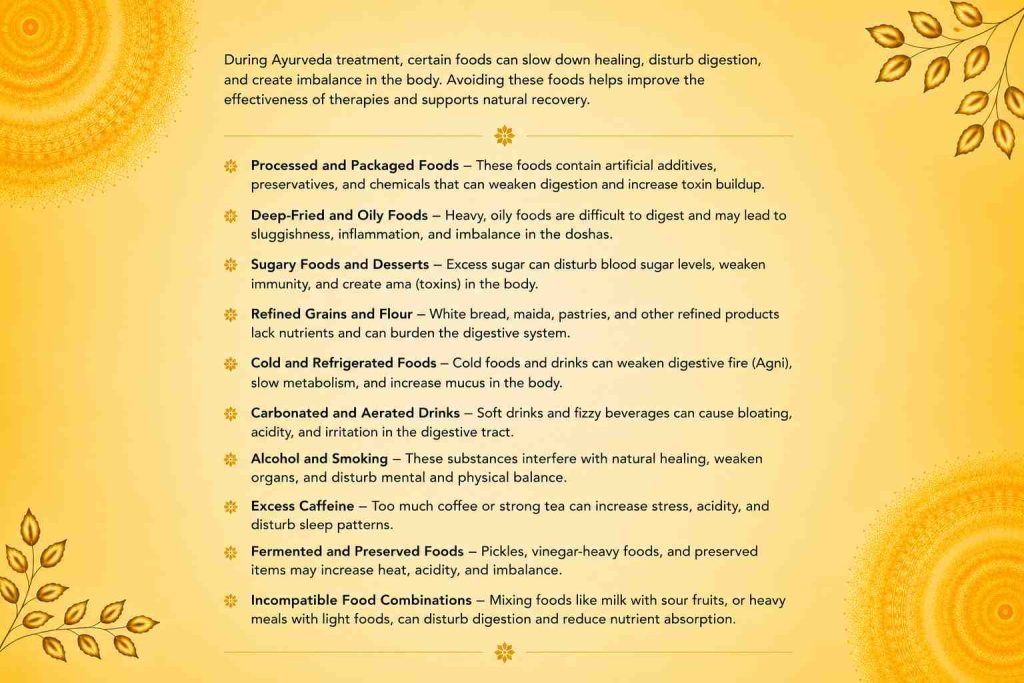
Knowing WHAT FOODS SHOULD YOU EAT DURING AYURVEDA TREATMENT also means understanding what should be avoided.
Common foods to limit include:
- Processed foods
- Fast food
- Deep-fried snacks
- Sugary desserts
- Artificial sweeteners
- Carbonated beverages
- Excess coffee
- Alcohol
- Frozen meals
- Preserved foods
- Excess cheese
- Refined flour products
These foods may weaken digestion and slow healing.
Diet According to Your Dosha
Vata Dosha
People with Vata imbalance generally benefit from:
- Warm soups
- Cooked grains
- Ghee
- Root vegetables
- Warm milk
- Sesame oil
Avoid:
- Cold foods
- Dry snacks
- Excess salads
Pitta Dosha
Cooling foods are preferred.
Examples:
- Cucumber
- Coconut
- Sweet fruits
- Leafy vegetables
- Rice
- Coriander
Avoid:
- Spicy foods
- Excess chili
- Fried foods
- Alcohol
Kapha Dosha
Kapha benefits from lighter meals.
Recommended:
- Barley
- Millet
- Green vegetables
- Ginger
- Black pepper
- Lentils
Avoid:
- Heavy dairy
- Sweets
- Fried foods
- Excess rice
Best Meal Ideas During Ayurveda Treatment
Breakfast
- Warm porridge
- Stewed apples
- Herbal tea
- Oats with cinnamon
Lunch
- Khichdi
- Vegetable curry
- Rice
- Lentil soup
Evening Snack
- Herbal tea
- Roasted seeds
- Fresh fruit
Dinner
- Vegetable soup
- Steamed vegetables
- Moong dal
- Soft rice
Dinner should ideally be light and eaten early.
Lifestyle Tips Along with an Ayurvedic Diet
Following WHAT FOODS SHOULD YOU EAT DURING AYURVEDA TREATMENT is most effective when combined with healthy habits.
Consider these tips:
- Eat at regular times.
- Avoid overeating.
- Eat mindfully.
- Chew food thoroughly.
- Drink warm water.
- Sleep adequately.
- Practice gentle yoga.
- Meditate daily.
- Avoid stress during meals.
- Stay physically active.
Common Mistakes to Avoid
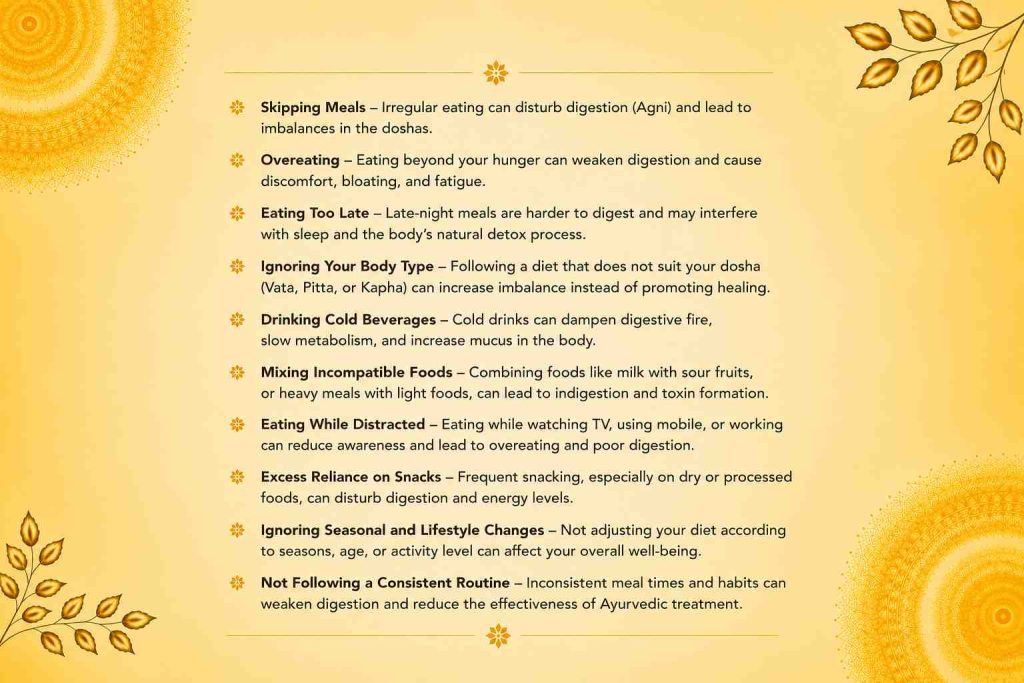
Many people unknowingly reduce the effectiveness of Ayurvedic treatment.
Avoid:
- Skipping meals
- Eating too late
- Consuming cold beverages
- Mixing incompatible foods
- Eating while distracted
- Overeating healthy foods
- Ignoring hunger cues
Can Ayurveda Diet Help Different Health Conditions
A balanced Ayurvedic diet may support people managing various health concerns, including:
- Digestive discomfort
- Joint pain
- Low immunity
- Stress
- Fatigue
- Skin problems
- Weight management
- Metabolic imbalance
Diet recommendations should always be individualized based on overall health and Ayurvedic assessment.
Long-Term Benefits of Following Ayurvedic Dietary Principles
Consistently following Ayurvedic nutrition may provide several long-term advantages:
- Better digestive health
- Improved immunity
- Healthy metabolism
- Balanced energy
- Better sleep quality
- Clearer skin
- Improved gut health
- Reduced toxin accumulation
- Better mental well-being
- Sustainable healthy lifestyle
Conclusion
Understanding is an important step toward achieving better health naturally. Freshly prepared meals, whole grains, seasonal vegetables, fruits, healthy fats, digestive spices, and balanced eating habits all contribute to successful Ayurvedic healing. At the same time, avoiding processed foods, excessive sugar, fried items, and cold beverages helps support your body’s natural recovery process. Since Ayurveda emphasizes personalized nutrition, dietary recommendations may vary according to your body constitution and current health condition. If you are following Ayurvedic therapy in Thiruvananthapuram, combining professional guidance with mindful food choices can help maximize the benefits of your treatment and support long-term wellness. For more information about Ayurvedic nutrition and healthy eating practices, visit the World Health Organization (WHO) page on healthy diets .
Frequently Asked Questions
What foods should you eat during Ayurveda treatment?
During Ayurveda treatment, freshly cooked meals, whole grains, seasonal vegetables, fruits, lentils, healthy fats like ghee, and mild digestive spices are generally recommended to support healing and maintain digestive balance.
Why is diet important during Ayurveda treatment?
Diet is considered an essential part of Ayurveda because it supports digestion, strengthens immunity, helps remove toxins, and enhances the effectiveness of Ayurvedic therapies.
Can I eat raw vegetables during Ayurveda treatment?
Cooked vegetables are usually preferred over raw vegetables because they are easier to digest and place less strain on the digestive system during treatment.
Is rice allowed during Ayurveda treatment?
Yes. Rice is commonly recommended in Ayurveda because it is light, easy to digest, and provides a good source of energy when combined with other nutritious foods.
Can I drink coffee or tea during Ayurveda treatment?
Herbal teas are generally preferred during Ayurveda treatment. Coffee and caffeinated beverages are usually consumed in moderation or limited based on individual health needs.
What foods should I avoid during Ayurveda treatment?
Processed foods, deep-fried snacks, excessive sugar, alcohol, carbonated drinks, frozen foods, and heavily preserved products are generally avoided because they may weaken digestion.
Does Ayurveda recommend eating fresh food every day?
Yes. Ayurveda emphasizes eating freshly prepared meals because they are believed to provide better nutrition, support digestion, and promote overall well-being.
Can I consume dairy products during Ayurveda treatment?
Fresh dairy products such as warm milk, homemade buttermilk, and small amounts of ghee may be recommended for some individuals, depending on their digestion and body constitution.
How does drinking warm water help during Ayurveda treatment?
Warm water is commonly recommended because it supports digestion, helps maintain hydration, and may assist the body's natural cleansing processes.
Should my Ayurvedic diet be personalized?
Yes. Ayurvedic dietary recommendations are typically personalized based on your body constitution (Dosha), digestive strength, health condition, and the specific treatment you are receiving.
Call Now
+91 7356 445 553
+91 8921 442 253
We Welcome You
Vandithadam, Pachaloor P.O,
Thiruvananthapuram,
kovalam, kerala India
Sent Email
info@sivasoorya.org



Connect with Kerala’s Leading Ayurveda Centre for treatment enquiries, Panchakarma scheduling, wellness retreat packages, or customised Ayurvedic guidance. Our skilled Ayurvedic specialists and support team assist guests from India and abroad with trusted insights, professional care, and well-defined recommendations for lasting healing.

