Ayurvedic Treatment Hospital in Kerala, India, Ayurveda Resort, Doctor
THE BEST AYURVEDIC TREATMENT CENTRE AND HOSPITAL IN KERALA, INDIA | SINCE 1965
THE BEST AYURVEDIC TREATMENT CENTRE AND HOSPITAL IN KERALA, INDIA | SINCE 1965

7 Important Facts About Raktamokshana Treatment in Kerala
Raktamokshana Treatment in Kerala is one of the traditional Panchakarma therapies explained in Ayurveda for selected conditions related to blood impurity, skin concerns, inflammation, and dosha imbalance. It is a specialized procedure and should always be performed only under the supervision of a qualified Ayurvedic doctor.
Kerala Ayurveda is known for its personalized treatment approach, traditional herbal therapies, doctor-guided Panchakarma programs, Ayurvedic meals, yoga, meditation, and holistic wellness routines. The main Ayurveda page also highlights personalized Panchakarma therapies, experienced Ayurvedic doctors, authentic Kerala Ayurveda methods, and wellness programs for guests from India and abroad.
Raktamokshana is not a general wellness therapy for everyone. It is selected only after proper Ayurvedic evaluation. The doctor studies the person’s body constitution, symptoms, strength, medical history, digestion, and overall health before deciding whether this therapy is suitable.
What Is Raktamokshana Treatment in Kerala?
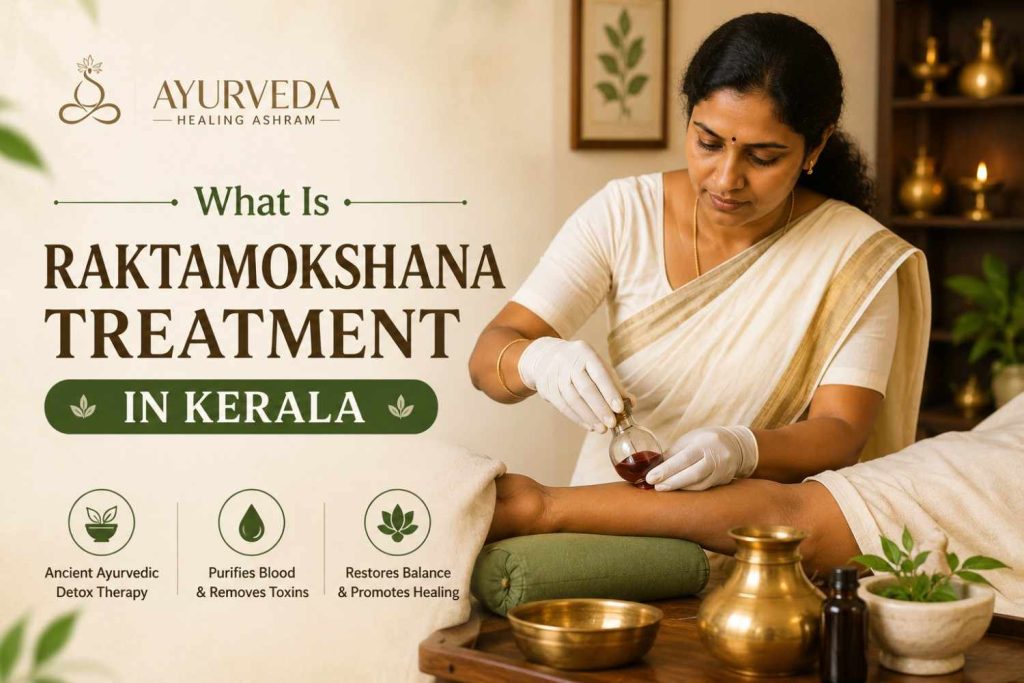
Raktamokshana Treatment in Kerala is a classical Ayurvedic bloodletting therapy used in specific cases where controlled removal of a small quantity of blood is considered helpful according to Ayurvedic principles. The word “Rakta” means blood, and “Mokshana” means release or removal.
In Ayurveda, Rakta dhatu, or blood tissue, plays an important role in nourishing the body and supporting healthy skin, circulation, complexion, and vitality. When Rakta becomes affected by dosha imbalance, especially Pitta and Kapha, it may lead to certain skin, inflammatory, or localized conditions.
Raktamokshana is performed to remove vitiated blood from a specific area or from the body in a controlled manner. It is usually done as part of a complete Ayurvedic treatment plan, not as a standalone decision.
Why Raktamokshana Is Included in Panchakarma
Panchakarma includes five main cleansing therapies in Ayurveda. Raktamokshana is traditionally mentioned as one of the important purification methods used for selected blood-related imbalances.
Raktamokshana Treatment in Kerala may be advised when the Ayurvedic doctor finds signs of blood impurity, localized inflammation, skin irritation, or dosha accumulation. The therapy is usually planned carefully with preparation, procedure, observation, and recovery care.
The main Ayurveda page explains that the centre follows doctor-guided Panchakarma therapies, traditional Kerala Ayurveda methods, personalized healing programs, herbal support, Ayurvedic nutrition, yoga, and meditation as part of holistic care.
Common Reasons for Choosing Raktamokshana Treatment in Kerala
Raktamokshana may be considered in Ayurveda for specific concerns after consultation. It is not suitable for every patient or every condition.
Common Ayurveda-related reasons may include:
- Certain skin concerns
- Localized swelling
- Pitta-related imbalance
- Inflammatory symptoms
- Blood impurity signs
- Recurrent skin irritation
- Burning sensation in selected conditions
- Localized pain or congestion
- Non-healing or recurring skin issues
- Dosha accumulation in a specific area
These symptoms can also be linked with medical conditions that need proper diagnosis. So, a detailed consultation is necessary before choosing Raktamokshana.
Types of Raktamokshana Treatment in Ayurveda
There are different methods of Raktamokshana. The method is selected based on the person’s condition, affected area, strength, and doctor’s assessment.
1. Jalaukavacharana
Jalaukavacharana is leech therapy. In this method, medicinal leeches are applied to a selected area to remove impure blood in a controlled way. It is commonly mentioned in Ayurveda for delicate areas and selected skin or inflammatory concerns.
This therapy must be done only by trained professionals using proper hygiene and safety protocols.
2. Siravedha
Siravedha is a venesection method where a small quantity of blood is removed from a selected vein. It is a more direct procedure and is done only when the doctor finds it suitable.
This method requires strong clinical judgment and should never be attempted without expert supervision.
3. Prachana
Prachana involves making small superficial pricks or scratches on the affected area to remove impure blood locally. It may be used in selected localized conditions.
4. Shringa
Shringa is a traditional horn-based suction method described in Ayurveda. It is generally used for certain Vata-Kapha-related localized concerns.
5. Alabu
Alabu uses a gourd-like suction method in classical Ayurveda. It is traditionally described for certain Kapha-related conditions.

Important Benefits of Raktamokshana Treatment in Kerala
1. Supports Blood Purification in Ayurveda
Raktamokshana is traditionally used to remove vitiated blood from the body or affected area. In Ayurveda, this may support better Rakta dhatu balance.
2. Helps Manage Pitta-Related Imbalance
Pitta imbalance is often linked with heat, burning, redness, and inflammation. Raktamokshana may be selected when the doctor identifies Pitta involvement.
3. Supports Skin Wellness
Raktamokshana Treatment in Kerala may be included in Ayurveda care plans for selected skin concerns, especially when blood impurity or inflammatory signs are involved.
4. Helps Localized Swelling and Congestion
In certain cases, controlled removal of vitiated blood may help reduce localized congestion and discomfort.
5. Supports Traditional Detoxification
As part of Panchakarma, Raktamokshana is considered a purification therapy. It may be combined with diet correction, herbal medicines, oil therapies, and lifestyle guidance.
6. Encourages Personalized Healing
The therapy is not given randomly. It is chosen only after checking the person’s symptoms, strength, body type, and treatment needs.
7. Helps Improve Treatment Planning
When used correctly, Raktamokshana may become part of a broader Ayurvedic care plan that includes internal medicines, food guidance, skin care, and follow-up support.
Raktamokshana for Skin Concerns
Skin health is closely connected with Rakta and Pitta in Ayurveda. When blood and Pitta are disturbed, the person may experience redness, itching, burning, irritation, or recurring skin flare-ups.
Raktamokshana Treatment in Kerala may be considered for selected skin-related conditions after examination. It may be combined with:
- Herbal medicines
- Ayurvedic diet
- Skin-cleansing therapies
- Detox support
- Oil or paste applications
- Lifestyle correction
- Follow-up care
The exact treatment depends on the type of skin concern, duration, severity, and patient health.
Who Can Consider Raktamokshana?
Raktamokshana may be considered only after Ayurvedic assessment. It may be suitable for selected people with blood-related, skin-related, or localized inflammatory concerns.
It may not be suitable for:
- Pregnant women
- Children unless advised by a doctor
- Elderly people with weakness
- People with anemia
- People with bleeding disorders
- People taking blood thinners
- People with severe weakness
- People with uncontrolled diabetes
- People with severe infections
- People with low blood pressure
- People recovering from major illness
A qualified doctor must decide whether Raktamokshana is safe for the patient.
Difference Between Raktamokshana and General Detox
Many people think detox means only diet or herbal drinks. In Ayurveda, detox can include different therapies based on dosha and body condition.
Raktamokshana is different because it focuses on blood-related purification. It is more specific and needs higher supervision compared to simple wellness detox routines.
General detox may include:
- Light diet
- Herbal drinks
- Oil massage
- Steam therapy
- Rest
- Yoga
Raktamokshana may include controlled bloodletting methods such as leech therapy or venesection when medically suitable.
Ayurveda & Panchakarma Packages at Ayurveda Healing Ashram
Ayurveda Healing Ashram presents thoughtfully designed Panchakarma and Ayurvedic treatment packages that offer an authentic path to deep detox and holistic healing. Rooted in classical Ayurvedic wisdom, our programmes support physical renewal, mental clarity, and emotional balance for guests from around the world.
Each Panchakarma programme is carefully structured after a detailed Ayurvedic consultation. Treatment plans are tailored based on individual health conditions, mental state, dosha constitution, and the guidance of experienced Ayurvedic doctors, ensuring meaningful and lasting results.
Recognised for its authentic Panchakarma treatments in Kerala, Ayurveda Healing Ashram provides personalised Ayurveda packages that honour traditional healing methods while meeting modern wellness needs. Our commitment to individual care, skilled practitioners, and a serene healing environment has made us a trusted destination for Panchakarma therapy in Kerala, India, for those seeking genuine Ayurvedic rejuvenation.
Conclusion
Raktamokshana Treatment in Kerala is a specialized Ayurvedic Panchakarma therapy used for selected blood-related, Pitta-related, skin-related, and localized inflammatory concerns. It is not a routine wellness therapy and must be planned carefully after proper consultation.
With doctor-guided assessment, hygienic procedure, correct method selection, diet care, rest, and follow-up support, Raktamokshana can become part of a personalized Ayurveda healing plan. For safety, patients should avoid self-treatment and choose qualified Ayurvedic supervision.
To learn more about Ayurveda and holistic wellness practices, visit National Center for Complementary and Integrative Health
FREQUENTLY ASKED QUESTIONS
Call Now
+91 7356 445 553
+91 8921 442 253
We Welcome You
Vandithadam, Pachaloor P.O,
Thiruvananthapuram,
kovalam, kerala India
Sent Email
info@sivasoorya.org


Connect with Kerala’s Leading Ayurveda Centre for treatment enquiries, Panchakarma scheduling, wellness retreat packages, or customised Ayurvedic guidance. Our skilled Ayurvedic specialists and support team assist guests from India and abroad with trusted insights, professional care, and well-defined recommendations for lasting healing.

