Ayurvedic Treatment Hospital in Kerala, India, Ayurveda Resort, Doctor

Nasya Treatment in Kerala: 9 Amazing Benefits You Need

Ever notice how a stuffy nose, constant headaches, or foggy thinking can quietly drain your entire day? In Ayurveda, this is often traced to imbalances above the neck, and one of the oldest solutions for it is Nasya Treatment in Kerala. This nasal therapy, part of the classical Panchakarma system, involves administering medicated oils or herbal drops through the nostrils to clear toxins from the head and neck region. Ayurvedic centres across Thiruvananthapuram have offered this therapy for generations, and today it’s gaining fresh attention for its results on sinus issues, migraines, and mental clarity. Let’s explore exactly how it works.

Ayurvedic Nasya oil therapy being administered in Kerala

Key Takeaways

  • Nasya is a Panchakarma therapy that clears toxins from the head, sinus, and neck region through the nasal passage
  • Best suited for chronic sinusitis, migraines, hair fall, and mental fog
  • A full session usually takes 30–45 minutes, with a short preparatory phase
  • Should only be performed by a certified Ayurvedic practitioner

What Is Nasya Treatment?

Nasya is the nasal administration of medicated oils, herbal juices, or powders, aimed at clearing accumulated toxins (ama) and excess dosha from the head, sinuses, and upper respiratory tract. Ayurveda considers the nose the direct gateway to the brain, which is why this therapy is specifically used for conditions above the collarbone.

It’s a short but precise procedure, always preceded by a mild facial massage and steam to loosen blockages before the oil is administered.

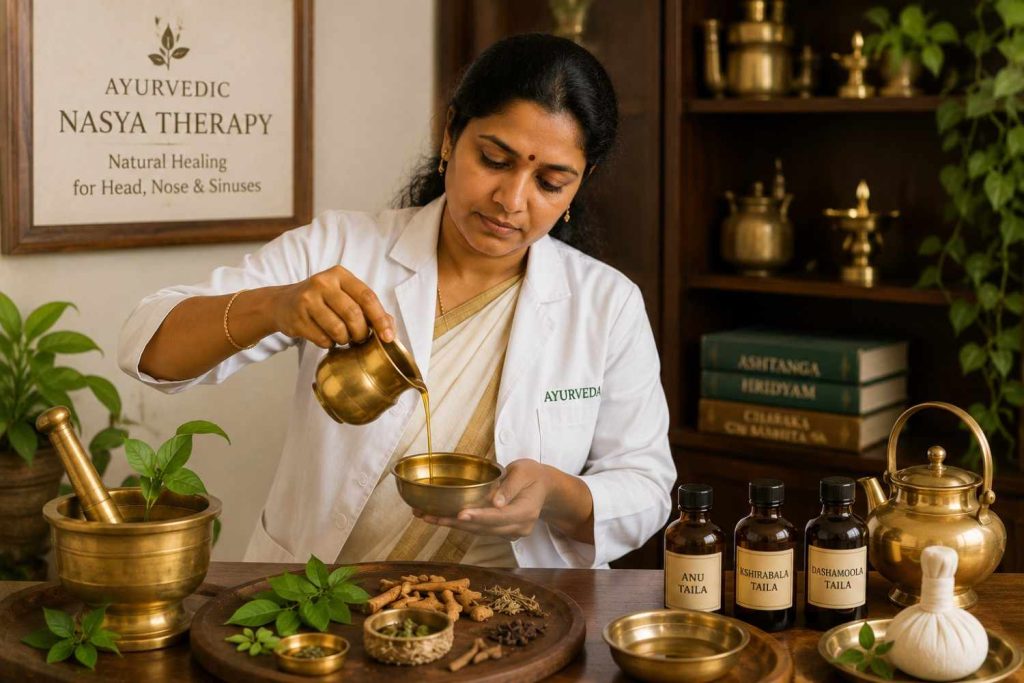
Realistic illustration of an Ayurvedic doctor preparing herbal oil for Nasya therapy using traditional brass vessels, medicinal herbs, and herbal oil bottles in a calm Ayurvedic treatment room.

Causes Behind Head & Sinus Imbalances

Modern lifestyle habits are often responsible for the very issues Nasya therapy is designed to correct:

  • Prolonged screen exposure causing eye strain and tension headaches
  • Pollution and dust triggering chronic sinus congestion
  • Poor sleep patterns affecting mental clarity
  • Excess stress leading to tension-type headaches or migraines
  • Cold, damp weather aggravating Kapha in the sinus region
  • Nutritional deficiencies contributing to hair thinning or fall

Types of Nasya Therapy

Ayurvedic physicians select the type based on the condition being treated and the patient’s constitution.

Virechana Nasya (Cleansing) — Uses stronger herbal formulations to clear excess Kapha and congestion.

Brimhana Nasya (Nourishing) — Uses medicated ghee or oils to nourish dry sinuses, hair, and nervous tissue.

Shamana Nasya (Pacifying) — A milder daily-use formulation for general wellness and preventive care.

Pratimarsha Nasya (Maintenance) — A very light, everyday application often self-administered after proper training, using 1-2 drops of medicated oil.

Symptoms That Signal You May Need It

  • Chronic sinus congestion or frequent colds
  • Recurring migraines or tension headaches
  • Hair thinning, premature greying, or dandruff
  • Dry nasal passages or reduced sense of smell
  • Mental fog, poor concentration, or memory lapses
  • Stiffness in the neck and shoulders

If a few of these feel familiar, it’s worth getting evaluated before symptoms turn chronic.

Step-by-Step Procedure

Minimal three-step infographic illustrating the Nasya treatment process with simple visuals for Preparation, Oil Administration, and Post-Procedure Care, connected by arrows on a warm beige Ayurvedic-themed background.

Step 1 – Preparation: A gentle facial massage (Mukha Abhyanga) followed by mild steam (Swedana) to open the nasal passages.

Step 2 – Oil Administration: Medicated oil or herbal extract is administered drop by drop into each nostril while the patient lies in a specific reclined position.

Step 3 – Post-Procedure Care: Gentle massage of the face, neck, and shoulders, followed by inhalation of medicated smoke (Dhoomapana) in some cases to fully clear the passages.

Benefits of Nasya Treatment

  • Clears sinus congestion

  • Removes excess mucus and blockages

  • Reduces migraines

  • Eases head and neck tension

  • Improves mental clarity

  • Reduces brain fog and fatigue

  • Strengthens hair health

  • Nourishes the scalp

  • Helps reduce hair fall

  • Enhances the sense of smell and taste

  • Clears nasal passages

  • Relieves neck and shoulder stiffness

  • Supports better sleep

  • Calms the nervous system

  • Balances Kapha and Vata doshas

  • Supports overall head and sinus health

  • Acts as preventive seasonal care

  • May help reduce the frequency of seasonal infections

Conclusion

Nasya Treatment in Kerala offers a natural, time-tested way to address sinus issues, migraines, and mental fatigue at their source rather than through temporary relief. With its structured process and dosha-specific formulations, it continues to be a trusted therapy across Ayurvedic centres in Thiruvananthapuram. If chronic congestion, headaches, or hair concerns have been bothering you, a proper consultation could be the natural reset you’ve been looking for.

To learn more about Ayurveda and holistic wellness practices, visit National Center for Complementary and Integrative Health

FREQUENTLY ASKED QUESTIONS

What is Nasya treatment used for? +
It's used to clear sinus congestion, relieve migraines, improve mental clarity, and support hair and scalp health.
Is Nasya treatment painful? +
No, it's a gentle procedure involving oil drops in the nostrils, generally well-tolerated by most patients.
How long does a session take? +
A typical session lasts 30–45 minutes, including preparatory massage and steam.
Who should avoid Nasya therapy? +
Pregnant women, individuals with active fever, and those with recent facial injuries should avoid it unless cleared by a doctor.
Can Nasya help with hair fall? +
Yes, certain formulations nourish the scalp and are commonly used for hair thinning and premature greying.
How many sessions are usually needed? +
This depends on the condition, but a course of 7–14 days is common for chronic issues.
Is Nasya safe for children? +
Only mild formulations under strict pediatric Ayurvedic guidance are recommended for children.
Can I drive after a Nasya session? +
It's best to rest for a short while post-procedure before resuming activities like driving.
Does it help with allergies? +
Yes, it's often used to reduce recurring allergic sinus symptoms and congestion.
How is Nasya different from a regular nasal spray? +
Nasya uses Ayurvedic medicated oils tailored to individual dosha imbalances, unlike generic decongestant sprays.