Ayurvedic Treatment Hospital in Kerala, India, Ayurveda Resort, Doctor
THE BEST AYURVEDIC TREATMENT CENTRE AND HOSPITAL IN KERALA, INDIA | SINCE 1965

THE BEST AYURVEDIC TREATMENT CENTRE AND HOSPITAL IN KERALA, INDIA | SINCE 1965

7 Powerful Benefits of Ksharasutra Treatment in Kerala Today
Ksharasutra Treatment in Kerala is gaining attention as a specialized Ayurvedic approach for managing anorectal conditions, particularly fistula-in-ano. This traditional treatment combines ancient Ayurvedic principles with a scientifically accepted procedural method that aims to address the root cause of the condition. Many individuals seeking alternatives to conventional surgery are exploring Ksharasutra Treatment in Kerala because of its minimally invasive nature, lower recurrence rates, and holistic healing approach. In Thrissur, patients increasingly look for treatment options that focus on both healing and long-term recovery.
What Is Ksharasutra Treatment
Ksharasutra is a specialized Ayurvedic para-surgical treatment that uses a medicated thread coated with herbal medicines. This thread is carefully placed in the fistulous tract to gradually cut, drain, and heal the affected tissue.
The treatment has been practiced in Ayurveda for centuries and has been extensively studied for the management of fistula-in-ano and certain other anorectal disorders.
How Ksharasutra Works
The medicated thread performs multiple functions simultaneously:
- Gradual cutting of unhealthy tissue
- Continuous drainage of infected material
- Prevention of reinfection
- Promotion of healthy tissue growth
- Facilitation of natural healing
The thread is periodically replaced until complete healing occurs.
Understanding the Need for Ksharasutra Treatment in Kerala
Anorectal conditions can significantly affect daily life. Persistent pain, discharge, swelling, and discomfort often interfere with work, social activities, and overall well-being.
Ksharasutra Treatment in Kerala is commonly considered when individuals experience chronic fistula-related symptoms and seek a treatment approach that focuses on healing while preserving surrounding tissues.
Conditions Commonly Treated with Ksharasutra
Fistula-in-Ano
This is the most common condition treated with Ksharasutra. A fistula is an abnormal tunnel connecting the anal canal to the skin around the anus.
Recurrent Fistula
People who have experienced recurrence after conventional treatment may explore Ksharasutra as an alternative management option.
Certain Types of Pilonidal Sinus
Selected cases may benefit from Ayurvedic para-surgical approaches.
Chronic Anal Tracts
Persistent sinus tracts and related conditions may also be assessed for suitability.
Causes of Anal Fistula
Understanding the causes helps individuals recognize risk factors and seek timely treatment.
Anal Gland Infection
An infected anal gland can develop into an abscess, which may later form a fistula.
Recurrent Abscesses
Repeated infections can increase the likelihood of fistula formation.
Inflammatory Bowel Conditions
Certain inflammatory diseases may contribute to fistula development.
Trauma
Injury to the anal region can occasionally lead to abnormal tract formation.
Previous Surgery
Some surgical procedures may increase the risk in certain cases
Symptoms That May Indicate the Need for Treatment
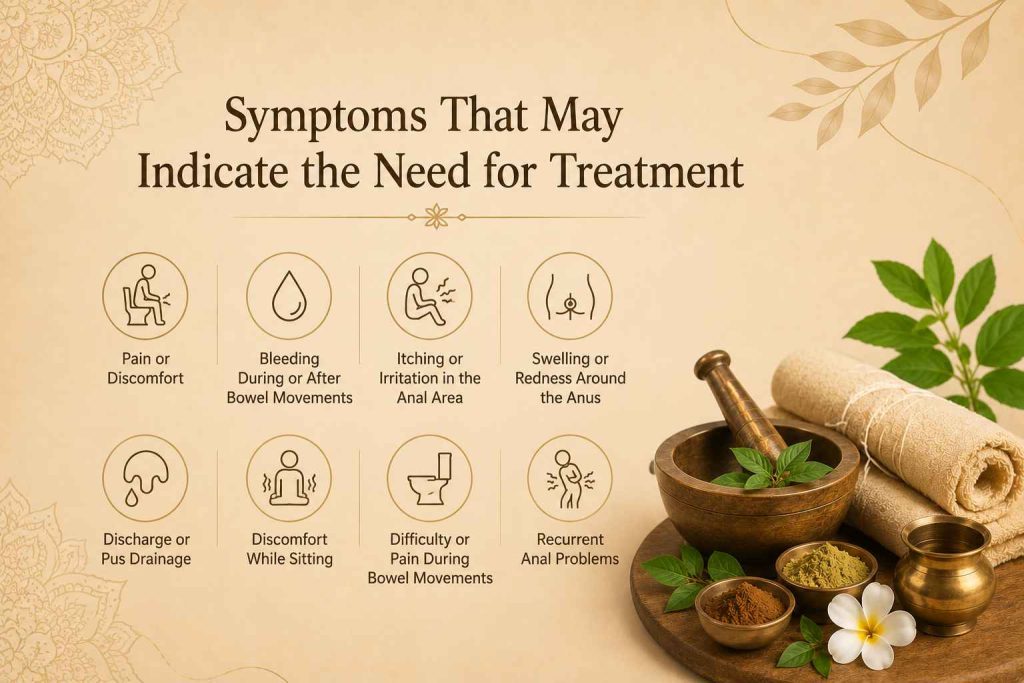
Individuals experiencing the following symptoms should seek professional evaluation:
- Persistent anal pain
- Swelling near the anus
- Recurrent abscess formation
- Pus discharge
- Blood-stained discharge
- Skin irritation around the anal area
- Fever associated with infection
- Difficulty sitting comfortably
- Repeated episodes of discomfort
Early diagnosis often contributes to better treatment outcomes.
Types of Ksharasutra Treatment Approaches
Standard Ksharasutra Procedure
This involves the placement of a medicated thread through the fistulous tract with periodic thread changes.
Modified Ksharasutra Techniques
Modern Ayurvedic centers may adopt modifications to improve patient comfort and treatment efficiency.
Combined Ayurvedic Management
Some treatment plans include:
- Dietary guidance
- Herbal support
- Lifestyle modifications
- Local wound care
These measures may complement the primary procedure
Procedure of Ksharasutra Treatment in Kerala
Understanding the procedure helps reduce anxiety and prepare patients for treatment.
Initial Consultation
A detailed evaluation is conducted to assess:
- Symptoms
- Medical history
- Extent of the fistula
- Suitability for treatment
Diagnosis
Various clinical assessments may be performed to identify the tract and determine the treatment plan.
Thread Placement
The medicated thread is inserted into the fistulous tract under appropriate medical supervision.
Regular Thread Changes
The thread is replaced at scheduled intervals.
This step is essential because:
- It promotes continuous healing.
- It facilitates drainage.
- It helps remove unhealthy tissue.
Healing Phase
The tract gradually heals from within while maintaining proper drainage.
Benefits of Ksharasutra Treatment in Kerala
1. Minimally Invasive Approach
The procedure generally avoids extensive surgical cutting.
2. Lower Risk of Tissue Damage
Healthy surrounding tissues are largely preserved.
3. Continuous Healing Process
The medicated thread supports ongoing healing throughout treatment.
4. Effective Drainage
Proper drainage helps reduce infection and discomfort.
5. Reduced Hospital Stay
Many cases can be managed with minimal hospitalization.
6. Lower Recurrence Potential
Ksharasutra is recognized for addressing the fistulous tract comprehensively.
7. Cost-Effective Management
The treatment may be a practical option for many patients.
8. Supports Natural Healing
The Ayurvedic approach focuses on tissue repair and recovery.
9. Preserves Normal Function
Preservation of surrounding structures is an important advantage.
10. Holistic Care
Treatment often includes dietary and lifestyle recommendations.
Why Many Patients Choose Ksharasutra Treatment in Kerala
Several factors contribute to the popularity of Ksharasutra Treatment in Kerala.
These include:
- Strong Ayurvedic heritage
- Availability of trained practitioners
- Integrated treatment protocols
- Focus on holistic recovery
- Growing awareness about Ayurvedic fistula management
The combination of traditional wisdom and structured clinical protocols attracts patients from different regions.
Recovery After Ksharasutra Treatment
Recovery varies depending on:
- Size of the tract
- Complexity of the condition
- Patient health status
- Compliance with follow-up care
What to Expect During Recovery
Patients may experience:
- Gradual symptom improvement
- Reduction in discharge
- Decreased pain over time
- Progressive healing of the tract
Regular follow-up appointments remain important throughout the healing process.
Dietary Tips During Treatment
Nutrition plays an important role in supporting recovery.
Recommended Foods
- Fresh fruits
- Cooked vegetables
- Whole grains
- Adequate water intake
- Fiber-rich foods
Foods to Limit
- Excessively spicy foods
- Deep-fried foods
- Highly processed items
- Foods causing constipation
Maintaining healthy bowel habits can support comfort during treatment.
Lifestyle Tips for Better Healing
Maintain Hygiene
Proper local hygiene helps reduce irritation.
Stay Hydrated
Adequate hydration supports digestive health.
Avoid Constipation
Regular bowel movements reduce strain.
Follow Medical Advice
Attend all scheduled follow-up visits.
Stay Physically Active
Light activity may support overall wellness unless otherwise advised.
Who Is a Suitable Candidate
Ksharasutra Treatment in Kerala may be considered for individuals who:
- Have fistula-in-ano
- Experience recurrent fistula
- Seek minimally invasive options
- Prefer Ayurvedic treatment approaches
- Can attend regular follow-up visits
A thorough evaluation is always necessary before determining suitability.
Common Myths About Ksharasutra
Myth 1: It Is Just a Herbal Remedy
Fact: It is a specialized para-surgical Ayurvedic procedure.
Myth 2: Results Are Immediate
Fact: Healing occurs gradually over time.
Myth 3: Follow-Up Is Not Necessary
Fact: Regular thread changes and monitoring are essential.
Myth 4: Everyone Is Suitable
Fact: Treatment suitability varies between individuals.
Conclusion
Ksharasutra Treatment in Kerala remains one of the most recognized Ayurvedic approaches for managing fistula-in-ano and related anorectal conditions. Its combination of medicated thread therapy, controlled healing, effective drainage, and tissue-preserving methodology has contributed to its continued relevance in modern healthcare. Individuals considering Ksharasutra Treatment in Kerala should seek proper evaluation, follow recommended aftercare practices, and maintain regular follow-up visits for optimal recovery. Patients exploring treatment options in Thrissur often value this approach for its focus on comprehensive healing and long-term management. For additional information about Ksharasutra therapy and its Ayurvedic principles, you can refer to the official website of the PubMed Central , which provides resources on Ayurvedic treatments and research.
Frequently Asked Questions
What is Ksharasutra Treatment in Kerala
It is an Ayurvedic para-surgical procedure that uses a medicated thread to manage fistula-in-ano and related conditions.
Is Ksharasutra painful
Some discomfort may occur, but treatment plans are designed to maximize patient comfort.
How long does treatment take
The duration varies depending on the complexity and length of the fistulous tract.
Is hospitalization required
Many patients require minimal hospitalization, depending on their condition.
Can Ksharasutra treat recurrent fistula
It is commonly considered for recurrent fistula cases after proper evaluation.
How often is the thread changed
The schedule varies according to the treatment protocol and patient needs.
What are the main benefits of Ksharasutra
Benefits include effective drainage, gradual healing, and preservation of surrounding tissues.
Can I continue working during treatment
Many individuals can continue routine activities with appropriate medical guidance.
Is special diet require
A fiber-rich diet and adequate hydration are generally encouraged.
Who can undergo Ksharasutra Treatment in Kerala?
Individuals diagnosed with suitable anorectal conditions may be considered after professional assessment.
Call Now
+91 7356 445 553
+91 8921 442 253
We Welcome You
Vandithadam, Pachaloor P.O,
Thiruvananthapuram,
kovalam, kerala India
Sent Email
info@sivasoorya.org





Connect with Kerala’s Leading Ayurveda Centre for treatment enquiries, Panchakarma scheduling, wellness retreat packages, or customised Ayurvedic guidance. Our skilled Ayurvedic specialists and support team assist guests from India and abroad with trusted insights, professional care, and well-defined recommendations for lasting healing.

