Ayurvedic Treatment Hospital in Kerala, India, Ayurveda Resort, Doctor
THE BEST AYURVEDIC TREATMENT CENTRE AND HOSPITAL IN KERALA, INDIA | SINCE 1965

THE BEST AYURVEDIC TREATMENT CENTRE AND HOSPITAL IN KERALA, INDIA | SINCE 1965

What Should German Patients Expect During Panchakarma 7 Tips
Understanding what should German patients expect during Panchakarma can help international patients prepare for a traditional Ayurvedic treatment experience. For German patients considering Panchakarma in Thiruvananthapuram, knowing what happens before, during, and after treatment can make the process easier to understand and plan.
Panchakarma is a classical Ayurvedic therapeutic approach that may include preparatory therapies, selected cleansing procedures, dietary modifications, rest, and post-treatment care. It is not simply an Ayurvedic massage or spa program. The therapies recommended can vary according to a person’s constitution, health status, digestive strength, age, lifestyle, and individual requirements.
This guide explains the Panchakarma process, commonly used therapies, daily routines, diet, possible temporary symptoms, potential benefits, safety considerations, and practical preparation tips.
What Is Panchakarma
Before exploring what should German patients expect during Panchakarma, it is important to understand what Panchakarma means.
Panchakarma is a traditional Ayurvedic therapeutic system. The term comes from two Sanskrit words: “Pancha,” meaning five, and “Karma,” meaning actions or procedures.
Classical Panchakarma describes five principal therapeutic procedures. However, this does not mean every patient undergoes all five treatments. The procedures are selected according to an individual’s condition and suitability.
A traditional Panchakarma program can generally be divided into three stages:
- Purva Karma – preparatory procedures
- Pradhana Karma – principal therapeutic procedures
- Paschat Karma – post-treatment and recovery care
Each stage has a specific purpose within the Ayurvedic approach.
Panchakarma programs should therefore be individualized rather than following exactly the same treatment schedule for every patient.
What Should German Patients Expect During Panchakarma Initially
The first step is generally a detailed Ayurvedic consultation.
Patients should not expect to immediately begin intensive treatments upon arrival. An Ayurvedic practitioner may first assess their health history, current concerns, lifestyle, diet, digestion, sleep, physical strength, and treatment objectives.
Initial Ayurvedic Assessment
Traditional Ayurvedic assessment may consider factors such as:
- Prakriti or individual constitution
- Current dosha balance
- Digestive strength
- Appetite
- Bowel habits
- Sleep quality
- Energy levels
- Physical strength
- Age
- Lifestyle
- Dietary habits
- Current health concerns
German patients should provide accurate information about their existing medical conditions, previous surgeries, allergies, medications, supplements, and other relevant health details.
Prescription medications should not be stopped simply because Panchakarma treatment is beginning. Any changes to prescribed medication should be discussed with an appropriately qualified healthcare professional.
The initial assessment helps determine whether Panchakarma is suitable and which therapies may be appropriate.
Preparation Before Panchakarma
Preparation is an important aspect of what should German patients expect during Panchakarma.
Traditional Panchakarma generally begins with Purva Karma, or preparatory therapies. The objective is to prepare the individual for the main therapeutic procedures.
Two commonly used preparatory approaches are Snehana and Swedana.
Snehana
Snehana refers to oleation therapy.
External Snehana can involve the application of warm herbal or medicated oils to the body. The oils and techniques used may differ according to individual Ayurvedic assessment.
In selected cases, internal oleation may also be considered under professional supervision.
The duration of Snehana depends on the treatment plan and individual response.
Swedana
Swedana refers to therapeutic sweating or fomentation.
It is often performed after oil-based therapies. Controlled herbal steam or other warming techniques may be used.
Patients may experience warmth and perspiration during the procedure. The temperature and duration should be adjusted according to individual tolerance.
Types of Panchakarma Procedures
One of the most important things to understand about what should German patients expect during Panchakarma is that there is no universal treatment package.
Classical Panchakarma includes five principal procedures.
Vamana
Vamana refers to therapeutic emesis performed in selected Ayurvedic situations.
It is an intensive procedure that requires appropriate preparation and professional supervision. Vamana is not suitable for every patient.
Virechana
Virechana is a traditional therapeutic purgation procedure.
Selected preparations are administered to induce controlled bowel evacuation. Because this procedure can influence hydration and bowel function, appropriate patient selection and supervision are important.
Basti
Basti is a classical Ayurvedic procedure involving the administration of specific herbal preparations through the rectal route.
Different types of Basti may be recommended depending on the individual’s Ayurvedic assessment.
Nasya
Nasya involves administering selected preparations through the nasal passages.
Preparatory facial massage or mild steam may sometimes be used before Nasya.
Raktamokshana
Raktamokshana traditionally refers to therapeutic bloodletting.
It is a specialized Ayurvedic procedure and is not routinely included in every Panchakarma program.
Patients should remember that undergoing Panchakarma does not automatically mean receiving all five procedures.
Supportive Ayurvedic Treatments During Panchakarma
Several supportive therapies may be incorporated into a Panchakarma program.
These treatments are selected according to individual requirements and may be used during different stages of the program.
Abhyanga
Abhyanga is a traditional Ayurvedic oil massage.
Warm herbal oils may be applied using specific massage techniques. The type of oil can be selected according to the person’s constitution and treatment plan.
Abhyanga should not necessarily be viewed as an ordinary spa massage because it may form part of a structured Ayurvedic program.
Shirodhara
Shirodhara involves a controlled stream of warm liquid, commonly herbal oil, flowing over the forehead for a specified duration.
It may be included in selected Ayurvedic programs depending on individual requirements.
Herbal Steam Therapy
Herbal steam or controlled fomentation may be used following certain oil treatments.
Patients should immediately communicate excessive heat, dizziness, breathing difficulty, weakness, or other significant discomfort.
What Should German Patients Expect During Panchakarma Diet
Dietary changes are an important part of what should German patients expect during Panchakarma.
The food served during a Panchakarma program may be quite different from a patient’s usual diet. Meals are generally simple, warm, freshly prepared, and selected to support digestion.
Depending on the treatment stage, foods may include:
- Rice preparations
- Mung dal
- Khichdi
- Cooked vegetables
- Light soups
- Mildly seasoned dishes
- Herbal drinks
- Warm water
- Other easily digestible meals
Heavy, highly processed, excessively oily, or difficult-to-digest foods may be restricted.
Alcohol is also generally avoided during Panchakarma.
Why Is the Diet Kept Simple?
Ayurveda places considerable importance on digestive function or Agni.
A simplified diet is traditionally used during Panchakarma to support digestion while the individual undergoes different therapeutic procedures.
The recommended foods may change during different stages of treatment.
Patients should therefore follow the individualized dietary plan provided during their program rather than adding unfamiliar supplements, foods, or herbal preparations independently.
Daily Routine During Panchakarma
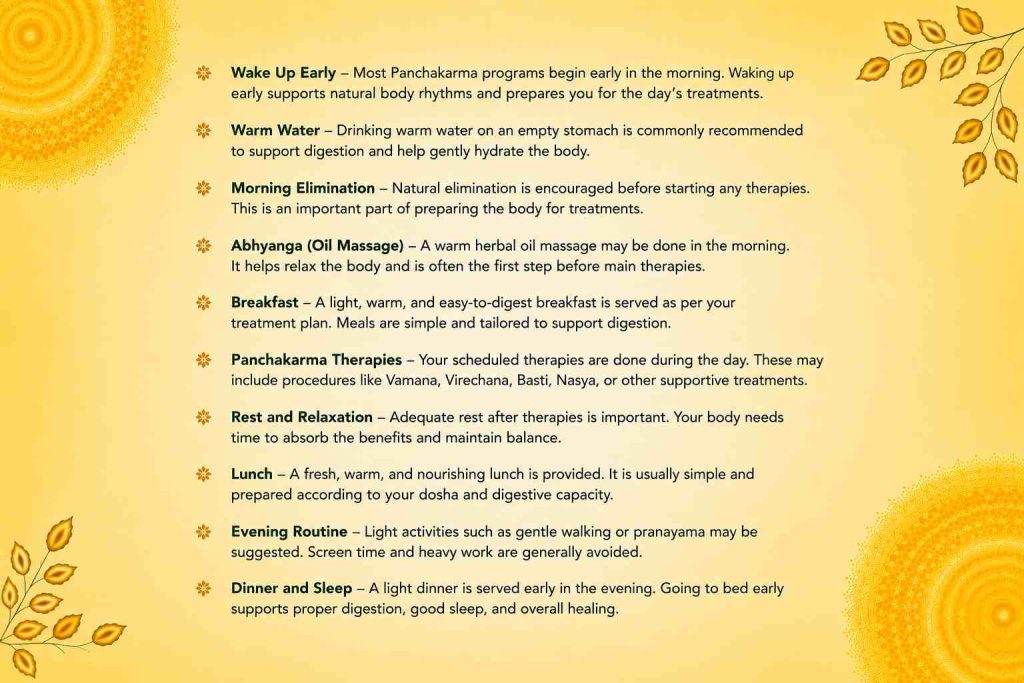
Patients researching what should German patients expect during Panchakarma should also prepare for a structured daily routine.
The schedule may differ significantly from a normal holiday.
A typical day could involve:
- Waking relatively early
- Drinking warm water
- Eating prescribed meals
- Receiving scheduled Ayurvedic therapies
- Taking prescribed herbal preparations
- Resting between treatments
- Eating a light lunch and dinner
- Avoiding strenuous activities
- Going to bed relatively early
Rest can be an important component of the Panchakarma routine.
Patients may be advised to minimize strenuous exercise, extensive sightseeing, late-night activities, alcohol, heavy meals, and excessive physical exertion during intensive treatment periods.
A flexible travel schedule can therefore be helpful.
Possible Symptoms During Panchakarma
Another consideration when discussing what should German patients expect during Panchakarma is how a person may feel during treatment.
Individual experiences vary considerably.
Changes in diet, daily routine, sleep patterns, physical activity, and therapeutic procedures can temporarily affect how someone feels.
Some people may experience:
- Tiredness
- Changes in appetite
- Increased bowel movements
- Temporary digestive changes
- Mild headaches
- Changes in sleep
- Greater need for rest
- Temporary emotional sensitivity
These symptoms should not automatically be described as evidence that “toxins” are leaving the body.
Patients should inform their treatment team about significant or persistent symptoms.
Severe vomiting, fainting, dehydration, breathing difficulty, severe abdominal pain, allergic reactions, chest pain, or substantial weakness require appropriate medical evaluation rather than being dismissed as a normal part of Panchakarma.
Potential Benefits of Panchakarma
Understanding what should German patients expect during Panchakarma also means maintaining realistic expectations about potential benefits.
Panchakarma has a long history within traditional Ayurveda, but individual outcomes vary. It should not be presented as a guaranteed cure for medical conditions.
Depending on the individual and therapies used, a structured Panchakarma program may provide opportunities for:
- Structured rest
- Relaxation
- Dietary discipline
- A simplified daily routine
- Individualized Ayurvedic care
- Improved attention to sleep habits
- Reduced lifestyle distractions
- Greater awareness of daily routines
- Time dedicated to personal wellbeing
- Development of healthier lifestyle habits
The experience and perceived benefits can vary substantially between individuals.
How Long Does Panchakarma Take
There is no single standard duration for Panchakarma.
The appropriate length can depend on:
- Individual health
- Age
- Physical strength
- Treatment objectives
- Ayurvedic assessment
- Selected procedures
- Preparation requirements
- Response to treatment
- Recovery requirements
Some programs are relatively short, while more comprehensive Panchakarma programs may require a longer period.
International patients should account for preparation, treatment, recovery, and travel rather than planning only around the number of therapy days.
7 Practical Tips for German Patients
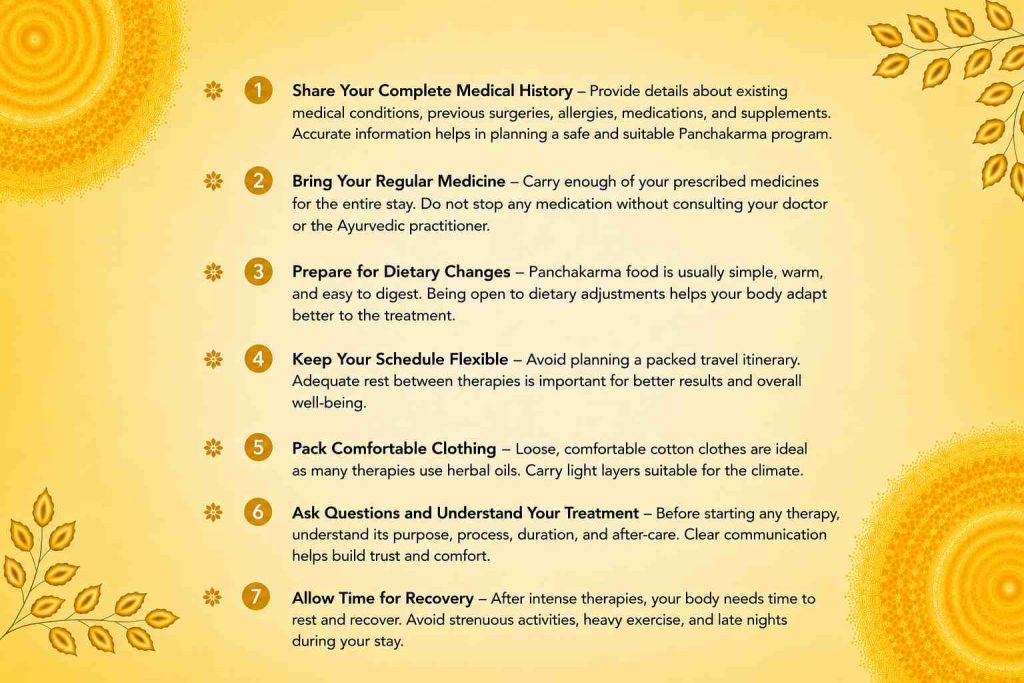
Knowing what should German patients expect during Panchakarma can help with practical preparation.
1. Share Your Complete Medical History
Provide information about diagnosed conditions, previous procedures, allergies, medications, and supplements.
2. Bring Your Regular Medicines
Carry enough prescribed medication for the entire trip. Do not discontinue necessary medicines without appropriate medical guidance.
3. Pack Comfortable Clothing
Loose and comfortable clothing is practical because many Ayurvedic therapies involve herbal oils.
4. Prepare for Dietary Changes
The Panchakarma diet may be much simpler than your regular meals. Following the prescribed dietary routine is generally considered part of the program.
5. Avoid an Overloaded Travel Schedule
Intensive sightseeing or frequent travel may interfere with treatment and rest.
6. Ask About Every Procedure
Patients should understand what a procedure involves, why it has been recommended, how long it takes, and what precautions are necessary.
7. Allow Time for Recovery
Avoid scheduling demanding activities immediately after intensive Panchakarma procedures. Recovery requirements can differ between individuals.
Safety Considerations for German Patients
Safety is an important aspect of what should German patients expect during Panchakarma.
Panchakarma should be individualized based on a person’s health and physical condition.
Certain intensive procedures may not be appropriate for some individuals, including those who are acutely ill, physically weak, dehydrated, pregnant, or managing particular health conditions.
Suitability requires individual assessment.
Before starting treatment, patients can ask questions such as:
- Which therapies are being recommended?
- Why is each procedure necessary?
- Are there any contraindications?
- What preparation is required?
- How should hydration be maintained?
- What side effects are possible?
- What happens if an adverse reaction occurs?
- What should be avoided during treatment?
- What post-treatment care is required?
Patients should also distinguish between traditional therapeutic Panchakarma and wellness or spa packages that use Panchakarma terminology.
Post-Panchakarma Recovery
A complete explanation of what should German patients expect during Panchakarma should include the recovery phase.
Traditional Ayurveda refers to post-treatment care as Paschat Karma.
After completing certain procedures, patients may receive specific instructions regarding food, sleep, physical activity, travel, and gradual return to their usual routine.
Returning to a Regular Diet
After intensive therapies, patients may be advised to gradually transition from lighter foods to their normal diet.
Immediately returning to very heavy, fried, highly processed, or difficult-to-digest meals may not be recommended.
Returning to Exercise
People who regularly run, cycle, swim, or perform gym workouts may need to gradually resume strenuous physical activity.
The appropriate timing depends on the procedures performed and individual recovery.
Maintaining Lifestyle Changes
The post-treatment period can also be an opportunity to maintain positive routines developed during the Panchakarma program, such as:
- Regular sleeping patterns
- Consistent meal timing
- Balanced food choices
- Adequate rest
- Moderate physical activity
- Better attention to daily routines
These habits may help patients maintain the lifestyle structure established during their stay
Panchakarma vs a Wellness Retreat
German patients should not automatically assume that Panchakarma is the same as a general wellness retreat.
A typical wellness holiday may emphasize massages, yoga, relaxation, healthy food, sightseeing, and recreation.
Traditional Panchakarma can involve a more structured process consisting of preparation, individualized Ayurvedic therapies, dietary restrictions, rest, selected cleansing procedures, and gradual recovery.
Some treatments can also be physically demanding.
Understanding this distinction helps patients develop more realistic expectations before beginning their program.
Conclusion
Understanding what should German patients expect during Panchakarma helps patients prepare for a structured Ayurvedic experience rather than viewing it simply as a spa holiday. Consultation, preparation, individualized therapies, dietary changes, adequate rest, careful monitoring, and gradual recovery can all be important parts of the process. German patients considering treatment in Thiruvananthapuram should plan enough time for both the Panchakarma program and appropriate recovery. For evidence-based information about Ayurvedic medicine, including its uses, research, and safety considerations, refer to the National Center for Complementary and Integrative Health (NCCIH) – Ayurvedic Medicine.
Frequently Asked Questions
What should German patients expect during Panchakarma?
German patients can generally expect an initial Ayurvedic assessment, personalized therapies, dietary changes, structured daily routines, adequate rest, and post-treatment recommendations. The exact Panchakarma program may vary according to individual health, constitution, physical strength, and treatment requirements.
Is Panchakarma the same for every German patient?
No. Panchakarma is traditionally individualized. The therapies recommended may depend on factors such as body constitution, current health condition, digestion, age, physical strength, lifestyle, and individual treatment goals.
How should German patients prepare for Panchakarma?
Patients should provide an accurate medical history, disclose current medications and supplements, bring relevant medical records, and prepare for possible changes in diet and daily routine. Comfortable clothing and a flexible travel schedule can also be helpful during treatment.
What treatments may be included in Panchakarma?
A Panchakarma program may include preparatory therapies such as Snehana and Swedana, along with selected traditional procedures such as Vamana, Virechana, Basti, or Nasya. Not every patient requires all classical Panchakarma procedures.
What food can German patients expect during Panchakarma?
Meals are generally simple, warm, freshly prepared, and selected according to the treatment plan. Rice, mung dal, khichdi, cooked vegetables, light soups, warm water, and herbal drinks may be included depending on individual dietary recommendations.
Can German patients continue regular medicines during Panchakarma?
Patients should not stop prescribed medication without appropriate medical guidance. All medicines, supplements, allergies, and existing medical conditions should be disclosed before beginning Panchakarma so that potential safety concerns can be considered.
Can patients exercise during Panchakarma?
Strenuous physical activity may be limited during certain stages of Panchakarma. Patients may be encouraged to prioritize rest and follow individualized recommendations regarding walking, yoga, exercise, and other physical activities during the treatment period.
Can German patients go sightseeing during Panchakarma?
Light activities may be possible depending on the treatment schedule and individual condition. However, extensive sightseeing, long journeys, and physically demanding activities may interfere with rest, particularly during intensive stages of Panchakarma.
How long does a Panchakarma program usually take?
There is no single duration suitable for everyone. The length of a Panchakarma program may depend on the individual's health, selected therapies, preparation requirements, treatment objectives, response to procedures, and required recovery period.
What happens after completing Panchakarma?
After Panchakarma, patients may receive recommendations for gradually returning to their regular diet and activities. Post-treatment guidance may also cover rest, sleep, exercise, meal routines, and lifestyle practices based on individual requirements.
Call Now
+91 7356 445 553
+91 8921 442 253
We Welcome You
Vandithadam, Pachaloor P.O,
Thiruvananthapuram,
kovalam, kerala India
Sent Email
info@sivasoorya.org



Connect with Kerala’s Leading Ayurveda Centre for treatment enquiries, Panchakarma scheduling, wellness retreat packages, or customised Ayurvedic guidance. Our skilled Ayurvedic specialists and support team assist guests from India and abroad with trusted insights, professional care, and well-defined recommendations for lasting healing.
Quick Link
Services

