Ayurvedic Treatment Hospital in Kerala, India, Ayurveda Resort, Doctor
THE BEST AYURVEDIC TREATMENT CENTRE AND HOSPITAL IN KERALA, INDIA | SINCE 1965
THE BEST AYURVEDIC TREATMENT CENTRE AND HOSPITAL IN KERALA, INDIA | SINCE 1965

9 Powerful Insights: How Does Panchakarma Detox Work Today
If you are exploring traditional Ayurvedic wellness practices in Thiruvananthapuram, you may be wondering, how does Panchakarma detox work? Panchakarma is a classical Ayurvedic approach involving preparation, selected cleansing procedures, dietary adjustments, rest, and gradual recovery. In Ayurvedic tradition, these practices are intended to support internal balance and address what Ayurveda describes as ama, or incompletely processed metabolic material. However, Ayurvedic “detoxification” should not be confused with medically proven removal of specific toxins from the blood or organs.
Understanding how does Panchakarma detox work requires looking at the complete process. Panchakarma is not simply an Ayurvedic massage or a short cleansing diet. Traditional practice follows several carefully planned stages based on an individual’s constitution, general condition, digestion, strength, and other factors.
1. What Is Panchakarma
Panchakarma is one of the traditional therapeutic approaches used in Ayurveda. The Sanskrit word “Panchakarma” broadly means “five actions” or “five procedures.”
The five classical procedures are traditionally described as:
- Vamana – therapeutic emesis
- Virechana – therapeutic purgation
- Basti – medicated enema therapy
- Nasya – nasal administration of selected preparations
- Raktamokshana – traditional bloodletting
This does not mean that everyone undergoing Panchakarma receives all five procedures.
Ayurvedic practitioners traditionally select specific approaches based on an assessment of the individual.
When asking how does Panchakarma detox work, it is important to understand that the Ayurvedic concept of purification differs from the modern medical concept of detoxification.
2. How Does Panchakarma Detox Work in Ayurveda
So, how does Panchakarma detox work according to traditional Ayurvedic principles?
The process is generally divided into three broad stages:
Purva Karma
Purva Karma is the preparatory phase. The body is traditionally prepared before a principal Panchakarma procedure is performed.
It may include:
- Dietary adjustments
- Deepana and Pachana practices
- Snehana or oleation
- Swedana or therapeutic sweating
- Changes in daily routine
Pradhana Karma
This is the primary treatment stage.
One or more classical Panchakarma procedures may be selected based on the person’s Ayurvedic assessment.
Paschat Karma
Paschat Karma refers to post-treatment care.
Diet, activity, sleep, and normal routines are gradually restored after the primary procedure.
Therefore, how does Panchakarma detox work cannot be explained by focusing only on one cleansing therapy. Preparation and recovery are also important components.
3. The Ayurvedic Concept of Ama
The concept of ama is often discussed when explaining Panchakarma.
According to traditional Ayurveda, improper digestion and metabolism may lead to the formation of incompletely processed material known as ama.
Ayurvedic theory associates ama with disturbances in normal balance and function.
The concept is closely connected with agni, which broadly represents digestive and metabolic processes within Ayurvedic theory.
When agni is considered balanced, digestion and processing are traditionally believed to function appropriately. When it becomes disturbed, Ayurveda proposes that ama may accumulate.
It is important to understand that ama is an Ayurvedic theoretical concept. It is not a specific toxin that can currently be identified through a standard laboratory test.
4. How Does Panchakarma Detox Work During Preparation
Preparation is one of the most important aspects of how does Panchakarma detox work.
Classical Ayurvedic practice generally does not begin immediately with an intensive procedure.
Instead, preparatory therapies may be recommended.
Deepana and Pachana
Deepana and Pachana are traditional Ayurvedic approaches associated with supporting digestive processes.
Dietary changes and selected Ayurvedic preparations may be used according to individual requirements.
Snehana
Snehana means oleation.
External Snehana can involve the application of oil to the body, often combined with massage.
Certain traditional protocols may also involve internal oleation using practitioner-selected substances such as medicated ghee.
The exact approach varies considerably between individuals.
Swedana
Swedana refers to therapeutic sweating or heat-based procedures.
It is often performed after external oil application.
From an Ayurvedic perspective, these preparatory methods help prepare an individual for the selected main Panchakarma procedure.
5. What Are the Five Panchakarma Therapies
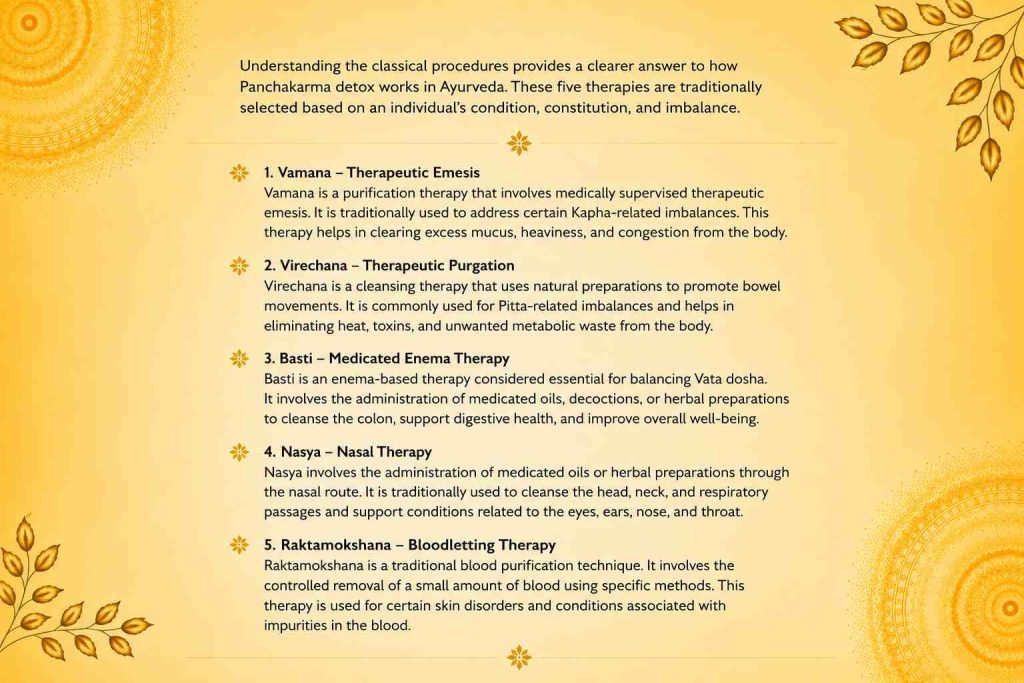
Understanding the classical procedures provides a clearer answer to how does Panchakarma detox work.
Vamana
Vamana is traditionally described as therapeutic emesis.
In Ayurvedic theory, it may be selected for particular patterns associated with Kapha.
Because intentionally inducing vomiting can lead to dehydration, electrolyte disturbances, aspiration, and other complications, Vamana should never be attempted as a DIY cleansing method.
Virechana
Virechana is therapeutic purgation.
It traditionally involves the use of selected preparations to promote bowel evacuation.
Ayurvedic theory commonly associates Virechana with certain Pitta-related patterns.
Excessive purgation can cause diarrhea, weakness, dehydration, and electrolyte disturbances. Appropriate assessment and supervision are therefore important.
Basti
Basti is an Ayurvedic enema-based procedure.
Different Basti preparations may contain oils, decoctions, or other prescribed substances.
Traditional Ayurveda gives Basti an important role, particularly in approaches related to Vata.
Nasya
Nasya involves the nasal administration of selected oils or other preparations.
Traditional Ayurveda particularly associates Nasya with approaches involving the head and neck region.
The substance and method used should be appropriate for the individual.
Raktamokshana
Raktamokshana refers to traditional bloodletting practices.
Its use varies in contemporary Ayurvedic practice.
Because bloodletting carries risks such as bleeding and infection, professional assessment, appropriate hygiene, and infection-control measures are essential.
6. What Causes Imbalance According to Ayurveda
To understand how does Panchakarma detox work, it also helps to understand what Ayurveda traditionally considers possible contributors to imbalance.
Ayurvedic theory emphasizes interactions between diet, digestion, sleep, activity, environment, constitution, and daily habits.
Factors traditionally associated with imbalance can include:
- Irregular eating habits
- Poor sleep patterns
- Changes in daily routine
- Sedentary lifestyle
- Excessive physical activity
- Digestive disturbances
- Seasonal changes
- Dietary habits considered unsuitable for an individual
- Lack of adequate rest
- Irregular bowel habits
These are traditional Ayurvedic explanations rather than diagnostic criteria used in modern medicine.
Persistent or unexplained symptoms should receive appropriate medical evaluation rather than automatically being attributed to “toxins.”
7. Symptoms That May Lead People to Explore Panchakarma
There is no scientifically validated set of symptoms proving that a person needs a detox.
However, people often explore traditional Ayurvedic wellness programs when experiencing general concerns such as:
- Digestive discomfort
- Feeling of heaviness
- Irregular appetite
- Changes in bowel habits
- General tiredness
- Difficulty maintaining regular sleep
- Changes in daily energy
- Feeling uncomfortable after meals
These symptoms can have many causes.
For example, persistent fatigue, abdominal pain, unexplained weight changes, vomiting, bleeding, or prolonged changes in bowel habits require appropriate medical assessment.
Panchakarma should not be used to delay necessary diagnosis or treatment.
8. How Does Panchakarma Detox Work With Diet
Diet plays an important role when discussing how does Panchakarma detox work.
Traditional Panchakarma programs may modify food intake during preparation, treatment, and recovery.
The exact diet depends on the procedure and individual assessment.
Common dietary principles may include:
- Eating freshly prepared meals
- Choosing relatively simple foods
- Maintaining appropriate hydration
- Eating at regular times
- Avoiding excessively heavy meals
- Reducing highly processed foods
- Following practitioner-directed dietary advice
- Gradually returning to a regular diet
Simple preparations such as rice-based meals, soups, or kitchari are commonly associated with contemporary Ayurvedic programs.
However, Panchakarma should not automatically involve starvation or prolonged fasting.
Extreme dietary restriction can result in weakness, nutritional deficiencies, dehydration, or electrolyte problems.
9. Potential Benefits of Panchakarma
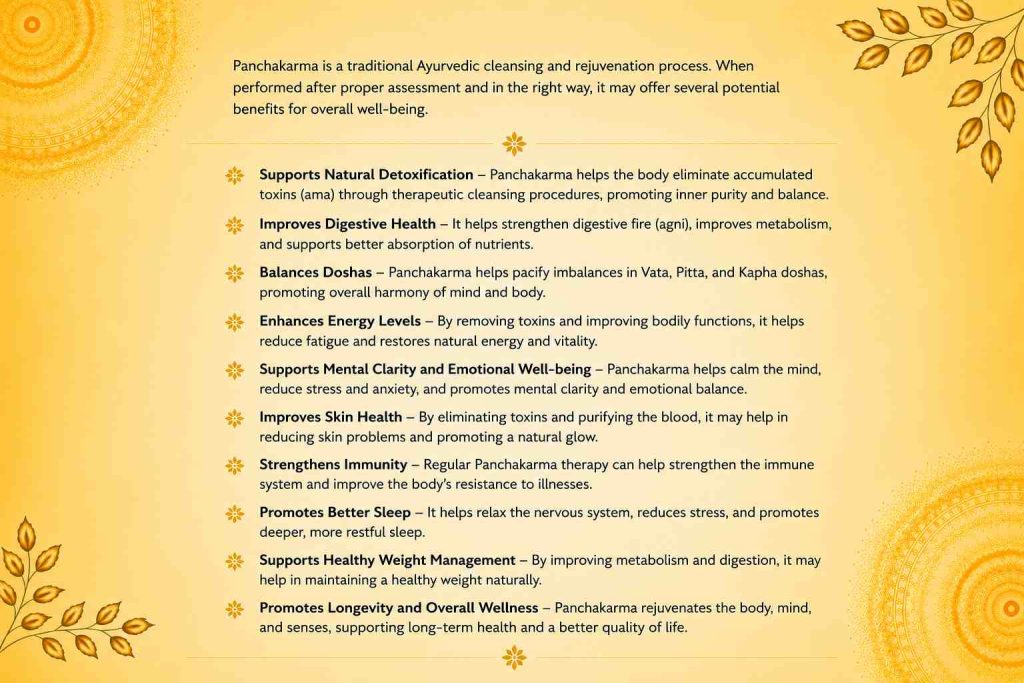
People researching how does Panchakarma detox work are often interested in its possible benefits.
Within traditional Ayurvedic practice, Panchakarma is used as part of an individualized wellness approach.
People may seek Panchakarma to support:
- A structured daily routine
- Mindful eating habits
- Rest and relaxation
- Dietary discipline
- Traditional Ayurvedic wellness goals
- Greater awareness of lifestyle habits
- A gradual return to regular routines
Some people report subjective improvements in well-being after structured Ayurvedic programs.
However, this should not be interpreted as proof that Panchakarma has physically removed unspecified toxins from the body.
Scientific evidence supporting generalized “detox” or “cleanse” claims remains limited.
10. What Happens After Panchakarma
Recovery is an essential part of how does Panchakarma detox work.
Traditional Ayurveda refers to post-treatment care as Paschat Karma.
After certain intensive procedures, immediately returning to heavy meals, intense exercise, irregular sleep, or other demanding activities may not be recommended.
Samsarjana Krama
Samsarjana Krama is a traditional dietary progression used after certain Panchakarma procedures.
The digestive system is gradually reintroduced to regular food.
The process may begin with lighter foods before progressively returning to the person’s normal diet.
The exact progression depends on the procedure performed and individual response.
Rest and Daily Routine
Rest is also traditionally emphasized during recovery.
A person may be advised to:
- Maintain regular sleep
- Avoid excessive physical exertion
- Follow recommended meal timings
- Maintain adequate hydration
- Gradually resume usual activities
The recovery period is one reason Panchakarma should be considered a complete process rather than a single therapy.
11. How Long Does Panchakarma Take
There is no universal duration for Panchakarma.
Some contemporary wellness programs may last several days, while more comprehensive traditional approaches can take longer.
Duration may depend on:
- Individual constitution
- General physical condition
- Age
- Digestive status
- Selected Panchakarma procedure
- Preparation requirements
- Recovery requirements
- Response to treatment
A longer Panchakarma program does not necessarily mean a better program.
Similarly, intensive cleansing should not be performed merely to obtain faster results.
12. Types of Panchakarma Programs
Although the classical procedures remain central to Panchakarma, programs may differ depending on their purpose and the person’s assessment.
Preparatory Programs
Some programs focus mainly on dietary management, oil application, massage, heat therapies, and lifestyle changes.
Procedure-Based Panchakarma
These programs may incorporate one or more classical Panchakarma procedures after appropriate preparation.
Recovery-Focused Care
Post-procedure programs emphasize gradual dietary restoration, rest, and lifestyle regulation.
The appropriate approach depends on individual circumstances rather than a standardized package.
13. How Does Panchakarma Detox Work Differently for Each Person
Another important point about how does Panchakarma detox work is individualization.
Ayurveda traditionally evaluates concepts such as prakriti and vikriti.
Prakriti broadly describes an individual’s constitutional pattern, while vikriti refers to the current pattern of imbalance according to Ayurvedic theory.
An Ayurvedic assessment may also consider:
- Age
- Physical strength
- Appetite
- Digestion
- Sleep
- Bowel habits
- Daily routine
- Current symptoms
- Season
- Previous health history
Therefore, two individuals undergoing Panchakarma may receive significantly different recommendations.
Panchakarma should not be treated as a universal DIY detox formula.
14. Panchakarma and Natural Detoxification in the Body
When explaining how does Panchakarma detox work, an important medical distinction should be made.
The human body already has physiological systems responsible for processing and eliminating waste.
The liver plays an important role in metabolizing many substances. The kidneys filter the blood and eliminate waste products through urine.
The gastrointestinal tract, lungs, skin, and other systems also contribute to maintaining normal internal balance.
Panchakarma should therefore not be described as replacing these organs or their functions.
In the Panchakarma context, the word “detox” is commonly used to describe the Ayurvedic concept of purification or shodhana rather than a medically established process for removing undefined toxins.
15. Safety Tips for Panchakarma
Safety is especially important when learning how does Panchakarma detox work.
Some classical procedures can be physically demanding.
Important precautions include:
- Have an appropriate health assessment beforehand.
- Discuss existing medical conditions.
- Disclose prescription medicines and supplements.
- Avoid performing intensive cleansing procedures yourself.
- Maintain appropriate hydration.
- Avoid prolonged fasting without appropriate supervision.
- Use Ayurvedic products from reliable sources.
- Do not stop prescribed medication without medical guidance.
- Ensure invasive procedures follow appropriate hygiene standards.
- Seek medical attention if serious symptoms develop.
Special caution may be necessary for pregnant or breastfeeding individuals, children, older adults, and people with chronic medical conditions.
Some Ayurvedic products have been reported to contain potentially harmful levels of metals such as lead, mercury, or arsenic, making product quality and appropriate professional guidance particularly important.
16. Tips for Following Panchakarma Responsibly
Once you understand how does Panchakarma detox work, several practical principles can help make the process more responsible.
Follow an Individualized Approach
Do not copy another person’s Panchakarma schedule. Ayurvedic treatment is traditionally individualized.
Provide Complete Health Information
Any healthcare professional involved should know about existing health conditions, allergies, medicines, supplements, and previous procedures.
Avoid DIY Intensive Cleansing
Do not independently induce vomiting, repeatedly use strong laxatives, perform medicated enemas, or undertake prolonged fasting to reproduce Panchakarma at home.
Maintain Hydration
Procedures that cause repeated bowel movements or vomiting can result in fluid and electrolyte loss.
Allow Adequate Recovery
The period after the main procedure is part of Panchakarma. Diet, exercise, work, and daily routines may need to return to normal gradually.
Conclusion
Understanding how does Panchakarma detox work means viewing Panchakarma as a complete traditional Ayurvedic process rather than simply a massage, diet, or cleansing procedure. It may involve Purva Karma preparation, individualized Panchakarma therapies, dietary management, rest, and Paschat Karma recovery.
The concept of detoxification in Ayurveda is traditionally connected with shodhana, ama, agni, and dosha balance. These concepts should be distinguished from scientifically established physiological detoxification performed by organs such as the liver and kidneys.
For someone considering traditional Panchakarma in Thiruvananthapuram, appropriate assessment, individualized treatment, realistic expectations, product quality, and careful attention to safety are important. Panchakarma should not delay medical evaluation or replace necessary treatment for persistent or serious health problems. For reliable information about Ayurvedic medicine, its traditional uses, research, and safety considerations, visit the National Center for Complementary and Integrative Health (NCCIH).
Frequently Asked Question
How does Panchakarma detox work?
According to traditional Ayurveda, Panchakarma combines preparation, selected cleansing procedures, dietary management, rest, and post-treatment recovery. The Ayurvedic concept of purification should not be interpreted as scientifically proven removal of unspecified toxins from the body.
Is Panchakarma the same as a detox diet?
No. Traditional Panchakarma is a structured Ayurvedic approach that may include preparatory therapies, selected cleansing procedures, dietary adjustments, rest, and gradual recovery. Diet is only one part of the overall process.
Does everyone undergo all five Panchakarma procedures?
No. The procedures used in Panchakarma are traditionally selected according to an individual's condition, constitution, strength, digestion, age, and other factors. Not everyone requires all five procedures.
Can Panchakarma be performed at home?
Intensive Panchakarma procedures such as therapeutic vomiting, purgation, medicated enemas, or bloodletting should not be attempted independently. These procedures can cause complications when performed without appropriate assessment and supervision.
How long does a Panchakarma program take?
There is no fixed duration for Panchakarma. The length of a program may vary depending on the individual's condition, preparation requirements, selected procedures, response to therapy, and post-treatment recovery.
What foods are usually eaten during Panchakarma?
Traditional Panchakarma programs may emphasize simple, warm, freshly prepared foods that are relatively easy to digest. The specific diet varies according to the individual, treatment stage, and procedures being performed.
What is Purva Karma in Panchakarma?
Purva Karma is the preparatory stage that takes place before the main Panchakarma procedure. It may include dietary adjustments, Snehana or oleation, Swedana or therapeutic sweating, and other traditional preparatory practices.
Can Panchakarma cause side effects?
Some Panchakarma procedures can cause side effects such as weakness, diarrhea, vomiting, dehydration, irritation, or electrolyte disturbances. The potential risks depend on the procedure and the individual's health condition.
Does Panchakarma scientifically remove toxins from the body?
Panchakarma is traditionally described in Ayurveda as a purification or Shodhana approach. Current scientific evidence does not establish that Panchakarma removes unspecified toxins from the body, so traditional detoxification claims should be interpreted carefully.
What happens after completing Panchakarma?
Post-treatment care may include rest, gradual dietary progression, adequate hydration, regular sleep, and a controlled return to normal activities. This recovery phase is traditionally considered an important part of the Panchakarma process.
Call Now
+91 7356 445 553
+91 8921 442 253
We Welcome You
Vandithadam, Pachaloor P.O,
Thiruvananthapuram,
kovalam, kerala India
Sent Email
info@sivasoorya.org


Connect with Kerala’s Leading Ayurveda Centre for treatment enquiries, Panchakarma scheduling, wellness retreat packages, or customised Ayurvedic guidance. Our skilled Ayurvedic specialists and support team assist guests from India and abroad with trusted insights, professional care, and well-defined recommendations for lasting healing.
Quick Link
Services

