Ayurvedic Treatment Hospital in Kerala, India, Ayurveda Resort, Doctor
THE BEST AYURVEDIC TREATMENT CENTRE AND HOSPITAL IN KERALA, INDIA | SINCE 1965

THE BEST AYURVEDIC TREATMENT CENTRE AND HOSPITAL IN KERALA, INDIA | SINCE 1965

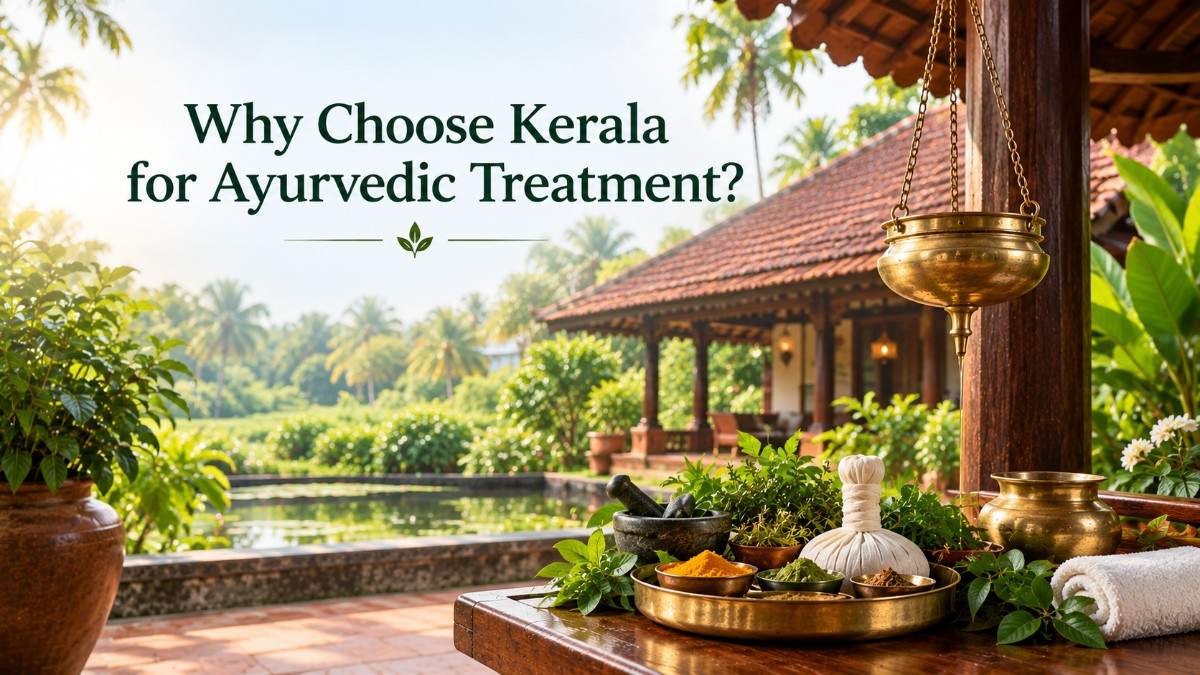
7 Powerful Reasons Why Choose Kerala for Ayurvedic Treatment?
When exploring traditional wellness and holistic healthcare, many people ask, Why Choose Kerala for Ayurvedic Treatment? Kerala has a long-standing association with Ayurveda and is known for its traditional Ayurvedic practices, therapies, herbal preparations, Panchakarma, wellness programmes, and lifestyle-based approach. For people who want to experience Ayurveda in a setting closely connected with its traditions, Kerala offers an environment where treatment, nutrition, yoga, meditation, rest, and mindful living can be brought together.
Ayurveda Healing Ashram follows a Kerala Ayurveda approach rooted in traditional practices and personalized care. The centre’s website states that its Ayurvedic heritage dates back to 1965 and highlights traditional therapies, personalized wellness programmes, Panchakarma, Ayurvedic nutrition, yoga, meditation, and a peaceful healing environment.
Choosing an Ayurvedic centre, however, should involve more than choosing a location. The practitioner, treatment plan, assessment process, therapy selection, accommodation, food, and follow-up care are all important. Understanding what makes Kerala associated with Ayurveda can help you make a more informed choice.
Why Choose Kerala for Ayurvedic Treatment?
Kerala is widely associated with Ayurveda because traditional Ayurvedic knowledge has been preserved and practised across generations in the state. Kerala Ayurveda incorporates classical therapies, herbal oils, Ayurvedic medicines, dietary practices, lifestyle routines, yoga, and other supportive wellness practices.
The Kerala Ayurveda experience is also different from simply visiting a spa for relaxation. A traditional Ayurvedic treatment programme may involve consultation, assessment, personalised therapies, specific food routines, rest, yoga, meditation, and post-treatment guidance.
Ayurveda Healing Ashram describes its approach as traditional Kerala Ayurveda combined with personalized treatment. Its website highlights qualified Ayurvedic doctors, classical therapies, Panchakarma, herbal oils, traditional medicines, yoga, and individualized wellness programmes.
This combination of traditional knowledge and structured care is one of the main reasons people consider Kerala when looking for Ayurvedic treatment.
Kerala Has a Long History of Ayurveda
One of the strongest answers to Why Choose Kerala for Ayurvedic Treatment? is its historical connection with the Ayurvedic tradition.
Ayurveda is an ancient Indian system of traditional medicine that takes a broad view of health. Traditional Ayurvedic practice considers factors such as an individual’s constitution, lifestyle, diet, digestion, daily routine, and overall balance.
Kerala has developed a distinctive tradition within Ayurveda. Knowledge has historically been passed through families, teachers, practitioners, and institutions. This has contributed to the continued presence of Ayurveda in Kerala’s healthcare and cultural environment.
Ayurveda Healing Ashram presents itself as an authentic Kerala Ayurveda center operating since 1965. The current website highlights its 70+ years of heritage and describes its approach as being based on generations of Ayurvedic knowledge. For someone interested in traditional Ayurveda, experiencing treatment in a region where the practice remains deeply connected with local culture can be an important consideration.
Traditional Kerala Ayurveda and Classical Therapies
Kerala Ayurveda is commonly associated with a range of traditional therapies and treatment methods. Depending on the individual’s assessment and treatment plan, Ayurvedic care may involve therapies using herbal oils, therapeutic massage, steam treatments, dietary practices, Panchakarma procedures, yoga, meditation, and other classical approaches.
The important point is that Ayurvedic therapies should not simply be selected based on popularity. A qualified practitioner should determine which therapies are appropriate for an individual’s circumstances.
Ayurveda Healing Ashram states that its treatments are personalized according to factors such as body constitution, symptoms, lifestyle, and wellness goals. This allows the treatment experience to be structured around the individual rather than following an identical routine for every guest.
The Importance of Personalized Ayurvedic Treatment
Personalization is an important part of traditional Ayurvedic care. Two people may have similar symptoms but different lifestyles, dietary patterns, constitutions, ages, medical histories, and treatment requirements. Because of this, an Ayurvedic practitioner may assess several factors before recommending a programme.
Ayurveda Healing Ashram states that its doctors assess an individual’s body constitution, lifestyle, and wellness goals before developing personalized healing programmes. Its Panchakarma programmes are also described as being planned following detailed Ayurvedic consultation.
A consultation can help the practitioner understand the person’s needs and determine the appropriate therapies, duration, diet, and supportive practices. This is particularly important for people travelling from another city or country for treatment because the programme should be planned around their individual requirements rather than simply selected from a list of treatments.
Panchakarma in Kerala
Panchakarma is one of the best-known aspects of traditional Ayurvedic treatment in Kerala. The term Panchakarma refers to classical Ayurvedic therapeutic procedures. It is traditionally used as part of carefully planned treatment programes and may involve preparatory procedures, selected main therapies, and post-treatment care.
At Ayurveda Healing Ashram, Panchakarma programmes are planned after an Ayurvedic consultation. The website states that factors including health condition, age, digestive strength, and dosha imbalance are considered before determining the treatment approach and duration.
The centre describes Panchakarma as having three broad stages:
- Purvakarma: Preparatory therapies
- Pradhanakarma: Main therapeutic procedures
- Paschatkarma: Post-treatment care
The centre’s Panchakarma page also describes classical procedures including Vamana, Virechana, Basti, Nasya, and Raktamokshana. These procedures are not intended to be selected casually. Appropriate assessment and professional supervision are important, particularly for intensive therapies.
Why Choose Kerala for Panchakarma?
People interested specifically in Panchakarma may consider Kerala because the state has a long association with traditional Ayurvedic practice. A structured Panchakarma programme may involve more than an individual therapy session. Preparation, treatment, food, rest, and post-treatment routines can all form part of the overall programme.
Ayurveda Healing Ashram offers dedicated Panchakarma programmes and describes them as personalized according to the individual’s health condition, mental state, constitution, and guidance from Ayurvedic doctors.
The centre also states that its Panchakarma programmes generally range from 21 to 28 days depending on individual circumstances. The actual duration should be determined through consultation rather than assumed in advance. For anyone considering Panchakarma, the quality of assessment and supervision is therefore as important as the location.
Kerala’s Natural Environment and Ayurveda
Kerala’s natural surroundings are another part of the Ayurvedic experience. The state is known for tropical greenery, vegetation, coastal landscapes, and a climate that contributes to its distinctive environment. Many Ayurvedic centres are located in surroundings designed to encourage rest and a slower daily routine.
Ayurveda Healing Ashram describes its wellness retreat as being surrounded by peaceful nature and tropical greenery. The centre combines Ayurvedic treatment with accommodation, yoga, meditation, Ayurvedic meals, and a calm healing environment.
A peaceful environment does not replace medical or therapeutic care. Instead, it can provide supportive surroundings for people following a structured wellness programme. Having time away from demanding work schedules, traffic, digital distractions, and irregular routines may also make it easier to concentrate on rest and wellness.
Kerala’s Monsoon and Ayurvedic Traditions
Kerala’s monsoon season is often discussed in relation to traditional Ayurvedic treatment. Ayurveda Healing Ashram’s states that the monsoon climate is considered beneficial for certain Ayurvedic therapies because the cooler and humid environment is traditionally associated with the use of herbal oils and treatment procedures.
For people planning an Ayurvedic visit, seasonal considerations may therefore be discussed with the treatment center. However, treatment timing should depend on the individual’s needs and the practitioner’s recommendations rather than assuming that one season is medically suitable for everyone.
Ayurvedic Nutrition in Kerala
Food is an important part of traditional Ayurveda. Ayurvedic approaches may consider food quality, preparation, meal timing, digestion, individual constitution, and lifestyle when planning a wellness programme. Ayurveda Healing Ashram places particular emphasis on personalized Ayurvedic meals. Its website describes nutrition as an important part of Ayurvedic healing and Panchakarma programmes.
The center also highlights several food-related practices, including vegetarian food, no preservatives, no refrigeration, and ingredients associated with its own organic farming practices. For visitors, having meals incorporated into the treatment programme can make it easier to maintain a consistent routine. Any dietary plan should still account for allergies, medical conditions, nutritional requirements, and individual dietary restrictions.
Organic Farming and Ayurvedic Lifestyle
Ayurvedic wellness is often connected with natural ingredients and mindful lifestyle practices. Ayurveda Healing Ashram states that it has its own pesticide-free organic farms and incorporates this approach into its food and wellness philosophy. The centre also highlights in-house products as part of its traditional Ayurveda approach.
This focus reflects the center’s broader approach of combining treatment with lifestyle and nutrition. For someone staying for an extended Ayurvedic programme, daily habits can become an important part of the overall experience. Meals, rest, therapy schedules, yoga, meditation, and other routines can create a more structured environment than a short wellness visit.
Yoga and Meditation Alongside Ayurveda
Yoga and Ayurveda have traditionally been connected within Indian wellness practices. Yoga may include physical postures, breathing practices, relaxation, meditation, and mindful awareness. When appropriately selected, yoga can complement an Ayurvedic wellness programme.
Ayurveda Healing Ashram incorporates yoga and meditation into its programmes. Its website states that yoga and meditation are integrated with Panchakarma and Ayurvedic therapies and describes yoga as more than exercise, presenting it as a way of developing awareness and inner calm. The centre’s retreat programme also includes daily yoga and meditation as part of the overall experience. The intensity and type of yoga should always be appropriate for the person’s physical condition and treatment programme.
Ayurveda Wellness Retreat in Kerala
Another reason people consider Kerala is the opportunity to combine treatment with a wellness retreat. An Ayurvedic retreat can provide a structured period where accommodation, food, treatment, yoga, meditation, and relaxation are arranged within one programme. Ayurveda Healing Ashram describes its retreat as a combination of traditional Kerala Ayurveda and a healing holiday. Its programme includes comfortable accommodation, personalized Panchakarma therapies, yoga, Ayurvedic meals, meditation, and a nature-focused environment.
This type of programme may be useful for people who want to dedicate several days or weeks to their wellness routine rather than attending isolated treatment sessions. The retreat format can also be convenient for people travelling from outside Kerala.
A Structured Approach to Ayurvedic Treatment
A well-planned Ayurvedic programme generally involves more than the therapy itself.
A structured approach may include:
- Initial consultation
- Ayurvedic assessment
- Treatment planning
- Selection of appropriate therapies
- Ayurvedic meals
- Rest and recovery
- Yoga or meditation
- Lifestyle guidance
- Post-treatment recommendations
Ayurveda Healing Ashram states that its treatment programmes are guided by Ayurvedic doctors and tailored according to individual needs. Its website also describes customized wellness programmes and doctor-guided Panchakarma. This structure can help visitors understand what their treatment involves and how different parts of the programme fit together.
Ayurvedic Treatment for Different Wellness Needs
People explore Ayurveda for many different reasons. Ayurveda Healing Ashram’s website lists personalized programmes relating to areas such as stress management, back pain, digestive concerns, arthritis, skin conditions, and respiratory disorders. The centre’s broader specialties also include lifestyle-related concerns, neurological disorders, musculoskeletal conditions, skin diseases, asthma, and IBS.
The appropriate treatment depends on individual assessment. People with a diagnosed medical condition should discuss Ayurvedic treatment with qualified healthcare professionals and should not discontinue prescribed medication or conventional treatment without appropriate medical advice.
Why Choose Ayurveda Healing Ashram in Kerala?
For people specifically looking for an Ayurvedic centre in Kerala, Ayurveda Healing Ashram offers several features that reflect the traditional Kerala Ayurveda experience. The website presents the centre as offering Kerala Ayurveda since 1965 and highlights more than 70 years of heritage, qualified Ayurvedic doctors, traditional therapies, personalized programmes, Panchakarma, Ayurvedic food, yoga, meditation, and international guest support.
The centre is located in Vandithadam, Pachaloor, Thiruvananthapuram, Kerala. Its website also provides information about treatment packages, Panchakarma programmes, wellness retreats, and international patient support. This combination allows visitors to experience Ayurvedic treatment within a dedicated wellness setting.
Support for International Ayurveda Guests
Kerala attracts people from different parts of India and other countries who want to experience traditional Ayurveda. For international visitors, treatment is only one part of the journey. Travel planning, accommodation, communication, consultation, and local assistance can also be important.
Ayurveda Healing Ashram has a dedicated international-patient programme. The website states that it welcomes wellness travellers from around the world and provides personalized consultation support, Ayurvedic treatment, Panchakarma, doctor-guided wellness programmes, accommodation, and travel assistance.
The centre’s website also provides dedicated information for visitors from countries including Germany, the USA, the UK, and France. This can make the process more organized for someone planning a longer Ayurvedic stay from outside India.
What Should You Look for When Choosing an Ayurvedic Centre?
Knowing Why Choose Kerala for Ayurvedic Treatment? is only the first step. The next question should be how to select an appropriate centre.
Consider the following:
Qualified Ayurvedic Practitioners
Look for a center where qualified practitioners are involved in assessment and treatment planning.
Individual Consultation
Treatment should be based on the individual’s circumstances rather than a generic package.
Clear Treatment Plan
Ask what therapies are recommended, why they are being recommended, and how long the programme is expected to last.
Appropriate Supervision
More intensive therapies should be professionally supervised.
Nutrition
Ask whether meals are part of the programme and whether dietary requirements can be accommodated.
Accommodation
For longer programmes, comfortable and suitable accommodation can make the experience easier.
Follow-Up Guidance
Ask what lifestyle or post-treatment recommendations are provided after completing the programme.
International Support
If travelling from abroad, check whether the centre assists with travel, accommodation, communication, and other practical requirements.
These factors can help you evaluate an Ayurvedic centre based on more than location alone.
How to Prepare for Ayurvedic Treatment in Kerala
Preparation can make an Ayurvedic treatment stay more comfortable.
Before travelling, provide the Ayurvedic practitioner with accurate information about your health and current routine.
You may need to discuss:
- Current health concerns
- Previous diagnoses
- Current medicines
- Allergies
- Previous surgeries
- Dietary restrictions
- Sleep patterns
- Lifestyle habits
- Previous Ayurvedic treatments
- Treatment expectations
If you are travelling internationally, also consider your travel documents, insurance, accommodation, transportation, and length of stay.
It is useful to communicate with the treatment centre before travelling so that your programme can be discussed in advance.
How Long Should an Ayurvedic Stay in Kerala Be?
There is no universal duration for Ayurvedic treatment.
The appropriate length depends on the type of programme, treatment goals, individual health circumstances, therapies selected, and practitioner recommendations.
Ayurveda Healing Ashram offers programmes of different durations. Its current website lists different treatment durations depending on the wellness programme, while its Panchakarma page describes programmes that may extend from 21 to 28 days.
Therefore, visitors should not assume that a longer treatment is automatically better. The programme should be appropriate for the individual and guided by professional assessment.
Ayurveda as a Lifestyle Experience
One of the distinctive aspects of an Ayurvedic stay is that it can involve changes to everyday routines.
Instead of focusing only on a treatment session, an individual may follow a schedule involving:
- Regular meals
- Ayurvedic therapies
- Adequate rest
- Yoga
- Meditation
- Reduced distractions
- Lifestyle guidance
- Sleep routines
Ayurveda Healing Ashram’s retreat model brings these elements together in one setting.
This can provide an opportunity to learn routines that may be continued after returning home.
The long-term value of these practices depends on how appropriately they are selected and how realistically they can be incorporated into everyday life.
What Makes Kerala Ayurveda Different From a Regular Wellness Spa?
A wellness spa may primarily focus on relaxation and temporary comfort.
Traditional Ayurvedic treatment, on the other hand, can involve consultation, assessment, treatment planning, therapeutic procedures, nutrition, lifestyle guidance, and follow-up.
Ayurveda Healing Ashram specifically distinguishes its traditional Kerala Ayurveda approach from a wellness-spa experience and describes its programmes as structured around personalized healing, herbal oils, detox therapies, diet, yoga, and doctor-guided Panchakarma.
For people seeking Ayurvedic treatment rather than simply a relaxing spa experience, this distinction can be important.
Frequently Asked Questions
1. Why Choose Kerala for Ayurvedic Treatment?
Kerala has a long-standing association with Ayurveda and is known for traditional Ayurvedic therapies, Panchakarma, herbal practices, Ayurvedic nutrition, yoga, meditation, and wellness programmes. The region also offers a natural setting suited to longer wellness stays.
2. What is special about Kerala Ayurveda?
Kerala has preserved distinctive Ayurvedic traditions through generations. Traditional therapies, herbal oils, Panchakarma, Ayurvedic food, yoga, and lifestyle practices are commonly associated with the Kerala Ayurveda experience.
3. Is Ayurveda Healing Ashram in Kerala?
Yes. Ayurveda Healing Ashram is located in Vandithadam, Pachaloor, Thiruvananthapuram, Kerala.
4. Since when has Ayurveda Healing Ashram been practising Ayurveda?
Ayurveda Healing Ashram have been offering Kerala Ayurveda since 1965 and currently describes more than 70 years of Ayurvedic heritage.
5. Does Ayurveda Healing Ashram offer Panchakarma?
Yes. Panchakarma is one of the center’s major Ayurvedic programmes. Treatment is described as being planned following an Ayurvedic consultation and individual assessment.
6. Is Panchakarma suitable for everyone?
No single Ayurvedic therapy is appropriate for everyone. Panchakarma procedures should be selected after an appropriate assessment by a qualified Ayurvedic practitioner.
7. Does the center provide Ayurvedic food?
Yes. Ayurveda Healing Ashram highlights personalized Ayurvedic meals and describes nutrition as part of its Ayurvedic healing and Panchakarma programmes.
8. Does Ayurveda Healing Ashram include yoga and meditation?
9. Can international visitors receive treatment at the Ashram?
Yes. The centre has a dedicated international-patient programme and states that it supports wellness travellers with consultation, treatment, accommodation, and travel assistance.
10. How long should I stay in Kerala for Ayurvedic treatment?
The duration depends on the treatment programme and individual requirements. Ayurveda Healing Ashram offers different programme durations, while its Panchakarma information describes programmes that may last approximately 21–28 days.
Call Now
+91 7356 445 553
+91 8921 442 253
We Welcome You
Vandithadam, Pachaloor P.O,
Thiruvananthapuram,
kovalam, kerala India
Sent Email
info@sivasoorya.org




Connect with Kerala’s Leading Ayurveda Centre for treatment enquiries, Panchakarma scheduling, wellness retreat packages, or customised Ayurvedic guidance. Our skilled Ayurvedic specialists and support team assist guests from India and abroad with trusted insights, professional care, and well-defined recommendations for lasting healing.

