Ayurvedic Treatment Hospital in Kerala, India, Ayurveda Resort, Doctor
THE BEST AYURVEDIC TREATMENT CENTRE AND HOSPITAL IN KERALA, INDIA | SINCE 1965

THE BEST AYURVEDIC TREATMENT CENTRE AND HOSPITAL IN KERALA, INDIA | SINCE 1965

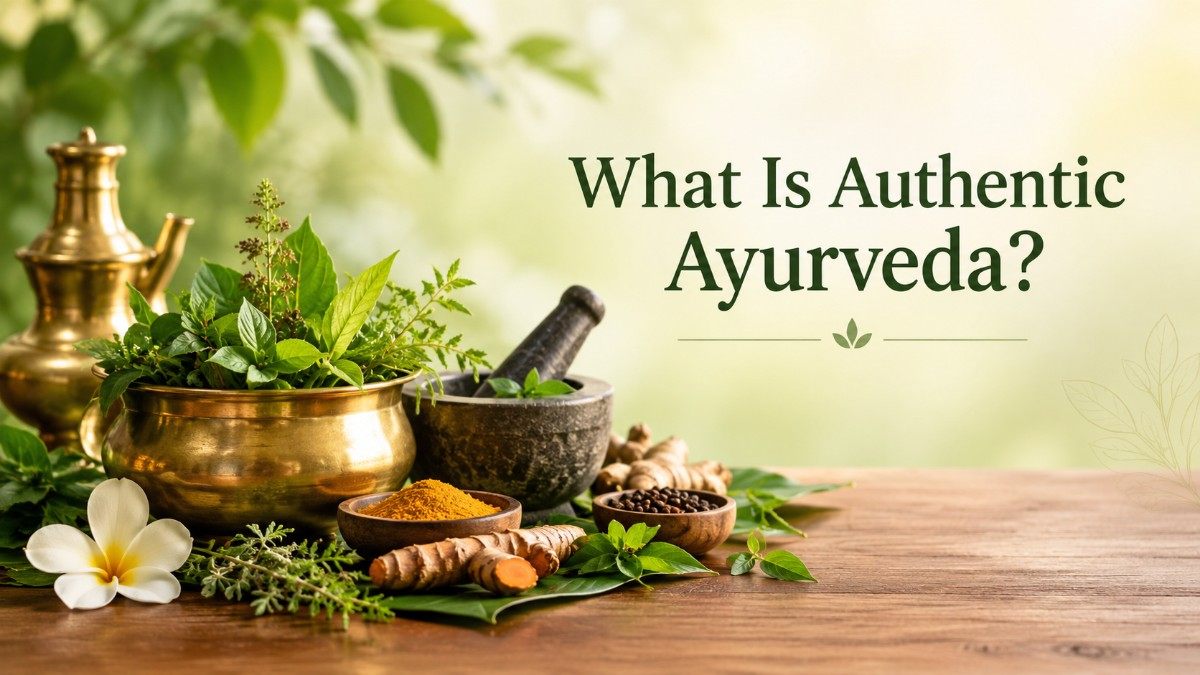
What Is Authentic Ayurveda? 6 Powerful Principles Explained!
What is authentic Ayurveda? The question matters because Ayurveda is much more than a collection of herbal oils, massages, or wellness routines. It is a traditional Indian system of health that approaches wellbeing through a broader understanding of the individual, including diet, daily routine, digestion, constitution, lifestyle, and balance. Ayurveda has its own terminology, principles, diagnostic approaches, and therapeutic traditions, and the World Health Organization has published international terminology and practice benchmarks for Ayurveda.
At Ayurveda Healing Ashram in Thiruvananthapuram, the centre describes its approach as being rooted in classical Ayurvedic traditions, personalized assessment, herbal formulations, therapeutic treatments, diet regulation, yoga, and Panchakarma programmes.
Understanding what authentic Ayurveda involves can help people distinguish a traditional, individualized Ayurvedic approach from services that simply use the word “Ayurveda” for general wellness products or spa treatments.
What Is Authentic Ayurveda?
Authentic Ayurveda can be understood as the practice of Ayurveda according to its traditional principles, terminology, methods of assessment, and therapeutic approach, while maintaining appropriate standards of practitioner training, safety, and quality.
Ayurveda is a traditional system of healthcare that developed in India. WHO describes traditional medicine as systems of health knowledge and practices that originated in particular historical and cultural settings and have evolved over time. WHO has also developed international standard terminology specifically for Ayurveda to support clearer communication among practitioners, researchers, health workers, and the publicAn important feature of authentic Ayurveda is that it does not simply treat every person with the same routine.
The Ayurvedic approach traditionally considers the individual’s constitution, present condition, diet, lifestyle, digestion, and other factors before choosing an appropriate course of care. This is one reason an authentic Ayurvedic experience may begin with consultation and assessment rather than immediately starting a treatment.
6 Principles That Help Explain Authentic Ayurveda
1. Individualized Assessment Is Central
One important answer to what is authentic Ayurveda is that the person is considered as an individual.
Ayurvedic principles describe concepts such as Prakriti, which relates to an individual’s constitution, and Dosha, commonly described through Vata, Pitta, and Kapha. The Ministry of AYUSH’s Ayurvedic knowledge resource explains that Ayurveda views individuals as unique and considers Prakriti an important part of understanding the person.
This means that two people with similar complaints may not necessarily receive the same Ayurvedic recommendations.
An Ayurvedic consultation may consider:
- Constitution
- Current symptoms
- Digestion
- Diet
- Sleep
- Daily routine
- Seasonal influences
- Lifestyle
- Previous health concerns
- Current medications or treatments
The purpose is to build a more complete understanding of the individual before selecting an approach.
At Ayurveda Healing Ashram, the centre’s own description of its programmes emphasizes detailed Ayurvedic consultation and individualized treatment planning based on factors such as health condition, mental state, and dosha constitution.
2. Ayurveda Uses Its Own Classical Framework
Authentic Ayurveda is based on a structured body of traditional knowledge rather than a collection of unrelated home remedies. The AYUSH knowledge resource describes fundamental Ayurvedic concepts including Pancha Mahabhuta, Dosha, Dhatu, Mala, Agni, and Prakriti.
These terms describe different aspects of the Ayurvedic understanding of the body and its functions.
For example:
- Dosha refers to Vata, Pitta, and Kapha within the Ayurvedic framework.
- Dhatu refers to the body’s tissue systems.
- Mala refers to waste products.
- Agni relates to digestion and metabolism.
- Prakriti relates to individual constitution.
These concepts are part of the classical framework through which Ayurvedic practitioners understand health and disease.
Therefore, authentic Ayurveda is not simply about using a traditional herb or receiving an oil massage. It involves a broader system of knowledge.
3. Food and Daily Routine Matter
Another important part of what is authentic Ayurveda is the emphasis on daily habits. Ayurveda traditionally considers food, digestion, sleep, activity, rest, and routine as important components of health.
Depending on the individual, Ayurvedic guidance may discuss:
- Meal patterns
- Food choices
- Digestion
- Sleep habits
- Daily routine
- Physical activity
- Rest
- Seasonal adjustments
- Stress management
This reflects the traditional Ayurvedic emphasis on maintaining health rather than focusing only on disease.
The WHO describes traditional medicine more broadly as including holistic and personalized approaches that can emphasize health and wellbeing, although the specific principles and terminology differ between systems. A structured Ayurvedic programme may therefore include lifestyle guidance alongside therapies rather than treating an individual therapy as the entire Ayurvedic experience.
4. Classical Therapies Have a Specific Context
When people ask what is authentic Ayurveda, they often associate the answer with Panchakarma, Abhyanga, herbal treatments, or other traditional therapies. However, these therapies are not necessarily intended to be performed in exactly the same way for every individual. The therapy, duration, preparation, frequency, and combination can depend on the person’s condition and the practitioner’s assessment.
For example, Ayurveda Healing Ashram describes its Panchakarma programmes as being structured after Ayurvedic consultation and individualized according to the person’s health condition and dosha constitution.
This is an important distinction between a personalized Ayurvedic programme and a generic wellness package.
5. Ayurveda May Include More Than Physical Treatments
Authentic Ayurveda traditionally takes a broader view of wellbeing. The classical framework considers the relationship between the body, mind, habits, environment, and lifestyle. The WHO’s description of traditional medicine similarly notes that traditional health systems can emphasize holistic approaches involving mind, body, and environment.
At Ayurveda Healing Ashram, the centre describes an environment that combines Ayurveda with yoga and meditation. Its information about life at the ashram also describes regular yoga and a lifestyle designed around simplicity and wellbeing. This broader approach is useful to understand because authentic Ayurveda is not necessarily limited to a treatment room.
Diet, rest, movement, mental wellbeing, and daily habits may all become part of a person’s overall programme.
6. Qualified Practitioners and Appropriate Assessment Matter
Another important part of understanding what is authentic Ayurveda is the role of trained practitioners. Ayurvedic treatment involves decisions about assessment, medicines, therapies, dosage, duration, and contraindications. These decisions should not simply be made by choosing a treatment from a menu.
WHO has published benchmarks for the practice of Ayurveda that establish minimum reference standards related to safe and quality practice. A professional Ayurvedic setting should therefore have appropriate practitioner involvement and processes for assessing the individual’s needs.
This also helps distinguish professional Ayurvedic care from products or services marketed as “Ayurvedic” without a structured clinical approach.
How Can You Recognize an Authentic Ayurvedic Approach?
There is no single label or visual feature that proves authenticity. Instead, look at how the service is delivered.
Consultation Before Treatment
An individualized consultation is an important feature to look for. The practitioner should understand the person’s concerns and relevant health information before recommending a treatment pathway.
Individualized Recommendations
A genuine Ayurvedic approach should not necessarily give exactly the same programme to everyone. Treatment selection can depend on the individual’s assessment.
Traditional Ayurvedic Principles
The service should be connected to recognizable Ayurvedic concepts rather than simply using Ayurvedic terminology for a generic spa treatment.
Appropriate Practitioner Involvement
A trained Ayurvedic professional should be involved in assessment and treatment decisions.
Clear Information About Therapies
People should understand what a therapy involves, why it is being recommended, and what the relevant precautions are.
Attention to Diet and Routine
Ayurvedic care can include guidance related to food, lifestyle, rest, activity, and daily habits.
Responsible Use of Herbal Preparations
Natural does not automatically mean risk-free. Ayurvedic medicines and herbal preparations should be selected and used appropriately, particularly for people taking conventional medicines or managing chronic health conditions.
Authentic Ayurveda vs a Spa-Style Ayurveda Experience
The word “Ayurveda” is used in many different ways. A spa-style experience may focus mainly on relaxation treatments such as oil massage, while a more traditional Ayurvedic programme may involve consultation, assessment, diet guidance, prescribed therapies, and follow-up.
This does not mean that relaxation treatments have no value. It simply means that a massage or wellness treatment on its own should not necessarily be described as the complete practice of Ayurveda.
For someone researching what is authentic Ayurveda, the key difference is the framework behind the treatment.
Ask:
- Was there an Ayurvedic assessment?
- Was the treatment selected for the individual?
- Is a qualified practitioner involved?
- Are traditional Ayurvedic principles being used?
- Is diet or lifestyle considered?
- Is there appropriate follow-up?
These questions can help clarify what type of service is actually being offered.
What Role Does Panchakarma Play in Authentic Ayurveda?
Panchakarma is one of the best-known Ayurvedic therapeutic traditions. However, authentic Panchakarma should not be understood simply as a standard “detox package.” Ayurveda Healing Ashram describes its Panchakarma programmes as being structured after consultation and individualized according to the person’s health condition, mental state, and dosha constitution.
The classical Panchakarma framework includes specific procedures and preparation stages, and appropriate selection depends on the individual’s condition. A person should therefore not select a Panchakarma programme solely because it is popular or advertised as a general detox.
Professional Ayurvedic assessment is important to determine whether a particular therapy is appropriate.
Why Is Individualization Important in Ayurveda?
Ayurveda’s concept of individualization is one of the reasons people may describe a traditional Ayurvedic approach as personalized. The Ministry of AYUSH’s explanation of Ayurvedic principles states that Ayurveda considers every individual unique and that Prakriti is important in this understanding.
For example, two people may report similar digestive complaints but have different:
- Dietary habits
- Constitution
- Sleep patterns
- Stress levels
- Existing health conditions
- Medication use
- Lifestyle factors
An individualized approach considers those differences rather than assuming that one remedy or treatment schedule is appropriate for everyone.
What Can You Expect During an Authentic Ayurveda Consultation?
The exact process varies between practitioners, but an Ayurvedic consultation may involve a detailed discussion of your concerns and lifestyle.
You may be asked about:
- Main health concerns
- Digestion
- Appetite
- Sleep
- Daily habits
- Food preferences
- Physical activity
- Stress
- Previous illnesses
- Current medications
- Relevant treatment history
The practitioner may then consider the information through an Ayurvedic framework and decide whether specific therapies, dietary recommendations, medicines, or lifestyle changes are appropriate. The consultation is therefore a significant part of the process rather than merely a formal step before treatment.
Can Authentic Ayurveda Be Combined With Modern Healthcare?
Ayurveda and modern medicine are different healthcare systems with different theories, terminology, and treatment methods. For people managing an existing medical condition, it is important not to stop prescribed medication or replace medical treatment without speaking to the appropriate healthcare professional.
WHO describes integrative medicine as an evidence-based approach that combines biomedical and traditional or complementary knowledge and practices where appropriate. This means people should communicate with their healthcare providers about all treatments and supplements they are using. This is particularly important when herbs or Ayurvedic medicines may interact with conventional medicines.
Authentic Ayurveda and Safety
Authenticity should not be separated from safety.
A responsible Ayurvedic setting should pay attention to:
- Patient history
- Existing medical conditions
- Current medications
- Appropriate treatment selection
- Contraindications
- Qualified practitioner involvement
- Hygiene
- Correct preparation and use of medicines
WHO’s Ayurveda practice benchmarks specifically address minimum requirements for safe and quality Ayurveda practice. People should also be cautious of claims that promise guaranteed cures, instant detoxification, or universal results. Traditional healthcare practices can be individualized, and outcomes can vary.
Ayurveda Healing Ashram and Traditional Ayurvedic Care
Ayurveda Healing Ashram describes itself as a centre rooted in the Ayurvedic tradition of the Noorani family and states that its approach combines classical Ayurvedic knowledge with personalized treatment and therapies. Its current website highlights Panchakarma, herbal formulations, therapeutic Abhyanga, diet regulation, yoga, and other Ayurvedic and wellness practices.
The centre also describes an environment with a herbal garden, organic food production, yoga, meditation, and accommodation designed around an ashram-style experience. For people searching for what is authentic Ayurveda, understanding the difference between a complete Ayurvedic programme and an isolated treatment can make it easier to evaluate what kind of experience they are looking for.
How Diet Fits Into Authentic Ayurveda
Diet has an important place in Ayurvedic health practices. Food recommendations may be discussed in relation to digestion, individual constitution, routine, seasonal factors, and the person’s current condition. This does not necessarily mean that there is one universal Ayurvedic diet.
Instead, dietary recommendations may be individualized. Ayurveda Healing Ashram describes diet regulation as part of its treatment approach and also states that it provides organic fruits and vegetables as part of its ashram environment.
People should still discuss significant dietary changes with a qualified healthcare professional, especially if they have diabetes, kidney disease, pregnancy, eating disorders, or other medical considerations.
Why Traditional Knowledge and Modern Standards Both Matter
Authentic Ayurveda is rooted in a traditional knowledge system, but responsible contemporary practice also needs appropriate standards around safety and quality. WHO’s work on Ayurveda terminology is intended to make Ayurvedic concepts more consistent and understandable internationally, while its practice benchmarks provide minimum standards for quality and safety.
This is useful for people trying to understand what “authentic” should mean in practice. Authenticity is not simply about appearance, traditional clothing, herbs, or a peaceful environment. It is more fundamentally about whether the care reflects the principles and methods of Ayurveda while being delivered responsibly.
Questions to Ask Before Choosing an Ayurvedic Centre
If you are researching what is authentic Ayurveda, consider asking the following:
- Who will conduct the Ayurvedic consultation?
- What training does the practitioner have?
- Is the treatment individualized?
- Why has a particular therapy been recommended?
- What medicines or herbal preparations will be used?
- Are my existing medicines taken into account?
- What preparation is required before Panchakarma?
- What diet and lifestyle guidance is included?
- How is progress monitored?
- What should I do if I develop side effects?
- How are hygiene and treatment procedures managed?
These questions can help you understand whether the service is focused on structured Ayurvedic care rather than a generic wellness package.
Frequently Asked Questions
1. What is authentic Ayurveda?
Authentic Ayurveda refers to an Ayurvedic approach rooted in the system’s traditional principles, terminology, individualized assessment, therapies, diet, lifestyle guidance, and practitioner-led care. Contemporary practice should also pay attention to appropriate safety and quality standards.
2. Is Ayurveda only about herbal medicines?
No. Ayurveda includes much more than herbal preparations. Its traditional framework includes concepts related to constitution, Dosha, Dhatu, Mala, Agni, food, lifestyle, daily routine, and therapeutic practices.
3. What makes an Ayurvedic treatment personalized?
Personalization means that recommendations are based on the individual’s constitution, current concerns, lifestyle, diet, and other relevant factors rather than giving everyone an identical treatment routine.
4. What is Prakriti in Ayurveda?
Prakriti is an Ayurvedic concept describing an individual’s constitution or innate characteristics. The AYUSH knowledge resource identifies Prakriti as an important principle because Ayurveda considers each individual unique.
5. What are Doshas?
Doshas are traditionally described in Ayurveda as Vata, Pitta, and Kapha. They form part of the Ayurvedic framework used to understand physiological functions and individual constitution.
6. Is Panchakarma part of authentic Ayurveda?
Panchakarma is a traditional Ayurvedic therapeutic framework. It should not simply be treated as a generic detox programme; the selection and structure of therapies should be based on appropriate Ayurvedic assessment.
7. Is authentic Ayurveda the same as an Ayurvedic spa?
Not necessarily. A spa may offer individual relaxation treatments, while a traditional Ayurvedic programme can include consultation, individualized treatment, dietary guidance, lifestyle recommendations, and follow-up.
8. Can Ayurveda be used with modern medicine?
Traditional and modern healthcare can sometimes be used alongside each other, but this should be discussed with qualified healthcare providers. WHO defines integrative medicine as an evidence-based approach combining biomedical and traditional or complementary practices where appropriate.
9. Are Ayurvedic medicines always safe because they are natural?
No. “Natural” does not automatically mean risk-free. Ayurvedic medicines and herbal preparations can have effects and may interact with conventional medicines. Appropriate practitioner guidance and quality standards are important.
10. Does authentic Ayurveda focus only on illness?
No. Ayurveda traditionally includes preventive and health-promoting approaches alongside management of health conditions. WHO’s descriptions of traditional medicine also recognize preventive and wellbeing-oriented dimensions within traditional health systems
Call Now
+91 7356 445 553
+91 8921 442 253
We Welcome You
Vandithadam, Pachaloor P.O,
Thiruvananthapuram,
kovalam, kerala India
Sent Email
info@sivasoorya.org




Connect with Kerala’s Leading Ayurveda Centre for treatment enquiries, Panchakarma scheduling, wellness retreat packages, or customised Ayurvedic guidance. Our skilled Ayurvedic specialists and support team assist guests from India and abroad with trusted insights, professional care, and well-defined recommendations for lasting healing.

