Ayurvedic Treatment Hospital in Kerala, India, Ayurveda Resort, Doctor
THE BEST AYURVEDIC TREATMENT CENTRE AND HOSPITAL IN KERALA, INDIA | SINCE 1965

THE BEST AYURVEDIC TREATMENT CENTRE AND HOSPITAL IN KERALA, INDIA | SINCE 1965

The 5 Types of Panchakarma Therapies
Panchakarma is one of the most respected healing approaches in Ayurveda, designed to cleanse the body, remove accumulated toxins, and restore the natural balance of the doshas. The term “Panchakarma” literally means “five actions,” referring to five specialized detoxification procedures that help rejuvenate both body and mind. Understanding the different types of Panchakarma therapies can help individuals choose the most suitable treatment based on their health condition, body constitution, and wellness goals.
In Kerala, Panchakarma treatments are performed following traditional Ayurvedic principles under the supervision of experienced practitioners. These therapies are often recommended for detoxification, stress management, digestive health, joint disorders, and overall rejuvenation.
What is Panchakarma Therapy?
Panchakarma is a systematic Ayurvedic detoxification process that aims to eliminate toxins (Ama) from the body while balancing Vata, Pitta, and Kapha doshas. Unlike temporary cleansing methods, Panchakarma focuses on addressing the root cause of imbalances through personalized treatments.
The therapy usually includes preparatory procedures, the main cleansing treatments, and post-treatment rejuvenation practices that help restore optimal health.
Why is Panchakarma Important?
Modern lifestyles often expose the body to stress, unhealthy eating habits, environmental pollutants, and irregular routines. These factors can contribute to toxin accumulation and dosha imbalance.
Panchakarma therapies help:
- Support natural detoxification
- Improve digestion and metabolism
- Enhance immunity
- Promote mental clarity
- Improve energy levels
- Support healthy skin
- Encourage overall well-being
Three Stages of a Panchakarma Program
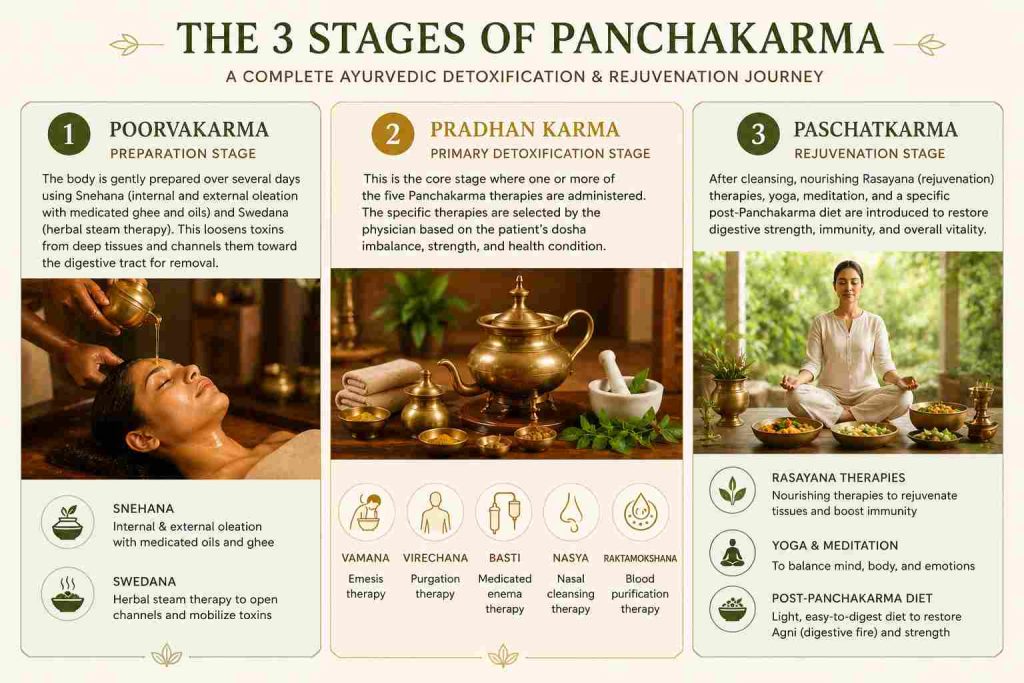
Every Panchakarma treatment regardless of which therapies are chosen follows a structured three-stage process designed to safely prepare, cleanse, and restore the body.
The Five Main Types of Panchakarma Therapies
1. Vamana (Therapeutic Emesis)
Vamana is a controlled therapeutic procedure designed to eliminate excess Kapha dosha from the body. It is commonly recommended for individuals experiencing respiratory issues, congestion, allergies, and certain skin conditions.
Benefits of Vamana
- Removes excess mucus
- Supports respiratory health
- Helps manage Kapha-related disorders
- Promotes better digestion
2. Virechana (Therapeutic Purgation)
Virechana focuses on eliminating excess Pitta dosha through controlled cleansing of the gastrointestinal tract. It is commonly used for digestive issues, liver-related concerns, and certain inflammatory conditions.
Benefits of Virechana
- Supports liver function
- Helps improve digestion
- Assists in skin health management
- Promotes internal cleansing
3. Basti (Medicated Enema Therapy)
Basti is considered one of the most important Panchakarma therapies because it primarily addresses Vata imbalance. Herbal oils, decoctions, or medicated preparations are administered under professional supervision.
Benefits of Basti
- Supports colon health
- Helps manage joint discomfort
- Promotes nervous system balance
- Supports mobility and flexibility
4. Nasya (Nasal Detoxification Therapy)
Nasya involves administering medicated herbal oils through the nasal passages. According to Ayurveda, the nose is considered the gateway to the head.
Benefits of Nasya
- Helps clear sinus congestion
- Supports respiratory wellness
- Promotes mental clarity
- Helps reduce stress and tension
5. Raktamokshana (Blood Purification Therapy)
Raktamokshana is a specialized Ayurvedic purification therapy aimed at removing impurities from the blood. It is performed only when medically indicated and under expert supervision.
Benefits of Raktamokshana
- Supports skin health
- Helps reduce toxin accumulation
- Promotes healthy circulation
- Assists in balancing Pitta-related conditions
Preparatory Therapies Before Panchakarma
Before the main cleansing procedures, Ayurvedic practitioners often recommend preparatory treatments to loosen toxins and prepare the body.
Abhyanga
A full-body herbal oil massage that improves circulation and supports relaxation.
Swedana
A therapeutic sweating procedure that helps open channels and facilitate toxin removal.
These preparatory treatments improve the effectiveness of Panchakarma therapies.
Key Benefits of Panchakarma Therapies
The different types of Panchakarma therapies work synergistically to produce benefits that go far beyond simple relaxation. Patients who undergo a complete Panchakarma program at our centre commonly report improvements across multiple dimensions of wellness.
- Deeper and more restful sleep quality
- Noticeable reduction in stress and anxiety
- Clearer, healthier skin appearance
- Better immune system function over time
- Better immune system function over time
- Enhanced physical energy and mental clarity
- Reduced joint stiffness and improved flexibility
- Emotional balance and improved mood
Who Can Benefit from Panchakarma Therapies?
Panchakarma may be beneficial for individuals seeking:
- Detoxification programs
- Stress management support
- Digestive wellness
- Rejuvenation therapies
- Lifestyle disorder management
- Improved overall wellness
A professional Ayurvedic consultation is essential before beginning any Panchakarma treatment plan.
Recommended Diet During Panchakarma Therapies
Diet is inseparable from the effectiveness of any Panchakarma program. The digestive fire (Agni) is deliberately lowered during cleansing to redirect the body’s energy toward detoxification. Following the correct Panchakarma diet significantly enhances outcomes.
Foods Recommended During Panchakarma
- Warm rice gruel (Peya / Yavagu)
- Freshly cooked vegetable soups
- Light moong dal preparations
- Warm herbal teas and cumin water
- Steamed seasonal vegetables
- Medicated ghee (as prescribed)
- Rock salt and digestive spices
Foods to Avoid During Panchakarma
- Fried and processed foods
- Cold drinks and refrigerated items
- Heavy meat and dairy products
- Refined sugar and sweets
- Fermented and stale foods
- Excessive raw salads
- Alcohol and caffeinated beverages
Why Choose Panchakarma Treatment in Kerala?
Kerala is widely recognized for preserving authentic Ayurvedic traditions. The region’s favorable climate, abundance of medicinal herbs, and experienced practitioners make it a preferred destination for Panchakarma therapies.
Patients often choose Kerala for:
- Authentic Ayurvedic practices
- Experienced Ayurvedic doctors
- Traditional herbal formulations
- Personalized treatment plans
- Holistic healing environment
Conclusion
Understanding the various types of Panchakarma therapies can help individuals make informed decisions about their wellness journey. Whether the goal is detoxification, rejuvenation, stress reduction, or improving overall health, Panchakarma offers a structured Ayurvedic approach focused on restoring balance and supporting long-term well-being.
For individuals considering Panchakarma treatment, consultation with qualified Ayurvedic professionals is essential. The World Health Organization recognizes the importance of traditional medicine systems and encourages their safe and evidence-informed use as part of integrated healthcare approaches.
Frequently Asked Questions
1. What are the five main types of Panchakarma therapies?
The five main Panchakarma therapies are Vamana, Virechana, Basti, Nasya, and Raktamokshana.
2. Which Panchakarma therapy is best for detoxification?
The most suitable therapy depends on an individual’s dosha imbalance and health condition. An Ayurvedic consultation helps determine the appropriate treatment.
3. How long does Panchakarma treatment take?
Treatment duration may range from a few days to several weeks depending on the therapy and health goals.
4. Can Panchakarma help with stress management?
Yes. Panchakarma therapies are often used to support relaxation, mental clarity, and overall emotional well-being.
5. What is the purpose of Basti therapy?
Basti therapy primarily helps balance Vata dosha and supports digestive, nervous system, and joint health.
6. Is Panchakarma useful for skin problems?
Some Panchakarma therapies may support skin health by helping remove accumulated toxins and balancing doshas.
7. What should I do after Panchakarma treatment?
Following dietary recommendations, maintaining healthy routines, and attending follow-up consultations are important for long-term benefits.
8. What is the difference between Basti and Enema?
While the route of administration is similar, Basti is fundamentally different from a conventional enema. Basti uses specially prepared medicated herbal decoctions and oils that are retained and absorbed, not just used for mechanical flushing. The herbal formulations are selected individually and are understood in Ayurveda to nourish tissues, balance Vata, and deliver therapeutic compounds directly to the colon and associated tissues.
9. Which type of Panchakarma therapy is best for stress and anxiety ?
For stress, anxiety, insomnia, and nervous system-related concerns, Basti (as Vata is the dosha of the nervous system) and Nasya are frequently prescribed. Supporting therapies like Shirodhara and Abhyanga are also central to stress management programs. The physician will tailor a combination specific to your presentation.
10. How many types of Panchakarma therapies are there in Ayurveda?
Classical Ayurveda defines five core Panchakarma therapies: Vamana (therapeutic emesis), Virechana (therapeutic purgation), Basti (medicated enema), Nasya (nasal administration), and Raktamokshana (blood purification). These are called “Panchakarma” because “Pancha” means five and “Karma” means action or procedure.
Call Now
+91 7356 445 553
+91 8921 442 253
We Welcome You
Vandithadam, Pachaloor P.O,
Thiruvananthapuram,
kovalam, kerala India
Sent Email
info@sivasoorya.org


Connect with Kerala’s Leading Ayurveda Centre for treatment enquiries, Panchakarma scheduling, wellness retreat packages, or customised Ayurvedic guidance. Our skilled Ayurvedic specialists and support team assist guests from India and abroad with trusted insights, professional care, and well-defined recommendations for lasting healing.

