Ayurvedic Treatment Hospital in Kerala, India, Ayurveda Resort, Doctor
THE BEST AYURVEDIC TREATMENT CENTRE AND HOSPITAL IN KERALA, INDIA | SINCE 1965

THE BEST AYURVEDIC TREATMENT CENTRE AND HOSPITAL IN KERALA, INDIA | SINCE 1965

What Happens During a Panchakarma Treatment? A Complete Step-by-Step Guide
If you have been considering Ayurvedic detox therapy and wondering exactly what happens during a Panchakarma treatment, you are not alone. Many people are curious about the daily experience, the therapies involved, and what the body actually goes through during this ancient healing process. This guide walks you through every stage from your first consultation to the final rejuvenation phase so you know what to expect before you begin.
What Is Panchakarma and Why Does It Matter?
Before understanding what happens step by step, it helps to know what Panchakarma actually is. The word comes from Sanskrit -“Pancha” meaning five, and “Karma” meaning actions. Together, they refer to the five primary cleansing procedures that form the foundation of Ayurvedic detoxification .
Unlike a single spa session or a weekend cleanse, Panchakarma is a structured, multi-day process guided by trained Ayurvedic physicians. It works on the principle that modern lifestyle factors stress, poor diet, disrupted sleep, and environmental exposure cause toxins, called ama, to build up in the body’s tissues. Left unaddressed, this accumulation is believed in Ayurveda to disturb the natural balance of the three doshas: Vata, Pitta, and Kapha.
The treatment is designed to first loosen these toxins, then draw them out, and finally restore the body to a cleaner, more balanced state through nourishing therapies.
Stage 1: The Initial Ayurvedic Consultation
Everything begins with a detailed consultation with an Ayurvedic physician. This is arguably the most important part of the entire process.
During this session, the physician will:
- Assess your Prakriti (natural body constitution – Vata, Pitta, or Kapha dominant)
- Identify your current Vikriti (state of imbalance)
- Review your medical history, digestion patterns, sleep quality, and stress levels
- Examine your pulse (nadi pariksha), tongue, eyes, and skin
- Decide which of the five Panchakarma procedures are suitable for you
This personalised assessment is what makes Panchakarma treatment fundamentally different from a generic detox programme. No two treatment plans are identical because no two people have the same constitution or imbalance.
Stage 2: Poorvakarma – The Preparation Phase
Once your treatment plan is set, the process begins with Poorvakarma, the preparatory stage. This phase is critical because the body cannot be cleansed effectively unless it is first prepared to release stored toxins.
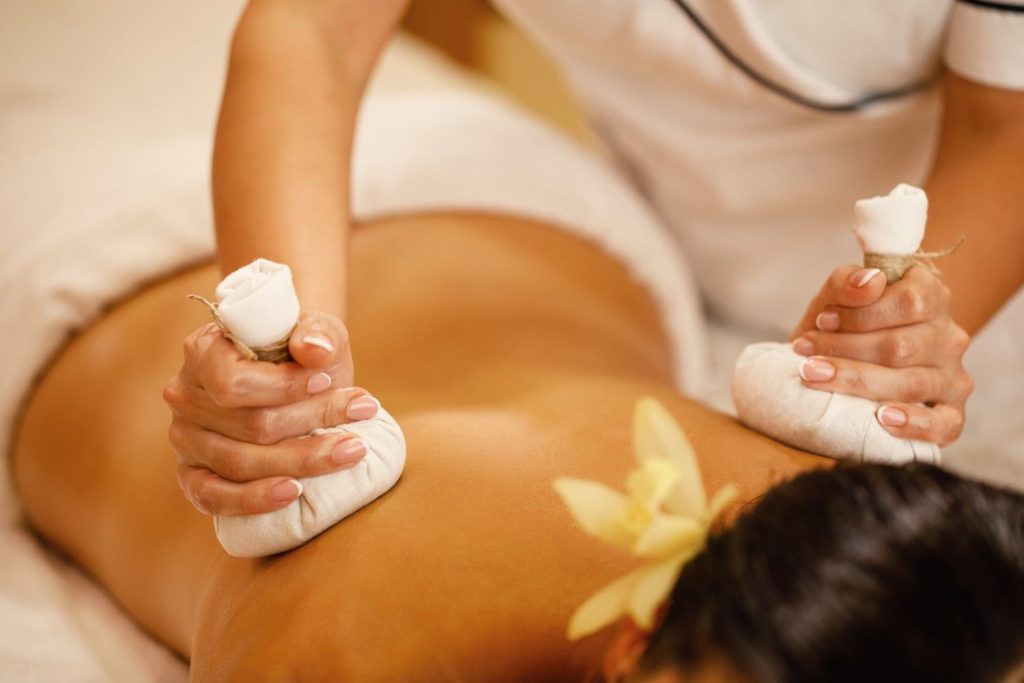
Snehana (Internal and External Oleation)
Internal oleation involves consuming medicated ghee (sneha) in gradually increasing doses over several days. This might sound unusual, but it serves a precise purpose the ghee travels through the digestive tract and into deeper body tissues, helping to loosen fat-soluble toxins that are embedded in cells and organs. Most people take this on an empty stomach in the early morning.
External oleation is the full-body herbal oil massage known as Abhyanga. A therapist often two working in synchronised movements applies warm, medicated herbal oil all over the body. The oil is selected based on your dosha profile. This massage:
- Stimulates lymphatic circulation
- Opens channels (srotas) in the body
- Softens and loosens accumulated toxins in tissues
- Deeply relaxes the nervous system
Sessions typically last 45 to 60 minutes.
Swedana (Herbal Steam Therapy)
Immediately following Abhyanga, most patients undergo Swedana herbal steam therapy. You lie inside a steam chamber (with your head outside), and steam infused with medicinal herbs surrounds your body for 15 to 20 minutes.
The purpose of Swedana is to:
- Dilate the body’s channels after the oil massage
- Further mobilise loosened toxins toward the digestive tract
- Encourage sweating, which aids in natural detoxification
- Relax muscles and relieve stiffness
Stage 3: Pradhankarma – The Five Core Cleansing Procedures
This is the heart of the treatment -the phase most people are thinking of when they ask what happens during a Panchakarma treatment. Based on your consultation, the physician selects the most appropriate procedures from the five classical therapies.
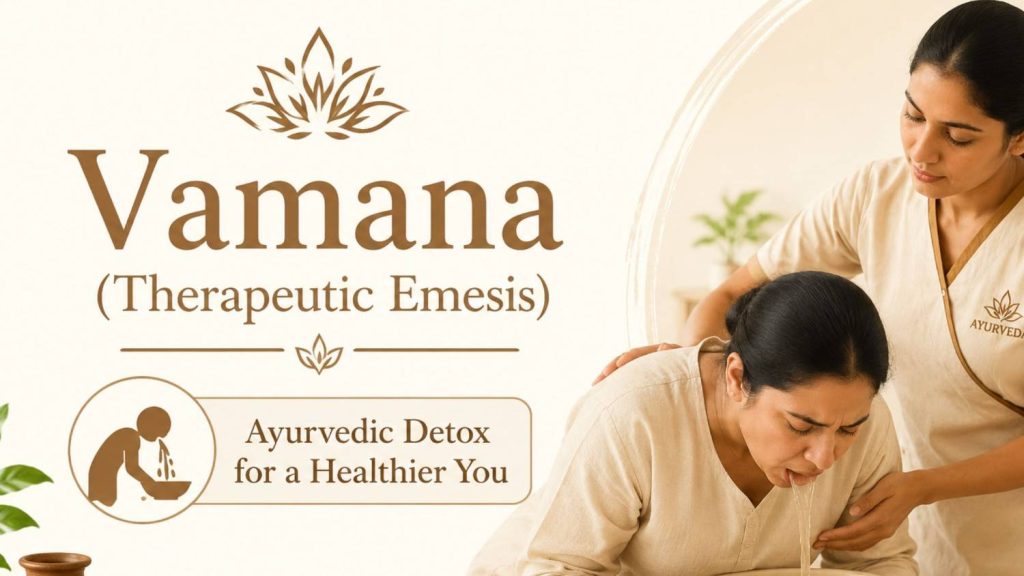
1. Vamana (Therapeutic Emesis)
Vamana is a carefully guided process designed to eliminate excess Kapha from the upper body and respiratory tract. It is not an arbitrary or harsh procedure it is precisely timed and supervised, typically carried out in the morning when Kapha energy is naturally dominant.
Who it may suit: People dealing with respiratory concerns, excess mucus, certain skin conditions, or Kapha-dominant imbalances.
What to expect: The patient is given herbal preparations the evening before to loosen Kapha. On the day of treatment, warm medicated herbal decoctions are administered. The therapeutic response is monitored closely by the physician throughout.
2. Virechana (Therapeutic Purgation)
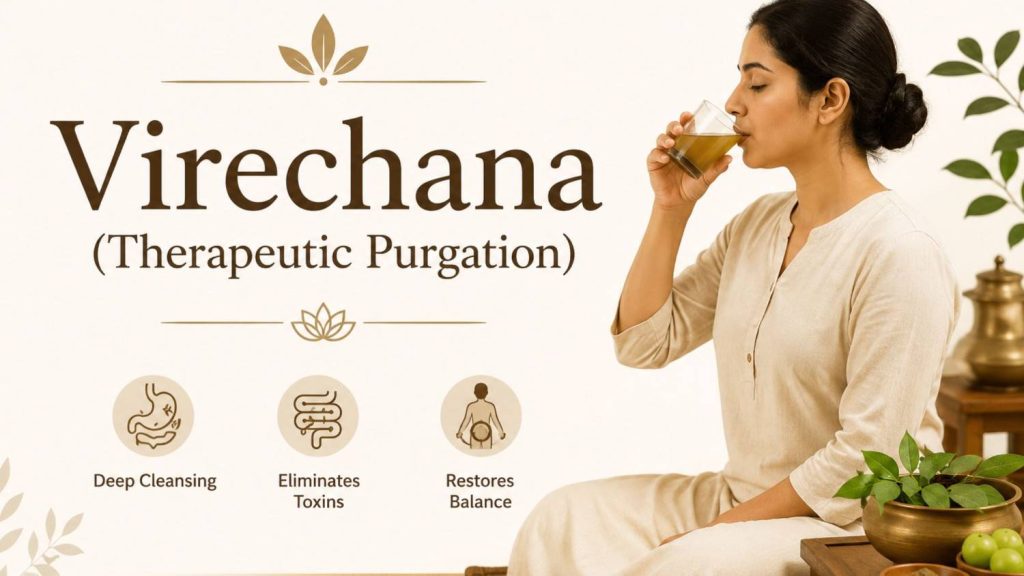
Virechana targets the Pitta dosha and focuses on cleansing the liver, small intestine, and digestive tract. It is one of the most commonly recommended Panchakarma procedures.
Who it may suit: People with skin issues, excess body heat, digestive sluggishness, or liver-related concerns.
What to expect: Medicated herbal laxatives are administered in the morning after the preparation phase. The process is gentle, and the physician determines the correct herbal combination based on your constitution. The outcome is a thorough internal cleansing that many patients describe as making them feel noticeably lighter and cleaner.
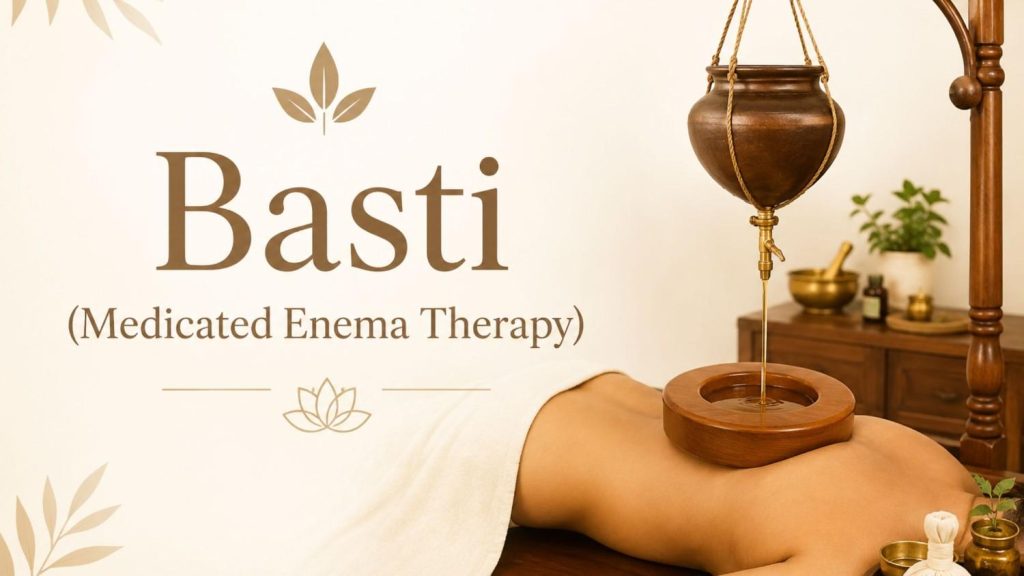
3. Basti (Medicated Enema Therapy)
Basti is considered the most powerful of all Panchakarma procedures in classical Ayurvedic texts often described as half the entire treatment. It involves the administration of medicated herbal decoctions or oils through the rectum to cleanse the colon and balance Vata dosha.
Who it may suit: People with joint stiffness, lower back discomfort, constipation, nervous system imbalances, or Vata-dominant conditions
A full Basti course may involve multiple sessions given on alternating days, following a defined sequence.
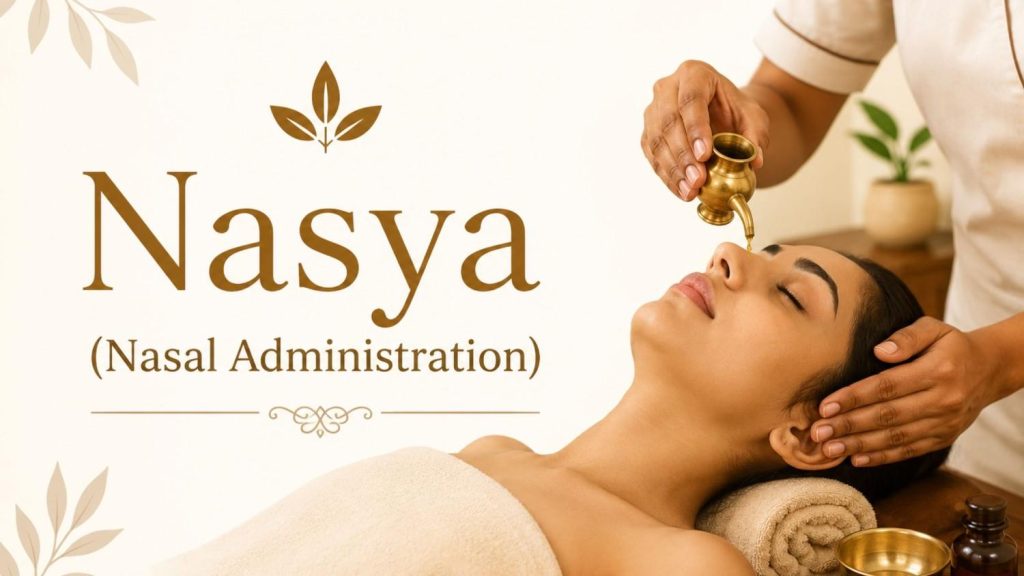
4. Nasya (Nasal Administration)
Nasya involves the administration of medicated oils, herbal powders, or herbal juices through the nasal passages. In Ayurveda, the nose is considered the gateway to the head and brain and Nasya aims to cleanse this pathway.
Who it may suit: People with sinus congestion, frequent headaches, migraines, neck stiffness, or those seeking mental clarity and improved concentration.
What to expect: The face and neck are gently massaged and given light steam to open the nasal passages. Warm medicated oil is then carefully administered into each nostril. Most patients find this surprisingly comfortable and often experience clearer breathing almost immediately.
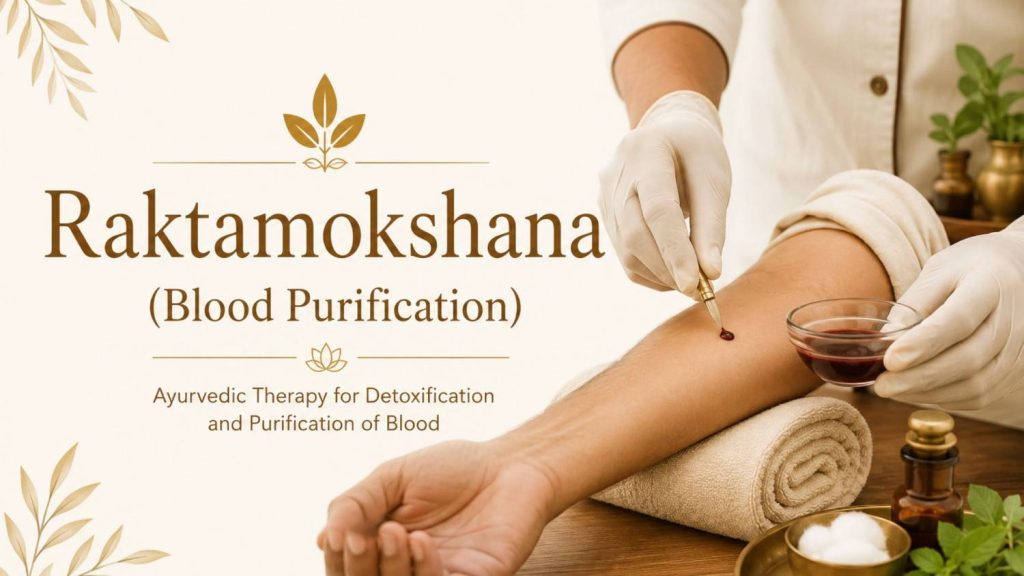
5. Raktamokshana (Blood Purification)
Raktamokshana is the fifth classical procedure and is the most selectively used. It is a traditional purification therapy historically used for certain skin and inflammatory conditions. In modern Ayurvedic practice, it is administered only under very specific clinical indications and with close professional supervision.
The Diet During Panchakarma: What You Will Eat
Food during Panchakarma is not a side element it is integral to the therapy. The Ayurvedic dietary approach during treatment is called pathya, meaning a supportive, therapeutic diet.
Commonly eaten during Panchakarma:
- Kichadi – a simple dish of rice and split moong lentils, easy to digest and deeply nourishing
- Warm herbal teas and medicated water
- Freshly cooked vegetable soups and broths
- Light steamed vegetables
- Warm milk with herbal additions (if appropriate for your dosha)
Commonly avoided:
- Raw, cold, or refrigerated foods
- Fried, processed, or heavy foods
- Excess sugar and salt
- Alcohol and caffeine
- Meat (in most programmes)
The digestive fire (agni) is considered deliberately reduced during detoxification, so heavy foods would simply not be processed and could interfere with the cleansing. Eating warm, simple, freshly cooked food is therefore not a restriction – it is supportive medicine.
Stage 4: Paschatkarma – The Rejuvenation Phase
Once the primary cleansing procedures are complete, the body enters a state of openness and receptivity. This is when the Panchakarma rejuvenation stage begins called Paschatkarma.
This phase focuses on rebuilding strength, nourishing the tissues, and reestablishing healthy daily rhythms. Therapies during this phase become richer and more nourishing rather than cleansing.
Common Paschatkarma therapies include:
Shirodhara
A deeply calming therapy where a continuous stream of warm medicated oil is poured in a gentle, rhythmic flow over the forehead (ajna marma point). It is widely used for stress, anxiety, insomnia, and mental fatigue. Most patients enter a profound state of relaxation some describe it as meditative even without intention.
Pizhichil
Warm medicated oil is poured over the entire body in a continuous stream while therapists simultaneously massage the body. It is deeply nourishing for the muscles, joints, and nervous system often recommended after Basti therapy to restore Vata balance.
Udwarthanam
A herbal powder or paste massage that stimulates circulation and helps the body re-energise after cleansing. It is especially used when weight management is part of the wellness goal.
Yoga, Meditation, and Pranayama
In the rejuvenation phase, structured yoga sessions and breathing practices (pranayama) are introduced or intensified. These are not generic fitness exercises they are sequenced specifically to support the post-detox body and help stabilise the emotional clarity that many patients experience after cleansing.
How Long Does Panchakarma Treatment Take?
The duration varies significantly depending on your health goals, constitution, and the programme structure.
- Short wellness programmes: 7 to 14 days – focused on relaxation, mild detox, and stress relief
- Standard treatment programmes: 14 to 21 days – full Poorvakarma, core procedures, and Paschatkarma
- Extended therapeutic programmes: 28 days or more – for deeper chronic conditions or comprehensive rejuvenation
Shorter programmes may not include all five Panchakarma procedures. A qualified physician will advise on the appropriate duration during your initial consultation.
Who Should Consider Panchakarma Treatment?
Panchakarma detox treatment in Kerala is explored by a wide range of people, including:
- Those experiencing chronic fatigue, brain fog, or low energy
- People with digestive issues, bloating, or irregular appetite
- Individuals dealing with stress, anxiety, or sleep disturbances
- Those with skin concerns such as psoriasis or eczema
- Anyone seeking a structured seasonal detox for preventive wellness
- Yoga practitioners and wellness seekers deepening their Ayurvedic practice
- People recovering from long periods of poor lifestyle habits
There is no single “type” of Panchakarma patient. The highly personalised nature of the treatment makes it adaptable to many different needs and starting points.
Conclusion
Understanding what happens during a Panchakarma treatment reveals that this is far more than a detox or spa experience. It is a layered, medically guided process that moves through preparation, deep cleansing, and systematic restoration working on the physical, mental, and emotional dimensions simultaneously.
From the initial Ayurvedic consultation and the gentle preparation of Snehana and Swedana, through the targeted power of Vamana, Virechana, Basti, Nasya, and Raktamokshana, to the calming nourishment of Shirodhara, Pizhichil, and Paschatkarma therapies every stage has a clear purpose rooted in thousands of years of classical Ayurvedic science.
If you are considering this journey, learning about Panchakarma detox treatment in Kerala in more detail is a natural next step. Speaking with a qualified Ayurvedic physician will help you understand which therapies are best suited to your constitution and wellness goals.
For further reading on integrative and traditional medicine approaches, the National Center for Complementary and Integrative Health (NCCIH) provides useful reference material.
FREQUENTLY ASKED QUESTIONS
1. What happens on the first day of Panchakarma treatment?
The first day typically begins with a detailed Ayurvedic consultation where the physician assesses your constitution and health history. Depending on the programme, you may begin the preparation phase with medicated ghee consumption and your first Abhyanga herbal oil massage followed by Swedana steam therapy.
2. Is Panchakarma painful?
No. Panchakarma is not a painful process. The therapies oil massages, steam, herbal decoctions are generally deeply relaxing. Some procedures like Virechana may cause mild discomfort during the cleansing response, but this is closely managed by the physician.
3. Can I work or exercise during Panchakarma?
Strenuous physical activity and mentally demanding work are discouraged during treatment. The body and mind need rest to process the detoxification effectively. Light yoga, gentle walks, and meditation are encouraged.
4. How will I feel after Panchakarma is complete?
Most people report improved energy, better sleep, lighter digestion, clearer skin, and a calmer mental state after completing a full Panchakarma programme. These effects often continue to deepen over the weeks following treatment.
5. How often should Panchakarma be done
Classical Ayurvedic texts recommend seasonal Panchakarma ideally once or twice a year as a preventive wellness practice. The appropriate frequency for you will depend on your health condition and your physician’s guidance.
6. Is Panchakarma suitable for everyone?
Panchakarma is highly personalised and the physician tailors the programme to the individual. Certain procedures may not be recommended during pregnancy, acute illness, or specific health conditions. A proper consultation determines what is appropriate.
7. Does Panchakarma include yoga?
Yes. Most structured Panchakarma programmes include gentle yoga and pranayama sessions, particularly during the rejuvenation phase. These complement the detoxification therapies and help stabilise emotional and physical balance.
8. What should I bring to a Panchakarma retreat?
Comfortable, loose cotton clothing is ideal. Avoid synthetic fabrics. You may bring personal meditation items, journals, or light reading. Most centres provide herbal supplies and dietary items as part of the programme.
9. Can Panchakarma help with stress and anxiety?
Yes. Therapies like Shirodhara, Abhyanga, and Nasya are specifically known for their calming effects on the nervous system. Many people explore Panchakarma primarily for stress management and mental wellness.
10. How do I prepare before starting Panchakarma?
Your physician will provide specific instructions, but common preparation includes gradually reducing heavy, fried, and processed foods, decreasing caffeine intake, and establishing an earlier sleep schedule in the days before treatment begins.
Call Now
+91 7356 445 553
+91 8921 442 253
We Welcome You
Vandithadam, Pachaloor P.O,
Thiruvananthapuram,
kovalam, kerala India
Sent Email
info@sivasoorya.org


Connect with Kerala’s Leading Ayurveda Centre for treatment enquiries, Panchakarma scheduling, wellness retreat packages, or customised Ayurvedic guidance. Our skilled Ayurvedic specialists and support team assist guests from India and abroad with trusted insights, professional care, and well-defined recommendations for lasting healing.

